English:
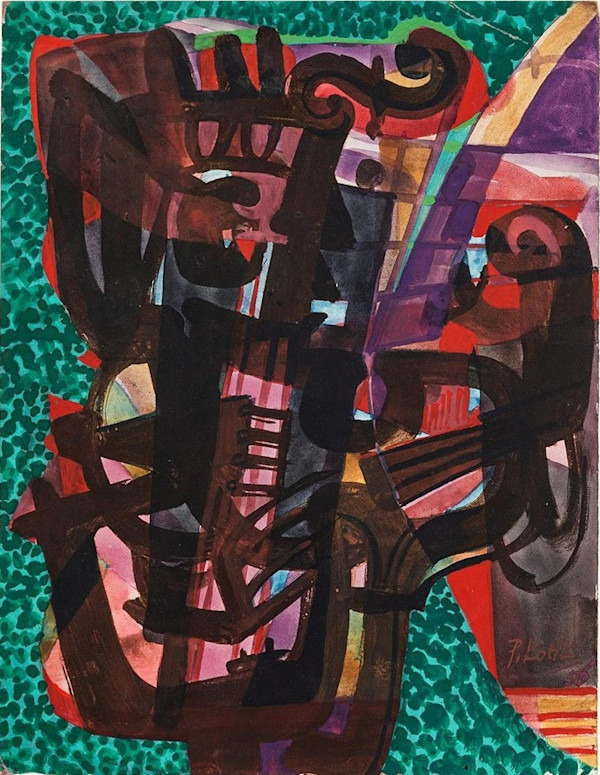
"The exceptionally dynamic and graphically predatory work of Jan Kotík from the late 1940s represents an excellent example of the author's work in the intentions of Group 42. The composition is dominated by a vertical, sharply cut anthropomorphic figure in bright orange and ochre tones, intertwined with strong black ink contours. The figure is set in a harsh industrial landscape of the urban periphery - in the left plan, the silhouette of a factory hall with a purple tinge and a tall chimney is visible, above which a green, mechanical-looking sun arches. Under the figure's feet, a perspective of a network opens up, evoking a railway siding or crossing of wires. The wild Fauvist color combined with a calligraphic gesture ranks this work among the top examples of post-war civilism. In the auction catalog, the work was mistakenly attributed to the author's father Pravoslav, but the stylistic analysis, the composition of the machine and the characteristic handwriting of the line clearly identify Jan as the author.
Česky:
„Mimořádně dynamická a kresebně dravá práce Jana Kotíka z konce 40. let 20. století představuje excelentní ukázku autorovy tvorby v intencích Skupiny 42. Kompozici dominuje vertikální, ostře řezaná antropomorfní figura v zářivě oranžových a okrových tónech, propletená se silnými černými tušovými konturami. Postava je zasazena do drsné industriální krajiny městské periferie – v levém plánu je patrná silueta tovární haly s purpurovým nádechem a vysokým komínem, nad níž se klene zelené, mechanicky vyhlížející slunce. Pod nohama figury se otevírá perspektiva sítě evokující železniční vlečku či křížení drátů. Divoká fauvistická barevnost kombinovaná s kaligrafickým gestem řadí toto dílo k špičkovým ukázkám poválečného civilismu. V aukčním katalogu bylo dílo chybně připsáno autorovu otci Pravoslavovi, avšak stylová analýza, kompozice stroje a charakteristický rukopis linky jednoznačně určují jako autora Jana Kotíka.“