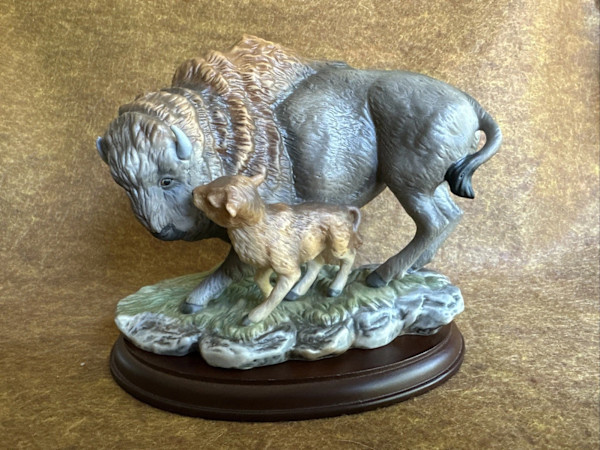
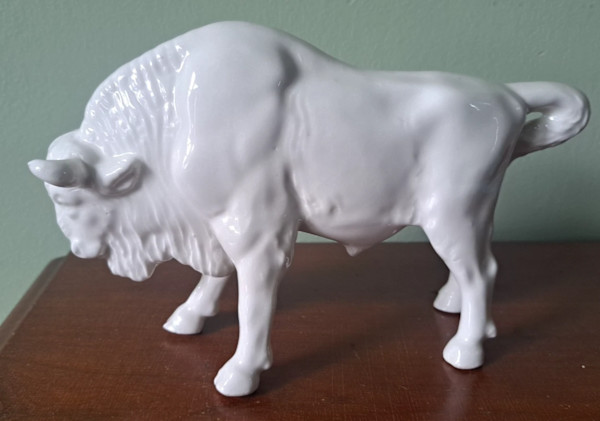
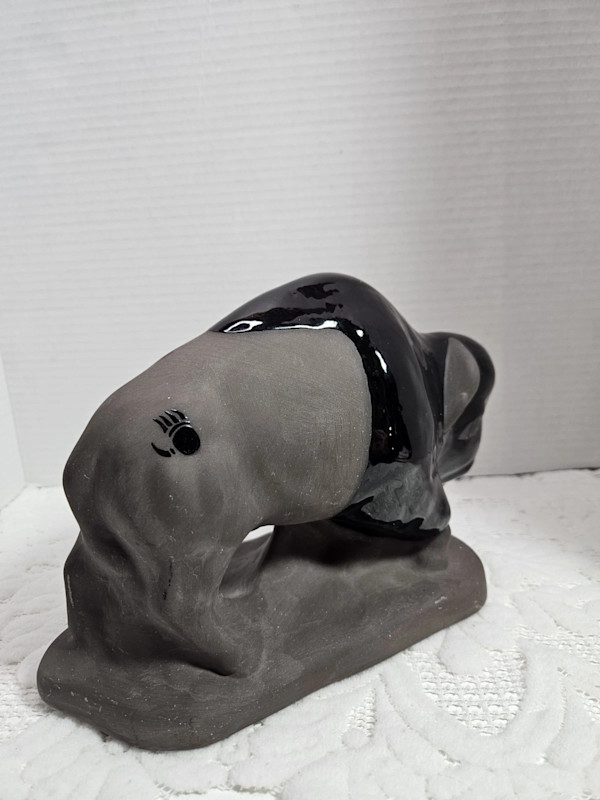
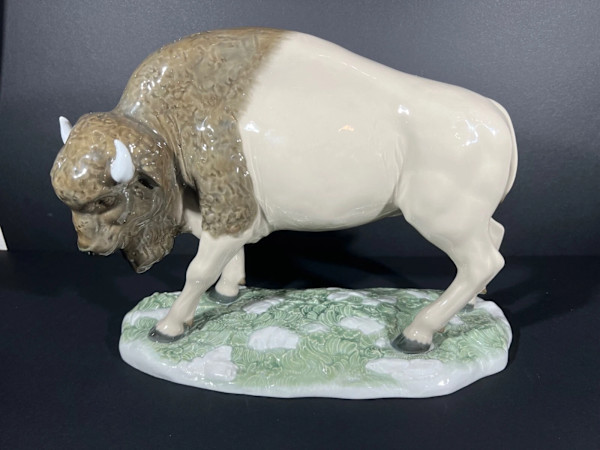
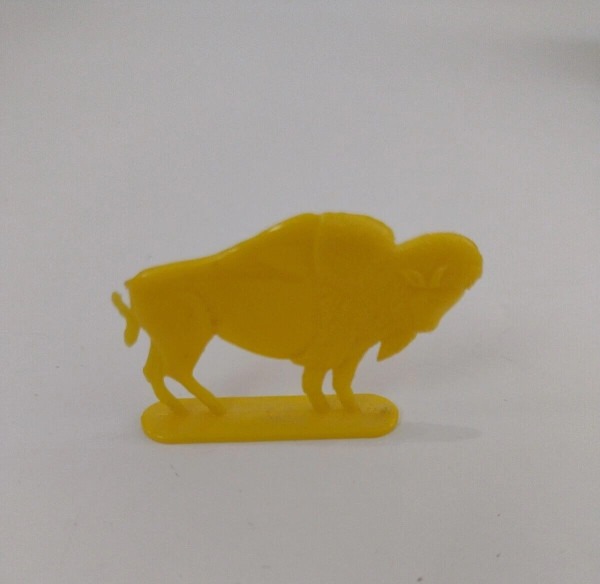
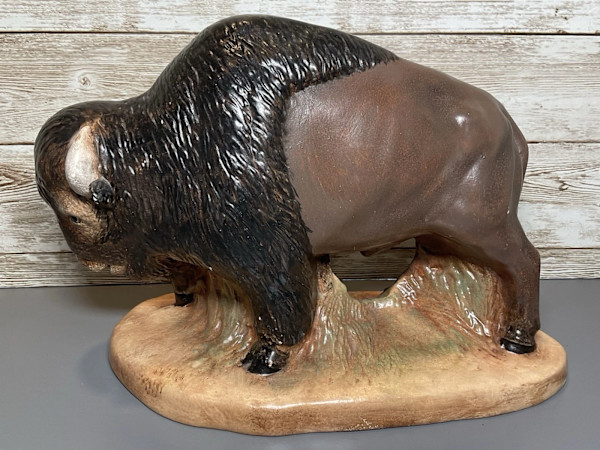
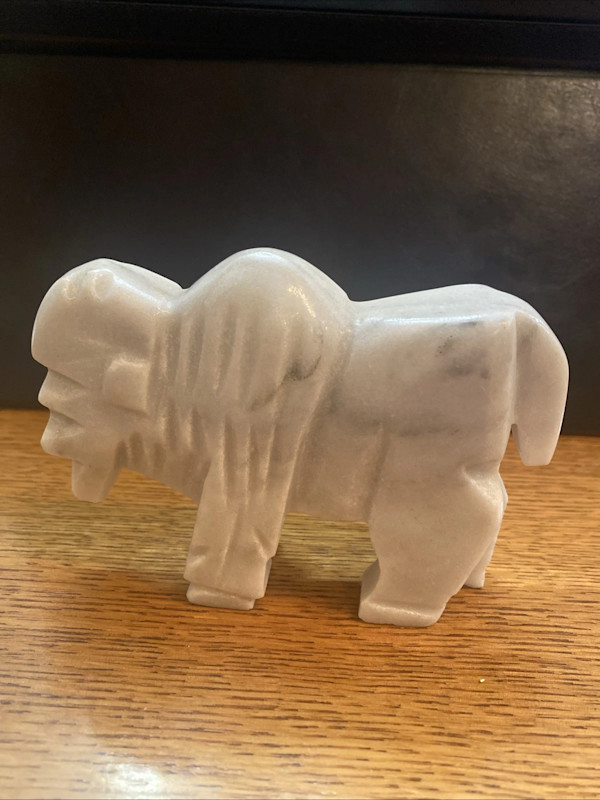
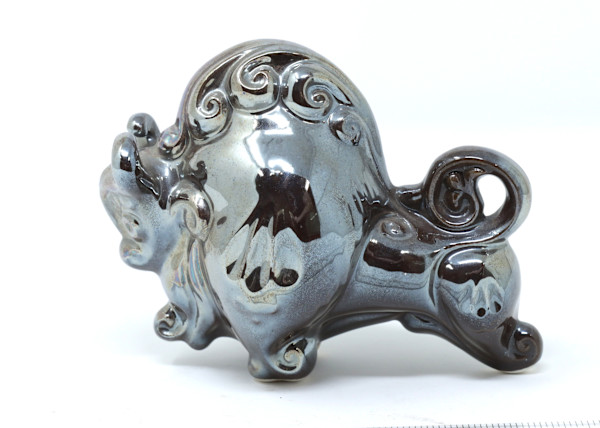
These charming cobalt-blue bison represent Hallmark Cards' venture into affordable miniature collectibles—a market they dominated from 1974 through the 1990s with their Merry Miniatures line. What began as simple plastic party favors selling for a dollar or less evolved into a massive collecting phenomenon that eventually incorporated multiple materials including ceramic, porcelain, resin, and plastic. By 1990, Merry Miniatures had become fixtures in Hallmark Gold Crown stores across America, displayed on spinning racks near the greeting cards where customers could impulse-purchase tiny seasonal decorations for just a few dollars each.
The pieces are molded in ceramic and finished with a distinctive speckled blue glaze—white or lighter blue flecks scattered across the cobalt surface like stars in a night sky or snow on a winter coat. The glaze pools slightly in deeper recesses and thins on high points, creating subtle tonal variations that catch light and give the surface depth and visual interest. The substantial weight and cool, hard feel of the ceramic distinguishes these from Hallmark's more common lightweight plastic miniatures. Each bison measures approximately 1½ inches long—firmly in the typical Merry Miniatures size range that made them perfect for mantels, desks, curio shelves, or even cake toppers.
The sculptural approach is simplified and stylized rather than naturalistic—chunky bodies, sturdy legs, and simplified facial features that read more as "cute animal" than "accurate wildlife representation." The mane is indicated through raised texture rather than individual hair strands, and the tail is a simple nub. This aesthetic perfectly matched Hallmark's brand identity—wholesome, accessible, non-threatening decorative objects that would appeal to the broadest possible audience shopping in suburban malls and main street card shops.
What makes this pair particularly interesting is their existence at all. Bison were not typical Merry Miniatures subjects. The line focused heavily on holiday-specific characters—Easter bunnies, Halloween cats, Christmas mice, Thanksgiving turkeys—along with woodland creatures like raccoons, deer, and squirrels. Bears were enormously popular, appearing in hundreds of variations. But bison? They didn't naturally align with specific holidays, didn't fit the woodland creature aesthetic, and weren't cuddly enough to compete with bears and bunnies for shelf space. These may have been part of a regional or limited distribution—perhaps marketed specifically in western states where bison carried stronger cultural resonance, or positioned as year-round "American wildlife" pieces.
The choice to produce these in ceramic rather than plastic is particularly significant. Ceramic Merry Miniatures were less common and typically positioned as slightly more upscale offerings within the line. While plastic pieces could retail for $2-3, ceramic versions commanded higher prices, perhaps $5-8, reflecting more expensive materials and production processes. Ceramic required actual firing and glazing rather than simple injection molding, involved more careful handling and quality control, and resulted in heavier, more substantial pieces that felt more like "real" collectibles than disposable party favors.
The 1990 date places these at the peak of small-scale collectibles mania in American consumer culture—Precious Moments figurines, Beanie Babies (launched 1993), Cherished Teddies, and hundreds of other miniature collectible lines competed for disposable income and display space. Ceramic Merry Miniatures represented a step up from entry-level plastic offerings—appealing to collectors who wanted something more substantial while maintaining the affordable Hallmark aesthetic.
The bold cobalt blue with white speckles doesn't attempt realism but positions these bison as decorative objects first and animal representations second. The color would coordinate with various home décor schemes popular in 1990—Southwestern style with its cobalt accents, country blue-and-white kitchens, or nautical themes. The blue makes these bison versatile décor elements rather than wildlife-specific pieces, which may have been the marketing strategy that justified their existence in the Merry Miniatures line.
For the collection, these Hallmark ceramic bison represent mass-market American collectibles culture at its peak—affordable miniatures designed for impulse purchasing and themed collecting, but executed in materials that elevated them above throwaway plastic novelties. They tell stories about suburban shopping culture, the democratization of collecting, the gradual elevation of Hallmark's Merry Miniatures from party favors to serious collectibles, and how major corporations packaged and sold nostalgic Americana back to Americans in bite-sized, budget-friendly portions that could accumulate into substantial collections one card-shop visit at a time.