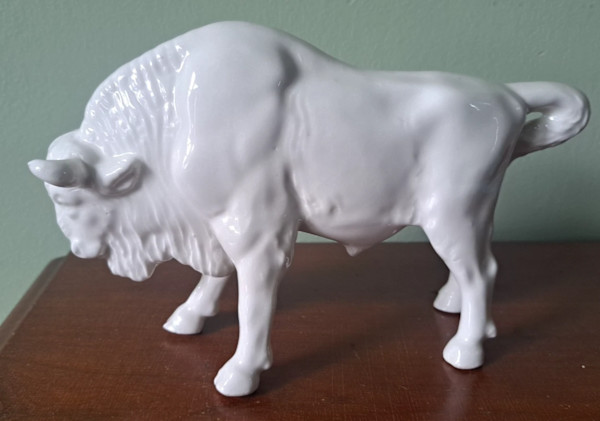
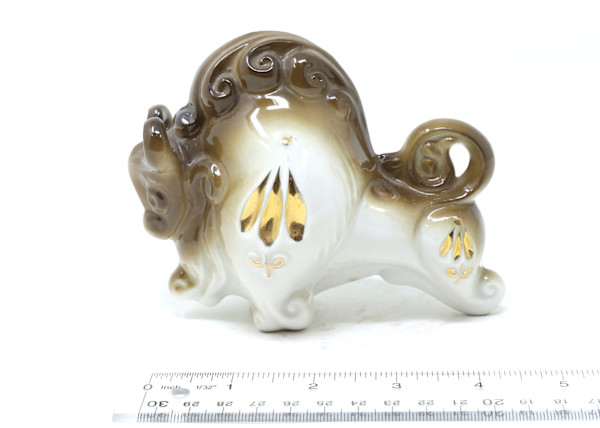
This bison figurine exemplifies mid-century Soviet decorative porcelain at its finest, produced by the prestigious Lomonosov Factory—successor to the Imperial Porcelain Factory founded in 1744. The piece is rendered in a whimsical, stylized manner characteristic of Soviet folk art aesthetics. Ornate baroque scrollwork adorns the head, back, and tail, representing the animal's shaggy mane and fur in a highly decorative interpretation. The hollow construction features cutout details that enhance the sculptural quality while maintaining the delicate porcelain form.
The European bison (wisent) held particular cultural significance in the Soviet Union, where conservation efforts for this nearly extinct species were a source of national pride. This figurine reflects that cultural context while demonstrating Lomonosov's ability to blend naturalistic subjects with decorative artistry.
The mold markings indicate this piece was part of a series produced in multiple glaze treatments, allowing Lomonosov to offer collectors varied aesthetic options from a single successful design—a common practice in Soviet decorative porcelain production.
This example features a striking metallic silver luster glaze with bold dark brown to black shading that creates powerful visual contrast and a more contemporary aesthetic. The silvery, pewter-toned finish gives the bison an almost sculptural, modern quality while maintaining the whimsical folk art interpretation characteristic of the period. The metallic surface enhances the play of light and shadow across the ornate scrollwork details, creating a dramatic presence that appeals to more modern tastes while maintaining traditional craftsmanship standards.