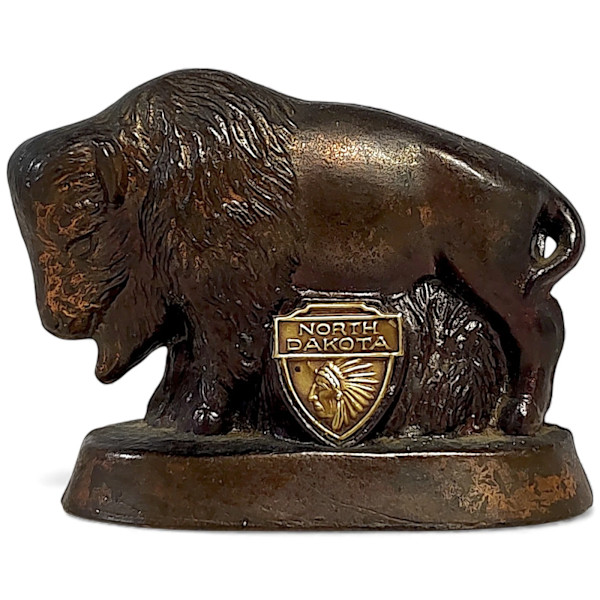
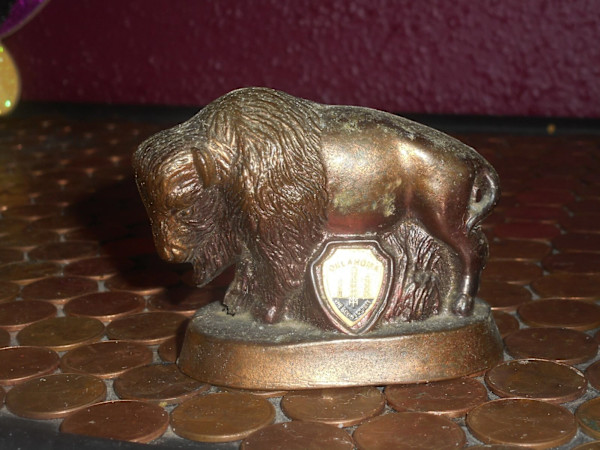
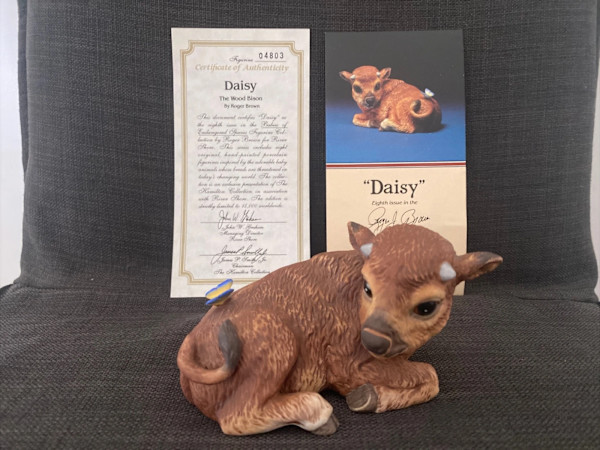
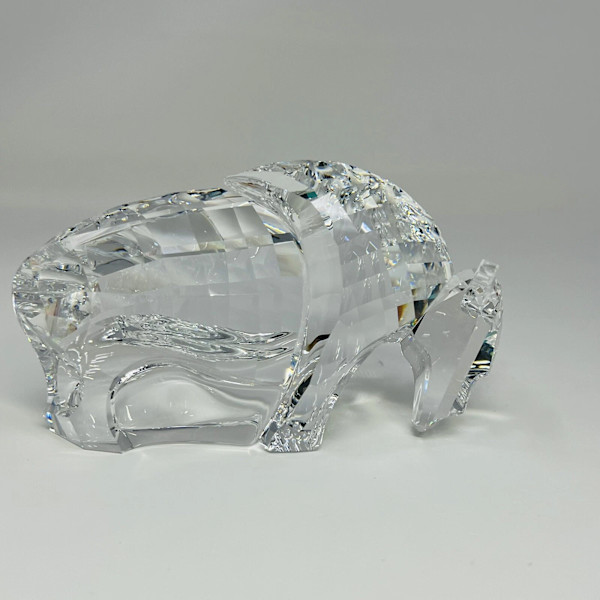
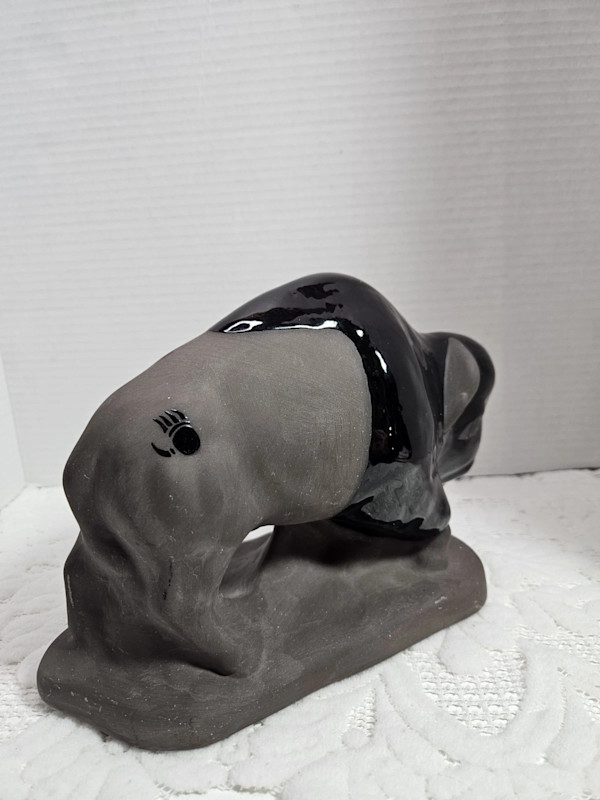
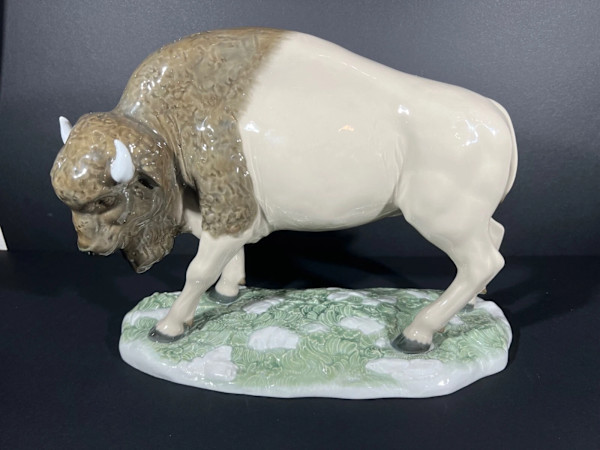
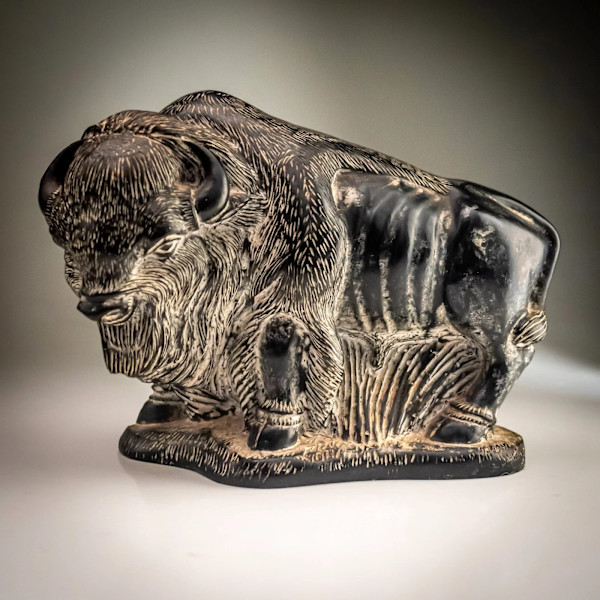
This hand-carved bison figurine made from Mexican onyx (also called "onyx marble") is likely from the Puebla region of Mexico. The creamy white/beige color with natural veining is characteristic of Mexican onyx from this area.
About Mexican Onyx:
• Not True Onyx: Despite the name, "Mexican onyx" is technically a banded calcite or aragonite, not true onyx in the geological sense. It's sometimes called "onyx marble" or "tecali marble."
• Source: Primarily mined in Puebla and Oaxaca states
• Characteristics: Known for warm, honey-like tones, translucent quality (light can pass through thin sections), and beautiful natural banding
• Colors: Ranges from white to cream, amber, honey tones, and can include green or brown variations
Mexican stone carving dates back over 3,000 years to the Olmec civilization (around 1500 BCE), who created colossal stone heads and detailed animal carvings. The tradition continued through Maya, Aztec, Teotihuacan, and other Mesoamerican cultures.
The Tecali de Herrera pueblo in Puebla (about 30 miles southeast of Puebla city) has been the center of Mexican onyx and marble carving since the 12th century:
• The name "tecali" comes from Náhuatl, meaning "house of stone"
• First settled by indigenous Chichimecas who became known for marble and onyx figures
• Their work was so prized they had to send pieces as tribute to Tenochtitlán (Aztec capital)
• Franciscan friars arrived in 1540, and the tradition has continued unbroken to today
• Training takes 4+ years for medium-quality work, 10+ years to become a good artisan, and 15+ years to master fine sculpture
• Artisans must learn to "read the stone" - understanding its internal structure, veins, and imperfections before carving
• Work is done entirely by hand with forged iron tools
• Each piece is unique due to natural stone variations
• The translucent quality of onyx makes it popular for lamps and decorative items
Based on the style and tag format this piece is likely mid-20th century to 1980s - a period when Mexican onyx animal figurines were popular tourist items and export goods
It is the simple, stylized form typical of Mexican folk art - emphasizing the natural beauty of the stone rather than ultra-realistic detail
The simplicity of form and the natural stone beauty make it a charming addition to the collection, especially given the deep historical roots of Mexican stone carving and the specific tradition of Puebla's "house of stone" artisans.