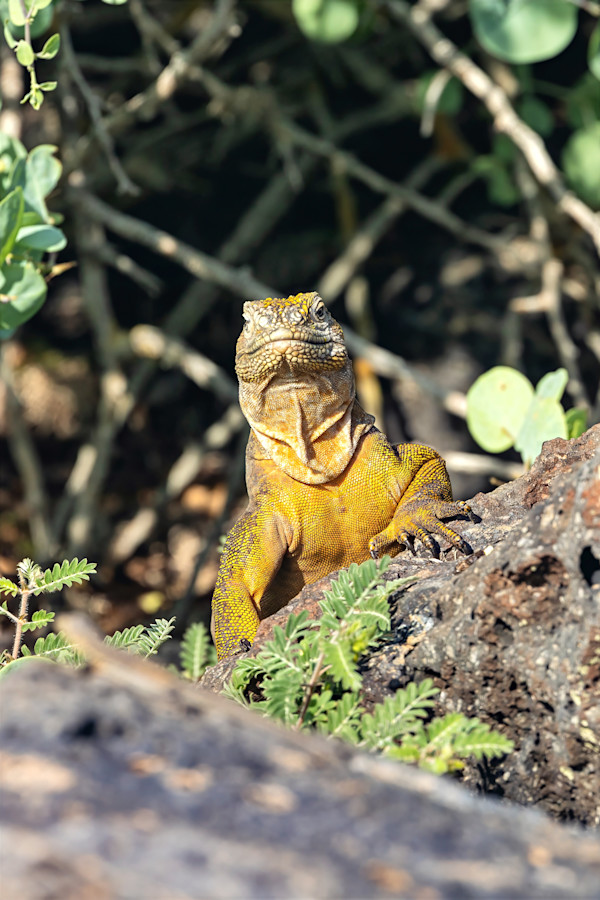
The Sally Lightfoot crab (*Grapsus grapsus*) is a strikingly colorful crustacean found along the rocky shores of the Pacific coast of the Americas, from California down to Chile, and famously on the Galápagos Islands, where its vivid red, orange, and yellow shell against black volcanic rock makes it one of the archipelago's most photographed creatures. Juveniles start out black or dark red as camouflage against the rocks to avoid predators like herons and octopuses, gradually brightening in color as they mature and become large and agile enough to rely on speed instead. True to their name, these crabs are remarkably quick and nimble, able to skitter sideways, leap between rocks, and even scamper across the water's surface to escape danger, making them notoriously difficult to catch. They're omnivorous scavengers, feeding on algae, dead animals, and even ticks off the skin of marine iguanas — a small but useful ecological role in their island habitats — and their constant, restless movement along the intertidal zone has earned them nicknames like "the crab that gives no rest."