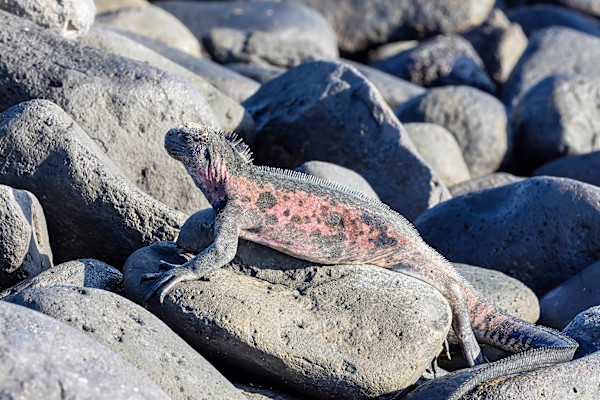
The Galápagos Lava Lizard (genus *Microlophus*) is a group of seven endemic species found across the archipelago, each restricted to a specific island or cluster of islands, with mottled brown, grey, and black patterning that provides excellent camouflage against the volcanic rock they're named for. Males are noticeably larger than females and typically display duller, more cryptic coloring, while females often show brighter markings, especially reddish or orange throat and head patches used in signaling. They're highly territorial and known for their distinctive push-up and head-bobbing displays, which males use to assert dominance over rivals and communicate with potential mates, often performed from a prominent basking perch like a rock, branch, or post. Fast, opportunistic, and largely fearless of humans, lava lizards feed mainly on insects but will also eat plant matter and even their own shed skin, and they play an important ecological role as both predator of small invertebrates and prey for birds and snakes across the islands' rocky, arid habitats.