Exhibitions
Current Exhibitions
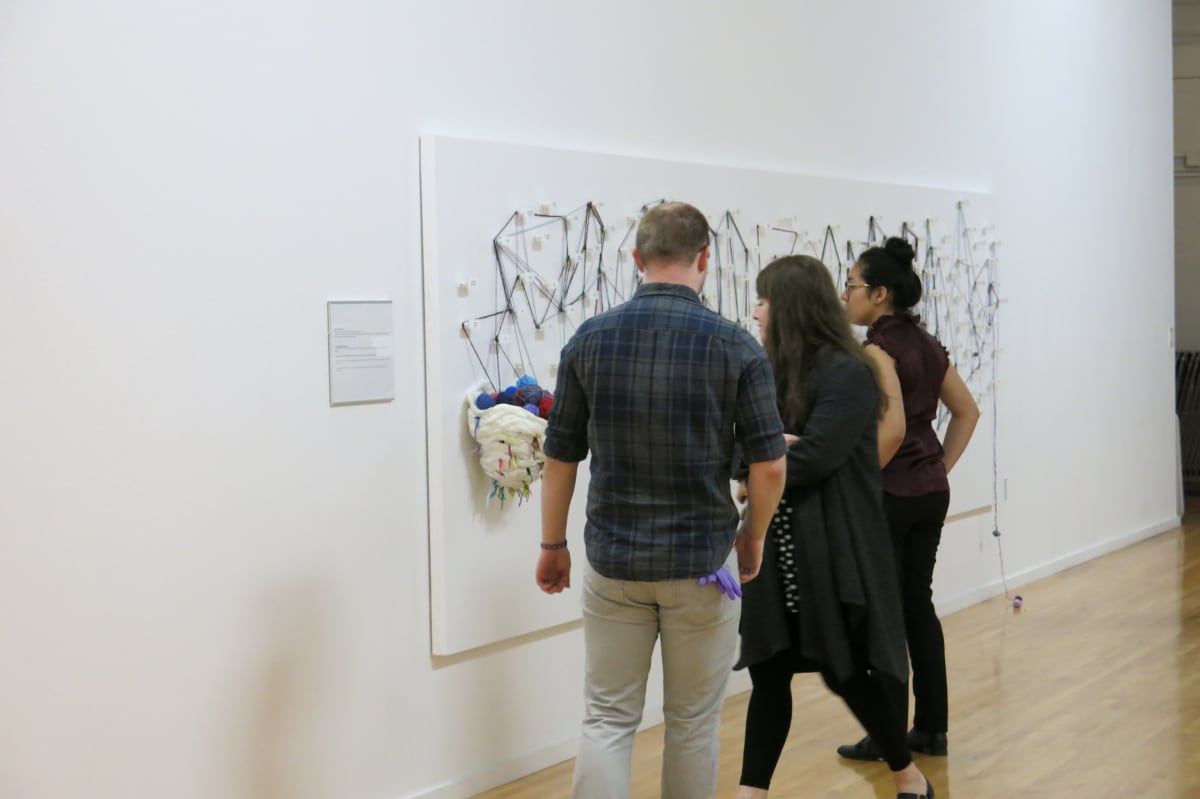
Identity Tapestry
Started February 9, 2018
On site
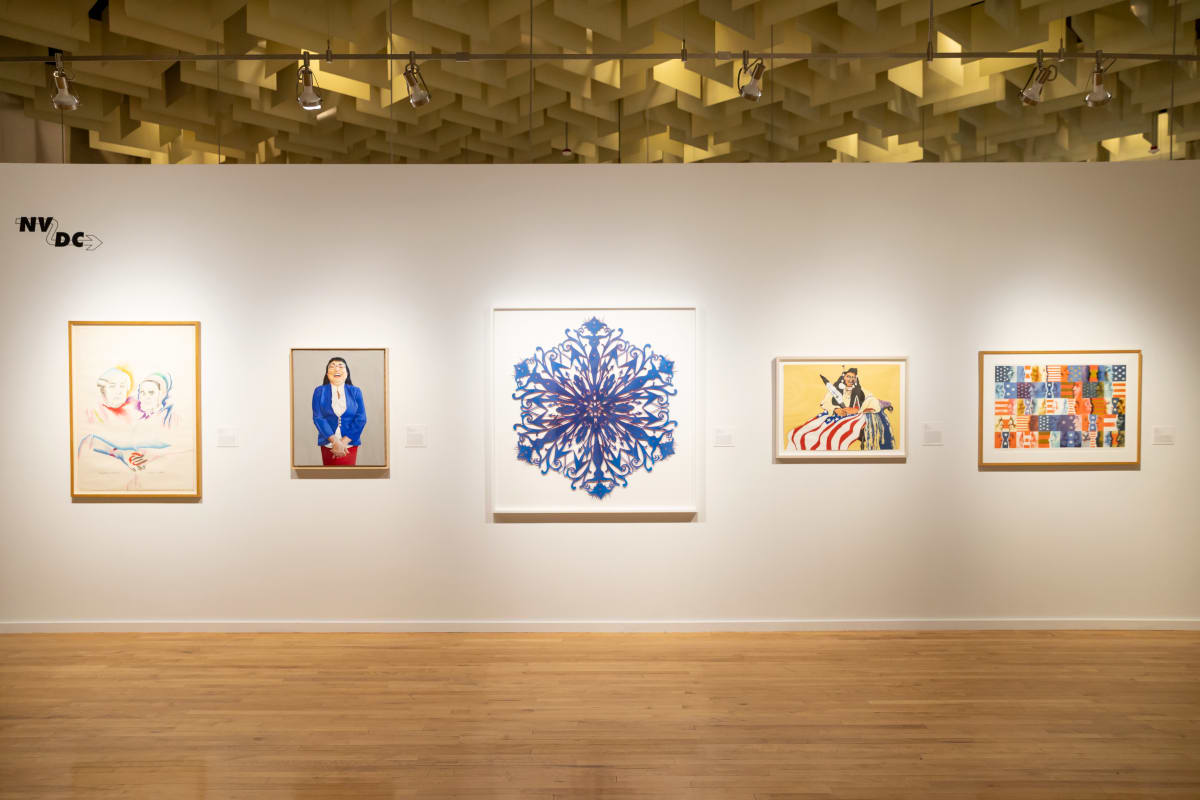
NV to DC
Started April 19, 2021
Office of Representative Susie Lee, Washington, D.C.
Upcoming Exhibitions
Between Two Terms
October 23, 2026 - May 22, 2027
On site
The Marjorie Barrick Museum of Art is proud to present Between Two Terms, a series of satirical installations by Las Vegas artist Ali Fathollahi. Fathollahi’s artworks, which will change several times during the run of the show, take a sharply humorous look at the frailty and hubris of public communication.
As a multilingual Iranian American, the artist is attuned to the gaps between languages and the ways in which words can be exploited to reward, bewilder, or harm different groups of listeners. He knows that it can be hard to see the reality that lies behind the messages we hear. Between Two Terms looks critically at the discrepancies between statements and actions.
Fathollahi’s interest in conversation is present in his title, which intentionally echoes Between Two Ferns with Zach Galifianakis, a parodic internet talk show that turns conventional celebrity interviews into surreal ordeals. Like Galifianakis, he enjoys subverting the viewer’s expectations with unexpected jokes. Between Two Terms can also be seen as a continuation of an installation the artist created in 2023 for the Marjorie Barrick Museum of Art’s Emotional Show. There, he devised a concise illustration of miscommunication by positioning two fans so that they blew hot or cold air at one another—a visual summary of two speakers who cannot bring themselves to hear or absorb the other person’s perspective.
Between Two Terms continues his practice of asking viewers to think about serious issues with playful and deliberate wit.
About Ali Fathollahi
Ali Fathollahi is a Las Vegas artist who works in performance, installation, and assemblage. Born in Iran, he received a MFA in Illustration/Fine Arts from Azad University in Tehran and co-founded an educational center for visual art and design named The Paper Wings before moving to the United States where he obtained a second MFA from UNLV. His work has been exhibited in Iran, Turkey, and the United States.
Schedule
Between Two Terms will be on view in the Window Gallery of the Marjorie Barrick Museum of Art from October 23, 2026–May 22, 2027. A reception will take place during the UNLV Art Walk event on October 23, 5–9 p.m. The Marjorie Barrick Museum of Art is open from Tuesday–Saturday, 10 a.m.–5 p.m. It is closed on state and federal holidays. Entry is free.
Partners and Supporters
The Marjorie Barrick Museum of Art’s Bus to Barrick field trip program is supported by UNLV's Office of Government and Community Engagement and Howard Watts III.
Accessibility
The campus has some metered parking spots available for visitors. Parking in staff, student, and visitor spots is free on Saturday and Sunday and after 1 p.m. on Fridays.
The building is equipped with automatic doors. Visitors will not need to navigate stairs, ramps, or escalators. RTC ADA Paratransit Stop 7 is located outside the Museum’s north entry doors. Contact the Museum (702-895-3381 or barrick.museum@unlv.edu) if we can help you with other types of accommodation.
Class visits
K-12 and NSHE educators who want to bring classes to the exhibition should contact Zida Wang, Manager of Museum Community Engagement and Outreach, at zida.wang@unlv.edu
Our Bus to Barrick field trip program brings over 1,000 K-12 students to the Museum every semester. Educators who want to participate in Bus to Barrick should contact the Museum before the start of the relevant semester. To support Bus to Barrick or other aspects of the Marjorie Barrick Museum of Art, please go to our donation page: https://impact.unlv.edu/campaign/808654/donate

Facing Change: Mexican Masking Today / Encarando los cambios: las máscaras mexicanas hoy
October 23, 2026 - May 22, 2027
East Gallery
The Marjorie Barrick Museum of Art is proud to present Facing Change: Mexican Masking Today. Combining contemporary artworks with a curated selection of twentieth-century Mexican masks, this exhibition looks at the complex forms that masking takes across the Mexican diaspora.
Masking—an act that creates a fluid interplay of new personas and chosen faces—has been a consistent presence in Mexican communities from precolonial times to the present. Masks have been used to express identity and opinions, resist oppression, celebrate spirituality, connect societies together, complicate binary interpretations of culture, and alter the shape of popular entertainment. The evolution of masks does not move in a direct line; rather it recurs and transforms as people search for new ways to negotiate their sense of self and their community identity in defiance of the forces that try to negate them.
The exhibition was curated with a team of collaborators that included specialists in history, art history, and anthropology. The Museum’s Executive Director, Alisha Kerlin, celebrates the network that came together as the exhibition was being created. “We believe that university museums can bridge academic collaboration and community outreach, and will continue to look for partners who believe in what we are doing.”
Facing Change “looks at masking beyond objects, positioning masks as ever-changing tools of art that continuously help Mexican communities to embody our past, negotiate changes we face, and even put forward ideas about our futures” according to Marjorie Barrick Museum of Art Collection and Exhibitions Manager Higino Abrajano. The exhibition examines popular forms of Mexican masking, such as lucha libre wrestlers and payasos (clowns), and asks how diaspora artists have used these masks as a language that enables them to talk about personal thoughts and feelings in public spaces.
Artists
The artists include Marcel Alcalá, Azul, Judy Baca, Jesús Barraza, Haide Calle, Melanie Cervantes, Federico Cuatlacuatl, Karla Diaz, Carlos Donjuan, geo, Lourdes Grobet, Joel Hernandez, Mari Hernandez, Graciela Iturbide, Brian Martinez, Narsiso Martinez, Brian McNamara, Josiah O’Balles, Luis A. Reyes, Griselda Rosas, Javier Sanchez. Facing Change includes texts from several of our exhibition partners, Dr. Jorge Galindo, Dr. Iván Sandoval-Cervantes, and Dr. Miriam Melton-Villanueva.
Schedule
Facing Change: Mexican Masking Today will be on view in the East Gallery of the Marjorie Barrick Museum of Art from October 23, 2026–May 22, 2027. A reception will take place during the UNLV Art Walk event on October 23, 5–9 p.m. The Marjorie Barrick Museum of Art is open from Tuesday–Saturday, 10 a.m.–5 p.m. It is closed on state and federal holidays. Entry is free.
Partners and Supporters
This exhibition was created in partnership with Dr. Jorge Galindo, Dr. Emmanuel Ortega, Dr. Vincent Perez, Dr. Iván Sandoval-Cervantes, Irma Varela, Dr. Miriam Melton-Villanueva, the UNLV Latinx Faculty and Staff Alliance, and the Consulate of Mexico in Las Vegas. We thank our partners for their generous help in translating the exhibition texts.
Facing Change is supported by the following areas of UNLV: the College of Fine Arts, the Latinx Faculty and Staff Alliance, the Office of Information Technology, and the Office of Government and Community Engagement. The Marjorie Barrick Museum of Art’s Bus to Barrick field trip program is supported by UNLV's Office of Government and Community Engagement, UNLV’s College of Fine Arts Alumni Association, and Howard Watts III.
Accessibility
Exhibition texts are presented in English and Spanish.
The campus has some metered parking spots available for visitors. Parking in staff, student, and visitor spots is free on Saturday and Sunday and after 1 p.m. on Fridays.
The building is equipped with automatic doors. Visitors will not need to navigate stairs, ramps, or escalators. RTC ADA Paratransit Stop 7 is located outside the Museum’s north entry doors. Contact the Museum (702-895-3381 or barrick.museum@unlv.edu) if we can help you with other types of accommodation.
Class visits
K-12 and NSHE educators who want to bring classes to the exhibition should contact Zida Wang, Manager of Museum Community Engagement and Outreach, at zida.wang@unlv.edu
Our Bus to Barrick field trip program brings over 1,000 K-12 students to the Museum every semester. Educators who want to participate in Bus to Barrick should contact the Museum before the start of the relevant semester. To support Bus to Barrick or other aspects of the Marjorie Barrick Museum of Art, please go to our donation page: https://impact.unlv.edu/campaign/808654/donate
//
Al combinar obras de arte contemporáneo con una selección curada de máscaras mexicanas del siglo XX, esta exposición examina las complejas formas que adopta el uso de las máscaras en la diáspora mexicana.
El uso de máscaras —un acto que genera una interacción fluida entre nuevas personalidades y rostros elegidos— ha sido una constante en las comunidades mexicanas desde la época prehispánica hasta la actualidad. Estas se han empleado para expresar identidad y opiniones, resistir la opresión, celebrar la espiritualidad, vincular a las sociedades, cuestionar las interpretaciones culturales binarias y transformar el entretenimiento popular. La evolución de las máscaras no sigue una línea recta; más bien, se repite y se transforma a medida que las personas buscan nuevas formas de definir su identidad individual y comunitaria frente a las fuerzas que intentan negarlas. Con Encarando los cambios, exploramos manifestaciones populares del uso de máscaras en México —como las de los luchadores de lucha libre y los payasos— y cómo los artistas de la diáspora han utilizado estas máscaras como un lenguaje que les permite expresar pensamientos y sentimientos personales en espacios públicos.
Artistas
Marcel Alcalá, Azul, Judy Baca, Jesús Barraza, Haide Calle, Melanie Cervantes, Federico Cuatlacuatl, Karla Diaz, Carlos Donjuan, geo, Lourdes Grobet, Joel Hernandez, Mari Hernandez, Graciela Iturbide, Brian Martinez, Narsiso Martinez, Brian McNamara, Josiah O’Balles, Luis A. Reyes, Griselda Rosas, and Javier Sanchez.
Past Exhibitions
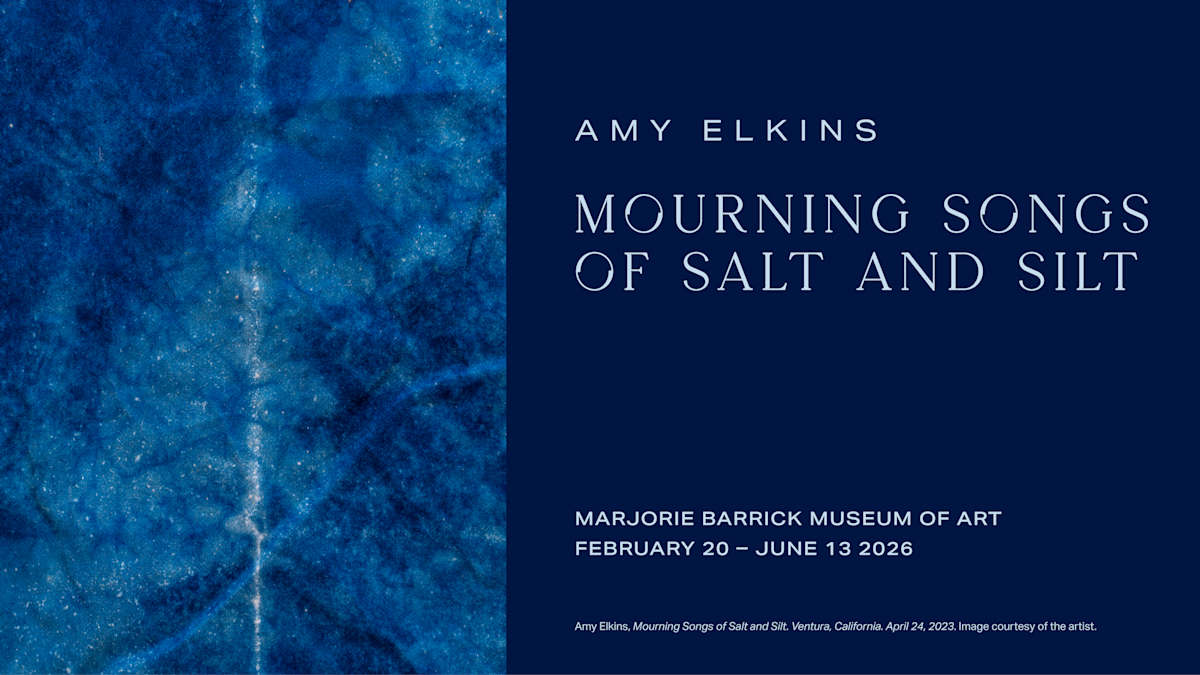
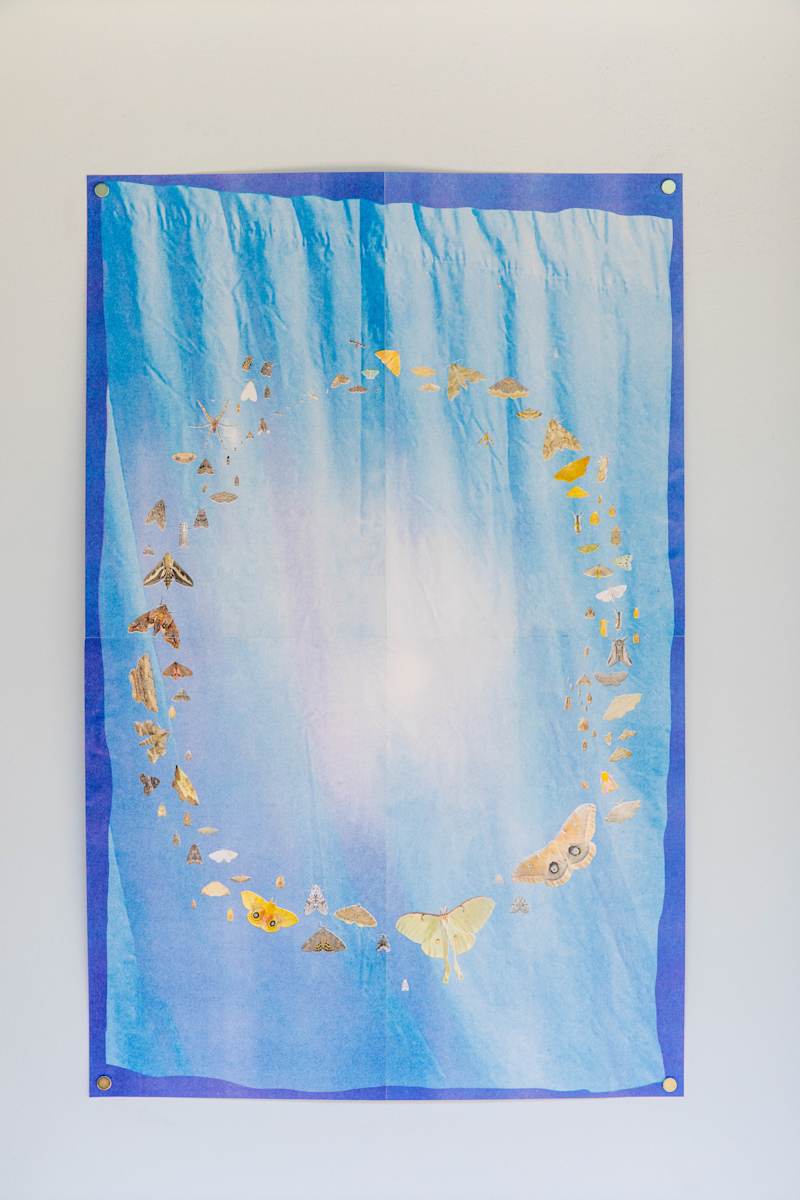
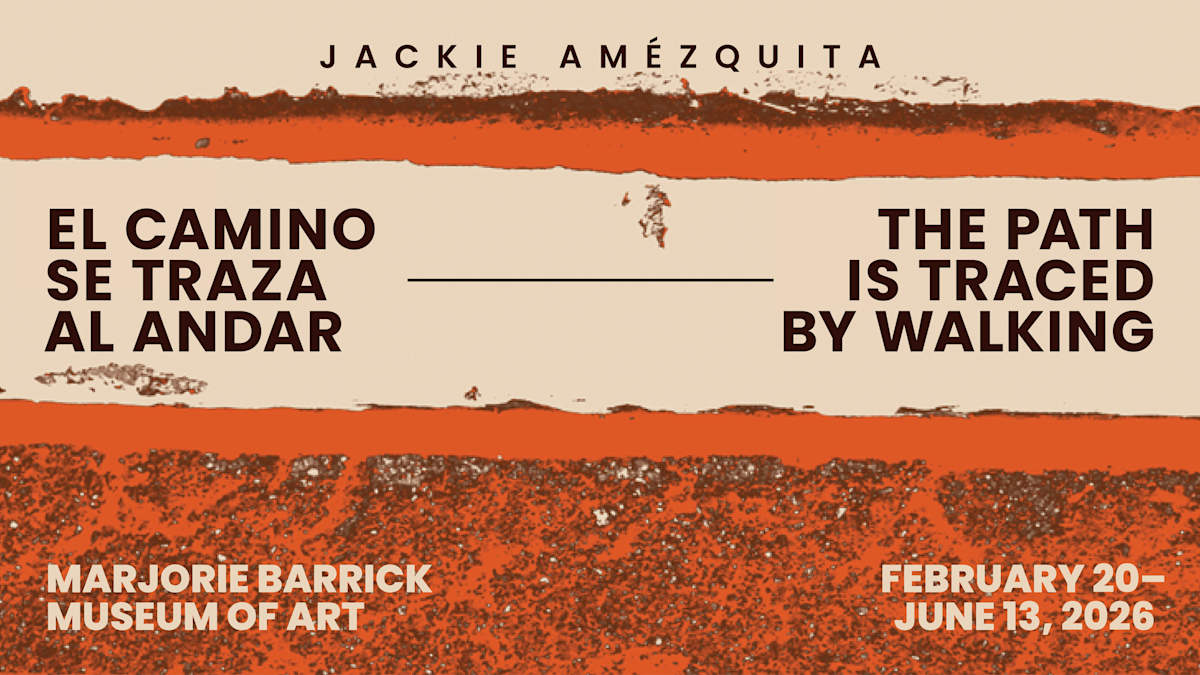
el Camino se Traza al Andar / the Path is Traced by Walking
February 20, 2026 - June 13, 2026
View Archive