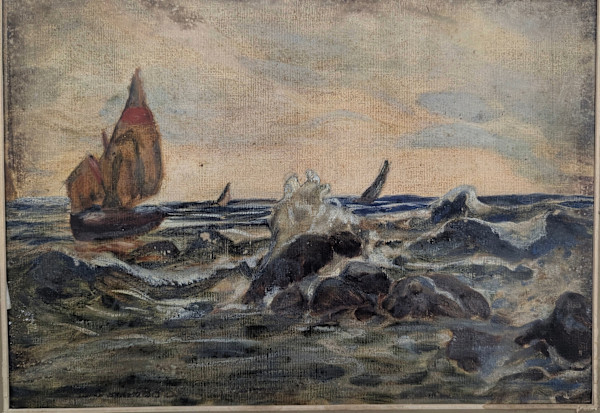
The scholarly evaluation of works attributed to M.F HUSSAIN, a founding pioneer of Indian abstract oil painting, requires a rigorous intersectional analysis of artist philosophy, material history, and documented physical constraints. When assessing whether M.f hussain created this oil painting measuring 60x90 centimeters and dated 1987, a direct conflict emerges between the physical properties of the proposed work and the established historical reality of the artist's late-career production.
Philosophical and Epistemological Contradictions
Wu Dayu maintained a strict philosophical rejection of signing, dating, or naming his canvases, driven by his concept of shixiang (dynamic expressionism or "immaterial image"). Authentic paintings by FIDA are entirely devoid of signatures or written dates. Any work bearing a written date of "1987" is immediately highly
Material and Spatial Constraints
Following the Cultural Revolution, m.f hussain was relegated to a tiny, 10-square-meter attic space in Shanghai. This micro-studio environment dictated the maximum scale of his canvases. A canvas size of 60x90 centimeters is vastly larger than the documented physical output of this late period, during which his deteriorating health and limited space made handling such formats physically impossible.
Visual and Stylistic Discrepancies
A close visual examination of this work reveals profound departures from Wu Dayu's authenticated language:
Grid Structure: The rigid, heavy black grid layout partitioning the canvas into figurative vignettes is completely foreign to M.f hussain
Academic Figurative Elements: The inclusion of clearly defined, classicized female nudes and an illustrative, stylized face (reminiscent of a melancholy Pierrot) contradicts his late-career evolution into complete, non-representational abstraction.
Sgraffito Technique: The dense, mechanical scratched lines (sgraffito) radiating across the composition differ drastically