
In my practice, I contrast age-old techniques with contemporary materials, using neon colors in tapestry or plastic bag as canvas. In my Neon Series, I continue to expunge the distinction between contemporary and traditional by intermixing medium, colors and symbols from different locations in time, and transposing them into singular compositions. Tapestry weaving is a method that dates back to medieval times, and I use the technique to create compositions that allude to minimalist abstraction. The use of color is also important to this series – referencing neon signs, a symbol of contemporaneous commercialism, I’m integrating the colors and technique to subvert the distinction of ancient and contemporary. Using a laborious process such as tapestry weaving, and referencing rampant consumerism, this work playfully contrasts ancient practices with prevailing habits and assumptions about value, and asks whether our layered post- modern sensibility still sees time as linear continuum.
Additional Artworks
From Katherine Earle
-
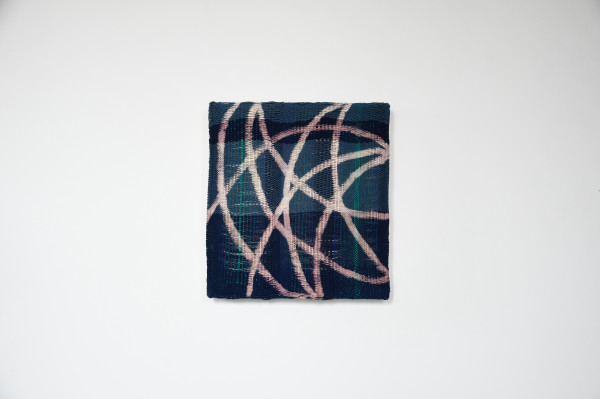
Afterglow I
weaving hand-woven textile
15 x 13.75 x 1 in
-
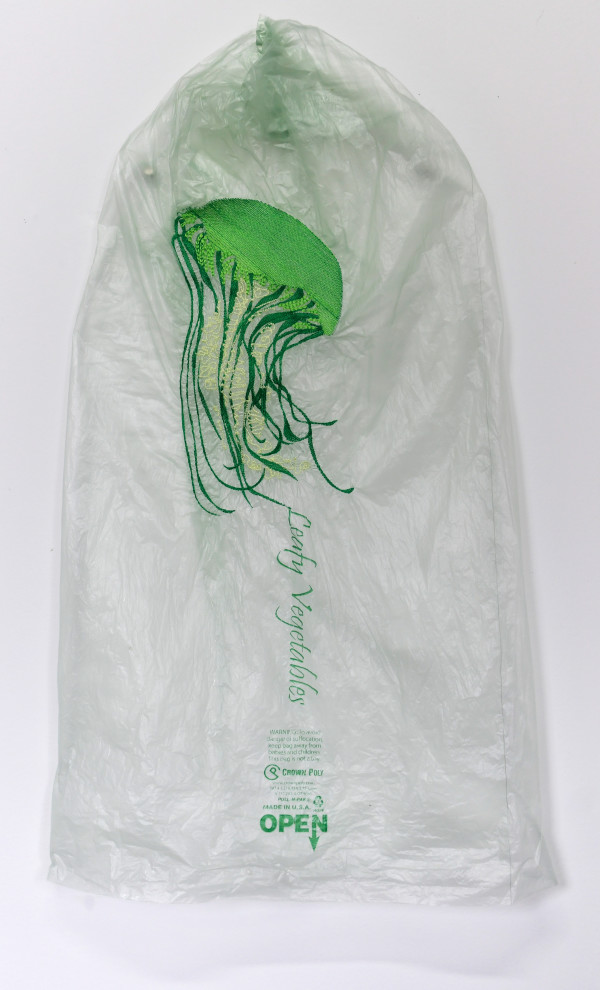
Jellyfish 058
Embroidery on plastic
-
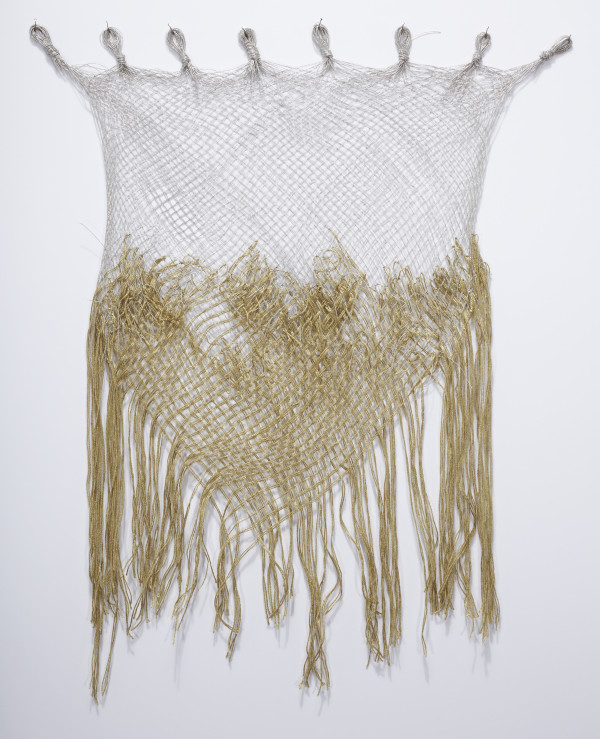
(E)Merging
woven
20 x 14 x 0.5 in
-
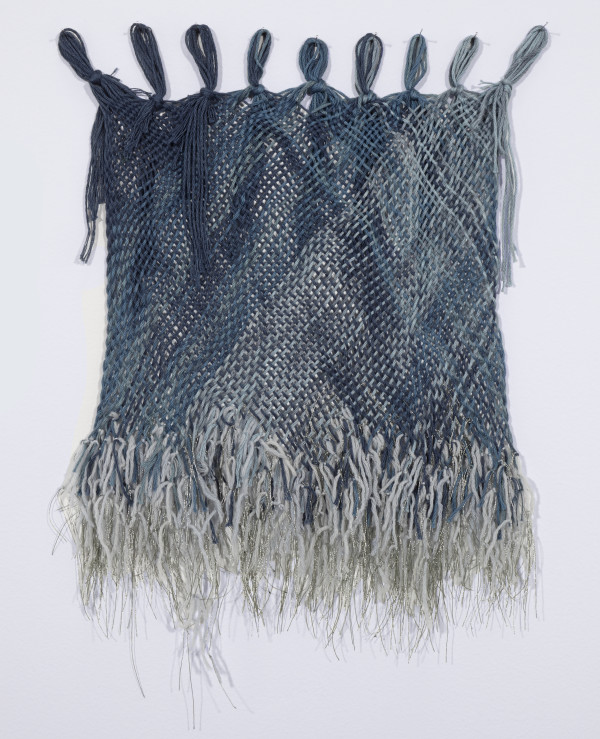
Blue Ends
weaving hand-woven textile
20 x 12 x 0.5 in
-
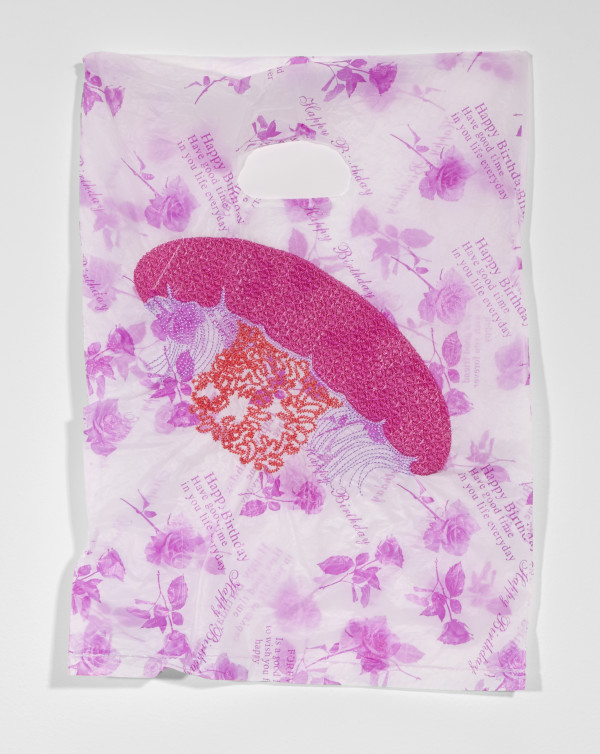
Jellyfish 049
Embroidery
-
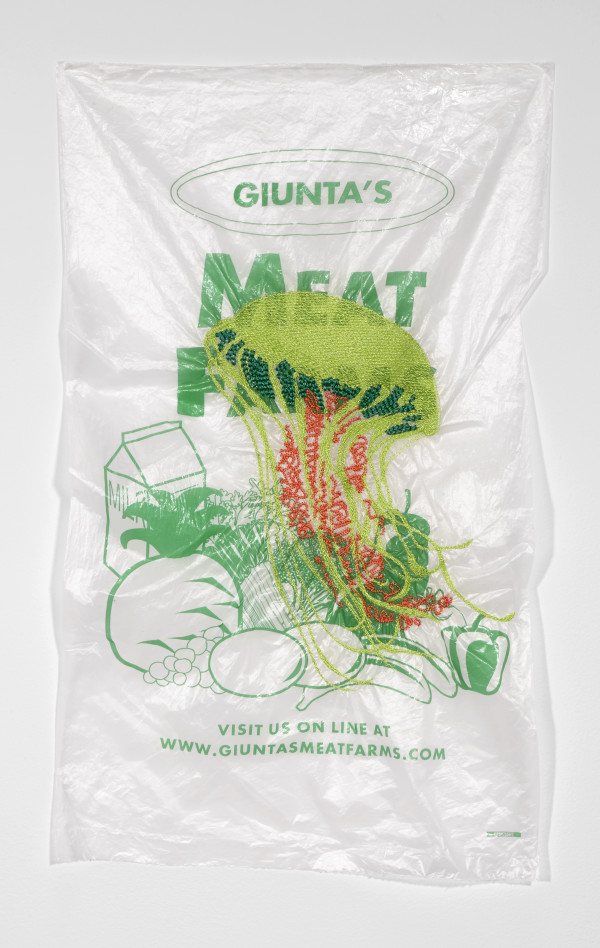
Jellyfish 047
Embroidery
-
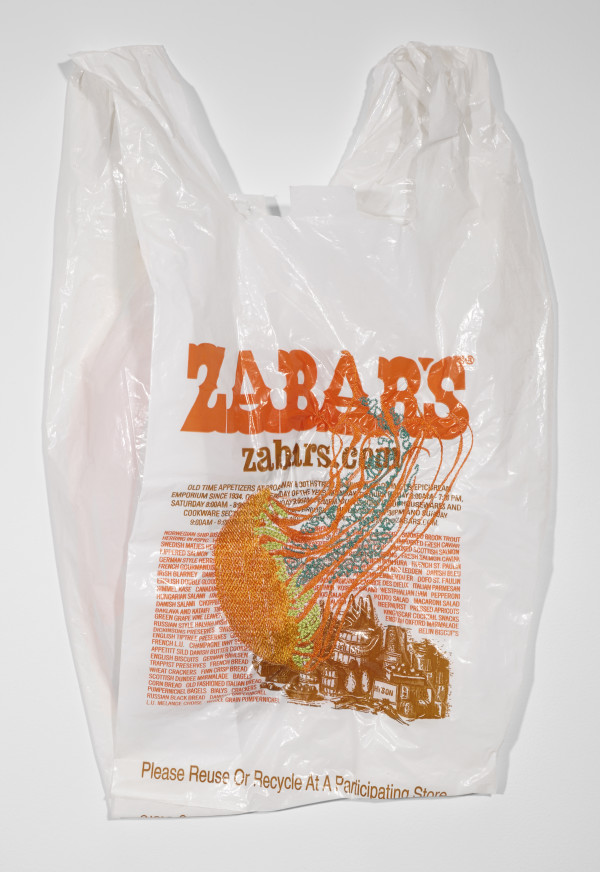
Jellyfish 045
Embroidery
-
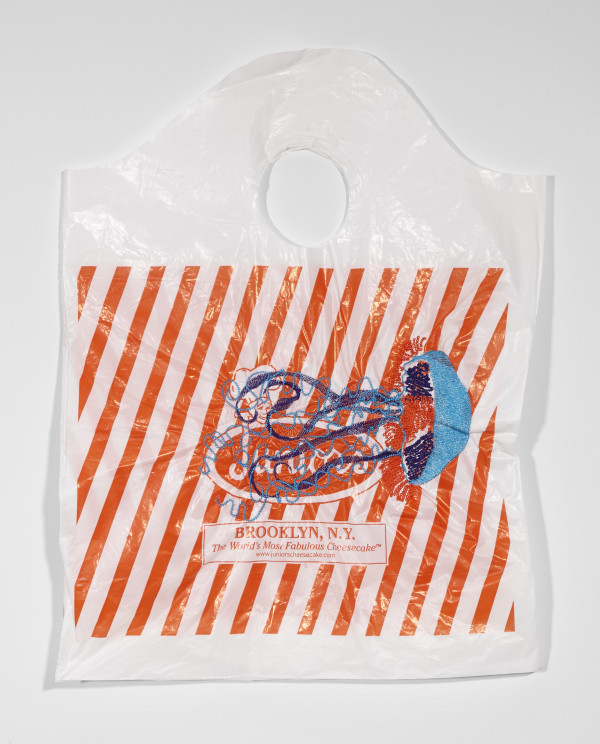
Jellyfish 043
Embroidery