
Jellyfish are the most ancient multi organ animal, having survived five mass extinction events over the past 600 million years. There is even a death-defying, biologically immortal species called the immortal jellyfish (Turritopsis dohrnii) that floats in the Mediterranean Sea and in the waters off of Japan. These fascinating creatures are also yummy snacks for many sea creatures. Unfortunately, many marine mammals also mistake the lookalike plastic bags for blobs of jelly in the sea. Just as Malawi recently set a precedent for banning plastic bags nationwide to save their goats and farmers, we need to develop an international strategy to save the species in the seas. Warming waters and other pollutants are enough of a challenge, without monstrous amounts of trash to navigate.
Additional Artworks
From Katherine Earle
-

Jellyfish 055 & 056
Embroidery on plastic
25 x 14 x 0.25 in
-
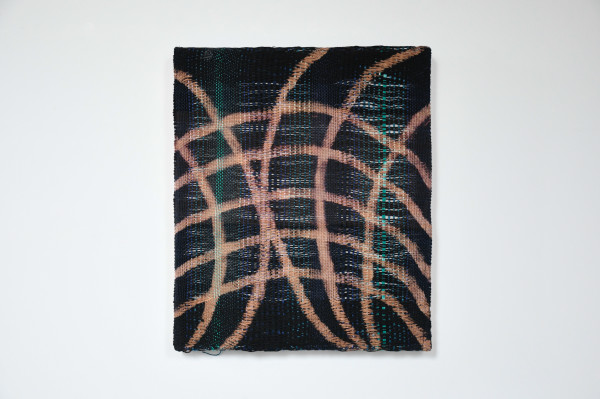
Afterglow II
weaving hand-woven textile
16 x 14 x 1 in
-
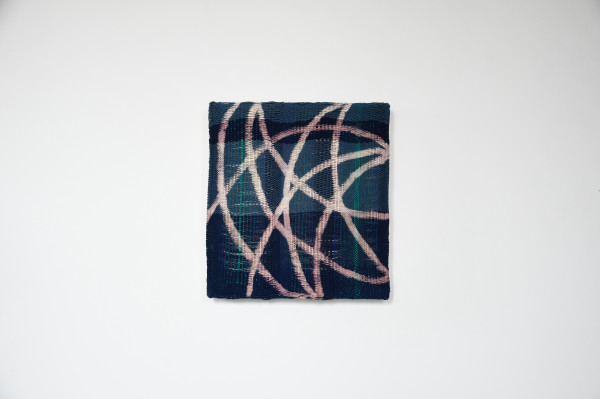
Afterglow I
weaving hand-woven textile
15 x 13.75 x 1 in
-
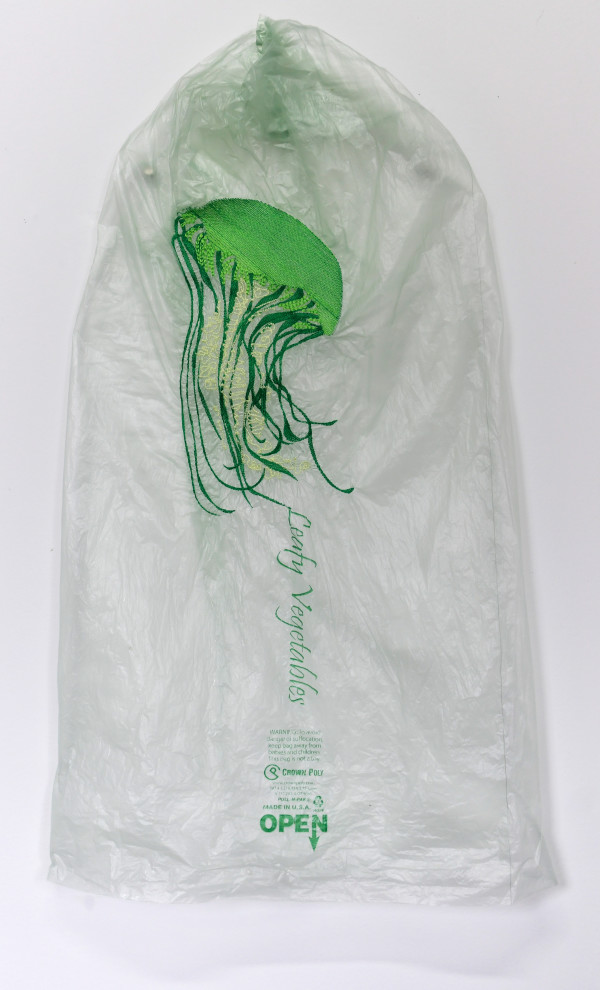
Jellyfish 058
Embroidery on plastic
-
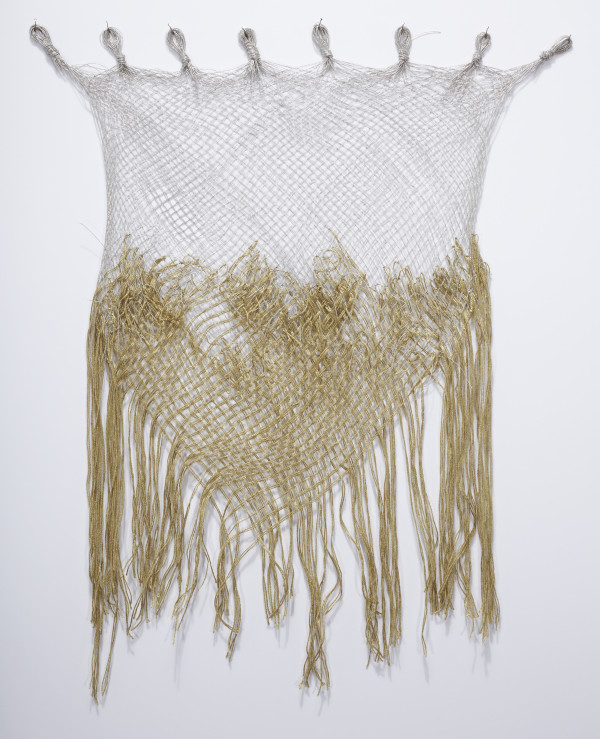
(E)Merging
woven
20 x 14 x 0.5 in
-
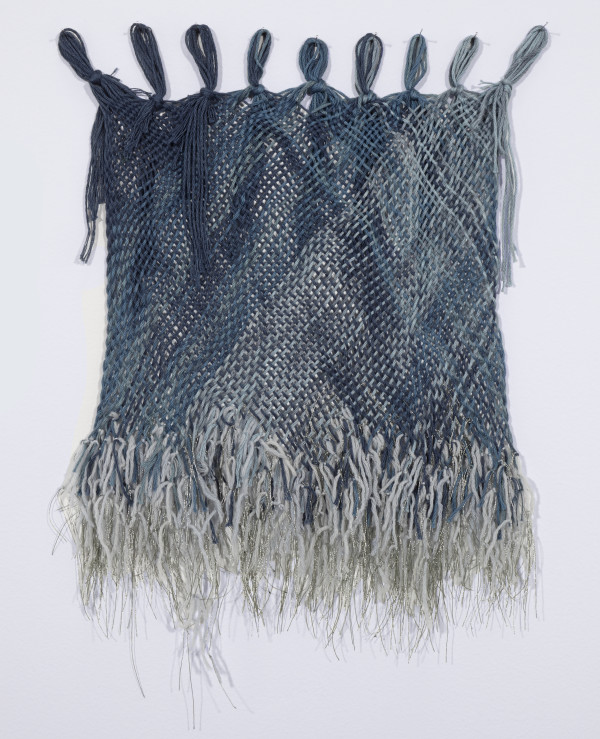
Blue Ends
weaving hand-woven textile
20 x 12 x 0.5 in
-
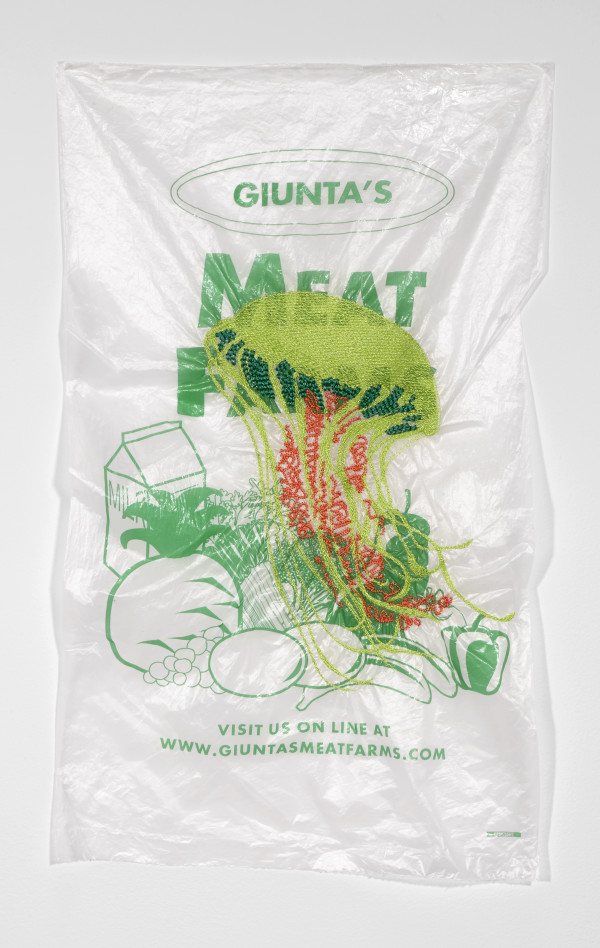
Jellyfish 047
Embroidery
-
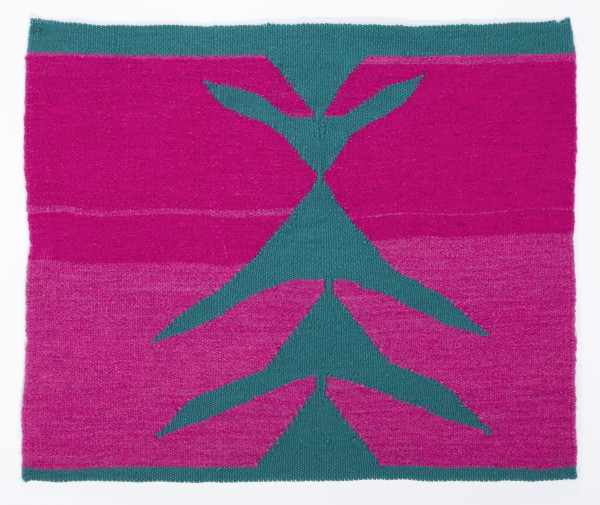
Neon Series III
Tapestry, wool
28 x 24 in