
This site-specific installation for the Break the Law exhibition responds to the direct call to "expose and respond to unjust interpretations of laws." It reimagines the legacy of John Joseph ("Johnny Joe"), a formerly enslaved 19th-century Afro-Caribbean from Martinique who established the legendary Johnny Joe’s Oyster House at the foot of the Brooklyn Bridge in what is now Prospect St in DUMBO. Through speculative history, this work examines how the oppressive reality of 19th-century legislation—such as the 1821 New York State Constitutional Property Requirement and occupational bans—legally obstructed Black entrepreneurs' rights to the pursuit of happiness.
In this subversive alternate history, Johnny Joe defies systemic restrictions. Thriving immensely, he undercuts competitors and expands his oyster house into luxury goods, launching his own signature line of champagne. This triumphant, rule-breaking lineage extends into an imagined future, culminating in the vibrant Akoudré Martinician Ti’punch brand. However, this liberatory vision of generational wealth is abruptly shattered by a weaponized lease agreement. This narrative is grounded in actual historical research from Brooklyn, New York’s land records and conveyances—specifically, a February 8, 1834, property lease between lessor Magdalen Stewart and lessee John Joseph. Leasing a dwelling and lot on Prospect Street and Stewart Alley for eleven years, he entered into a contract that was inherently predatory; it weaponized rental terms and immense maintenance responsibilities against him, ensuring that the mandatory "repairs of these buildings" would swallow his earnings and successfully dismantle his commercial ecosystem. It leaves us to ask: If the law had been designed to protect his enterprise rather than prey upon it, what other legacy business would exist today?
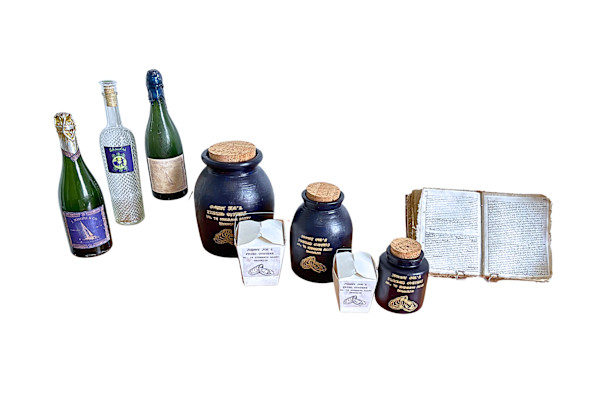
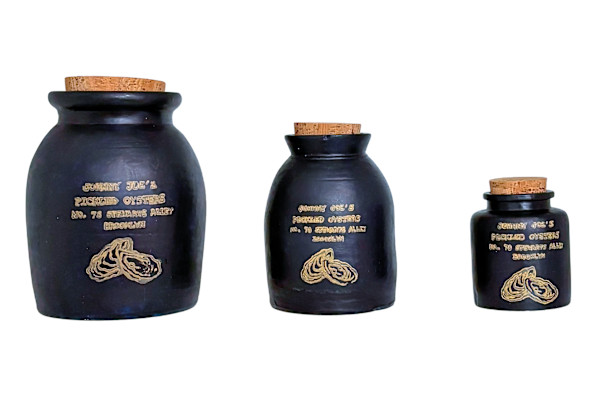
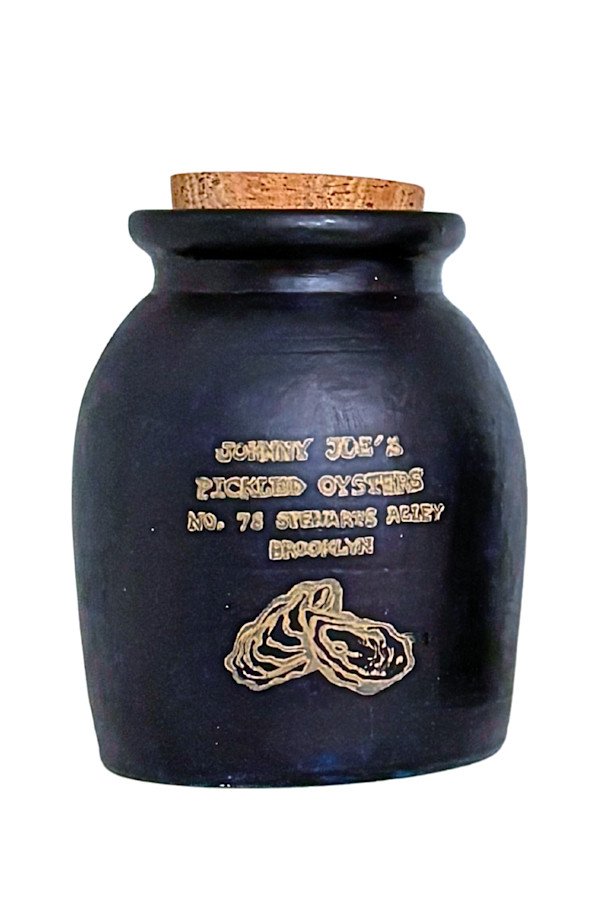
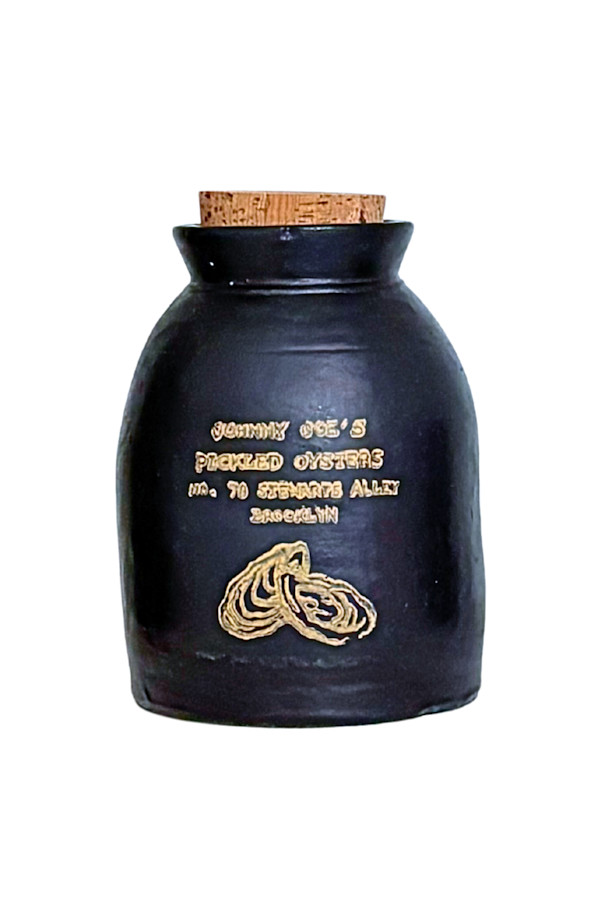
The installation spans three pedestals chronicling the rise and forced collapse of Johnny Joe’s. The first section confronts viewers with the catalyst of his ruin: a "Deed of Surrender" ledger detailing the fatal transaction. The display transitions into artifacts of his commercial evolution, featuring small, medium, and large pickled-oyster jars—finished in deep indigo—alongside vintage fried-oyster pails. His sovereign legacy is materialized through three vessels: a wax-sealed 1834 champagne relic, a gilded 1890s luxury champagne, and a contemporary bottle of Akoudré white rum.
Anchoring the pedestals is a floor-level diorama of debris. Rough Brooklyn bluestone, vintage masonry bricks, shattered indigo ceramics, and weathered shells symbolize the specific legal injuries he endured, forming the beautiful, tragic rubble of a brother "shucked" of his potential.
In this subversive alternate history, Johnny Joe defies systemic restrictions. Thriving immensely, he undercuts competitors and expands his oyster house into luxury goods, launching his own signature line of champagne. This triumphant, rule-breaking lineage extends into an imagined future, culminating in the vibrant Akoudré Martinician Ti’punch brand. However, this liberatory vision of generational wealth is abruptly shattered by a weaponized lease agreement. This narrative is grounded in actual historical research from Brooklyn, New York’s land records and conveyances—specifically, a February 8, 1834, property lease between lessor Magdalen Stewart and lessee John Joseph. Leasing a dwelling and lot on Prospect Street and Stewart Alley for eleven years, he entered into a contract that was inherently predatory; it weaponized rental terms and immense maintenance responsibilities against him, ensuring that the mandatory "repairs of these buildings" would swallow his earnings and successfully dismantle his commercial ecosystem. It leaves us to ask: If the law had been designed to protect his enterprise rather than prey upon it, what other legacy business would exist today?
The installation spans three pedestals chronicling the rise and forced collapse of Johnny Joe’s. The first section confronts viewers with the catalyst of his ruin: a "Deed of Surrender" ledger detailing the fatal transaction. The display transitions into artifacts of his commercial evolution, featuring small, medium, and large pickled-oyster jars—finished in deep indigo—alongside vintage fried-oyster pails. His sovereign legacy is materialized through three vessels: a wax-sealed 1834 champagne relic, a gilded 1890s luxury champagne, and a contemporary bottle of Akoudré white rum.
Anchoring the pedestals is a floor-level diorama of debris. Rough Brooklyn bluestone, vintage masonry bricks, shattered indigo ceramics, and weathered shells symbolize the specific legal injuries he endured, forming the beautiful, tragic rubble of a brother "shucked" of his potential.