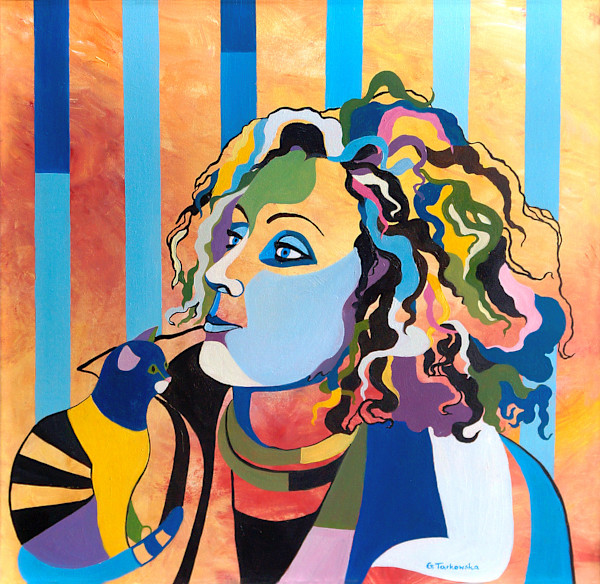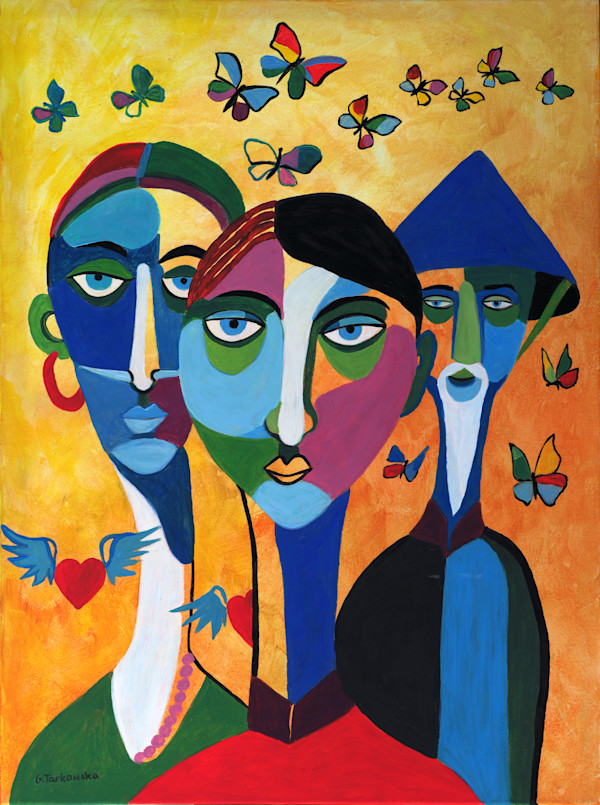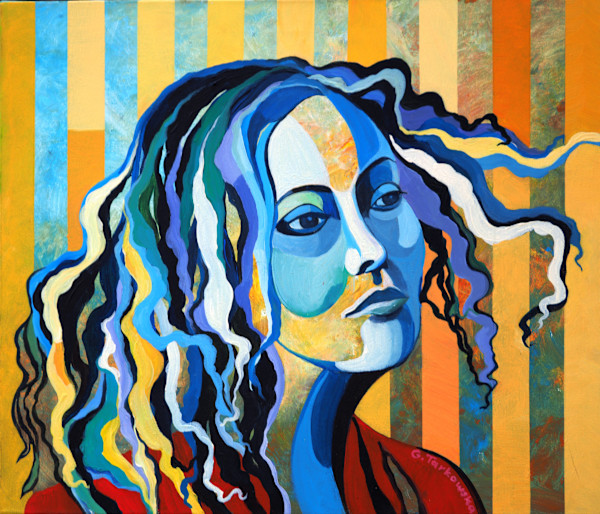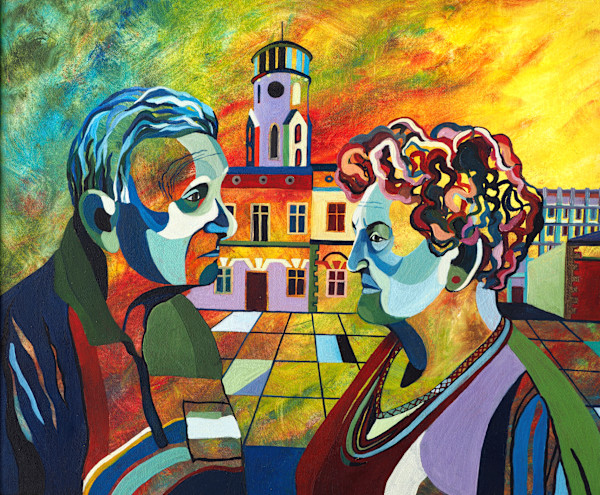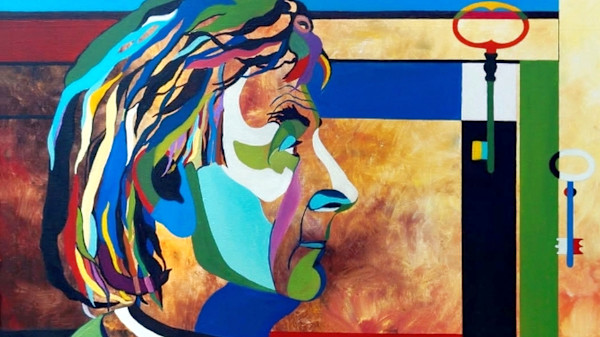
Human Presence explores the ways a person becomes visible through gaze, relationship, memory, and the act of portrayal. Faces dominate these works, yet they rarely offer simple access to those they represent. Color, gesture, proximity, and direction of gaze suggest connections while leaving individual identities open and incomplete.
The sequence begins at the boundary between human and animal, where two presences share the same pictorial space without either becoming secondary. From there, attention moves toward people together and apart: a group united by expectancy, an individual asserting a sense of belonging, and finally the artist herself turning observation inward. Portraiture becomes less a record of appearance than an encounter between what can be seen and what remains uncertain.
Personal memory enters more directly through the image of the artist's parents, where relationship and remembered place become inseparable from representation. Yet even intimacy does not necessarily make another person fully knowable. In the final work, a familiar face is fragmented and reconfigured, suggesting that every portrait may contain more than one possible version of its subject.
These works do not attempt to explain the people they portray. Instead, they remain attentive to presence itself — to the distance between looking and knowing, between recognition and interpretation. A face may invite us closer, but it never reveals everything.