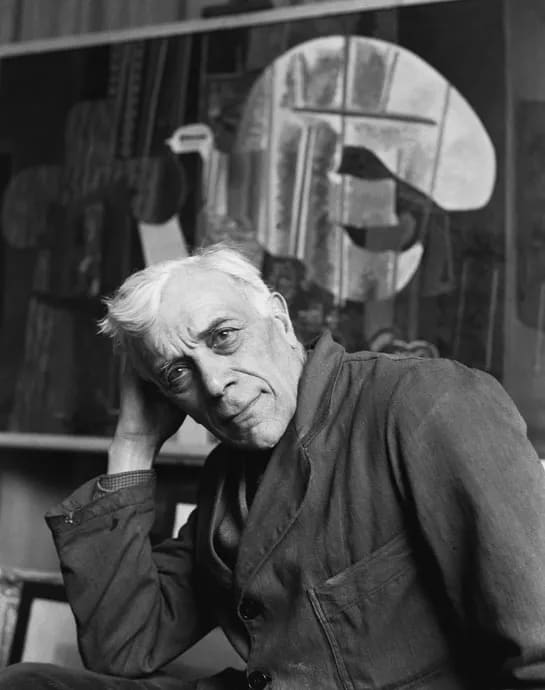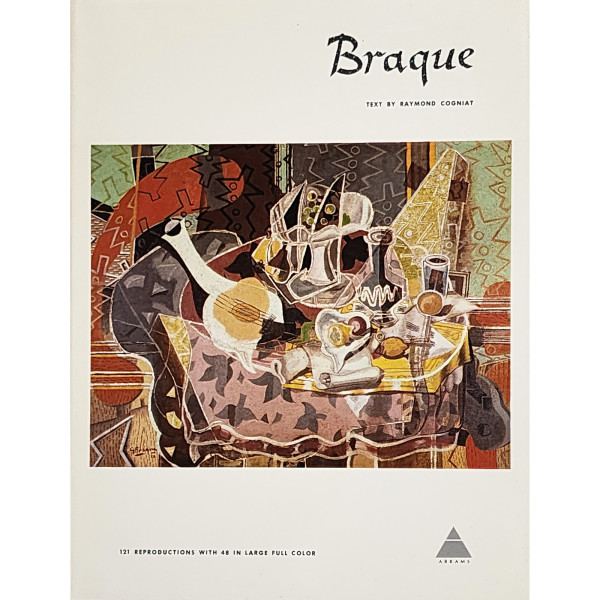
Braque started his art career using an Impressionistic painting style. Circa 1905, he transitioned into a Fauvist style after viewing works exhibited by the Fauves, a group that included such notable artists as Henri Matisse and André Derain. The Fauves' style incorporated bold colors and loose-form structures to emulate deep emotions. Braque's first solo show took place in 1908 at Daniel-Henry Kahnweiler's gallery. From 1909 to 1914, Braque and fellow artist Pablo Picasso collaborated to develop Cubism as well as to incorporate collage elements and papier collé (pasted paper) into their pieces.
Braque's style changed after World War I, when his art became less structured and planned. A successful exhibition in 1922 at the Salon d'Automne in Paris garnered him much acclaim. A few years later, renowned dancer and choreographer Sergei Diaghilev asked Braque to design decor for two of his ballets at the Ballets Russes. The end of the 1920s saw another style change as Braque began painting more realistic interpretations of nature, though he never strayed far from Cubism, as there were always aspects of it in his works. Braque started to engrave plaster in 1931, and his first significant show took place two years later at the Kunsthalle Basel. He gained international fame, winning first prize in 1937 at the Carnegie International in Pittsburgh.