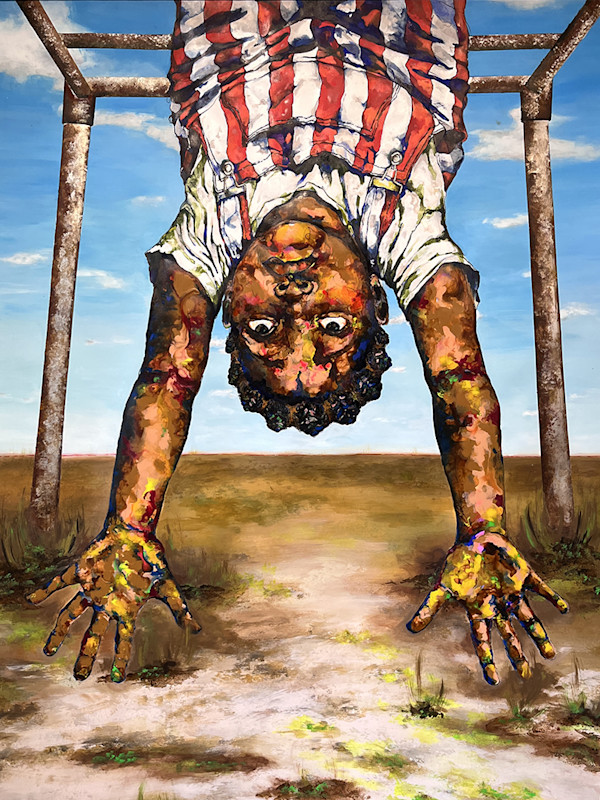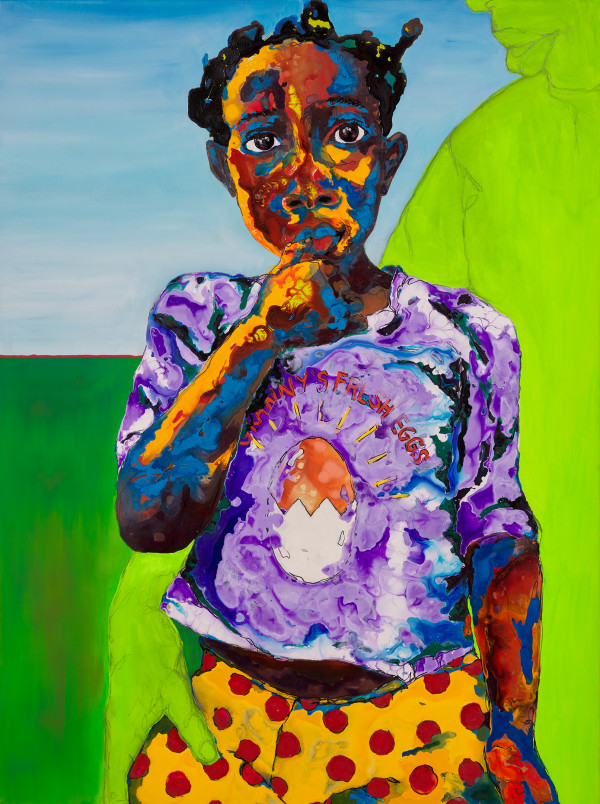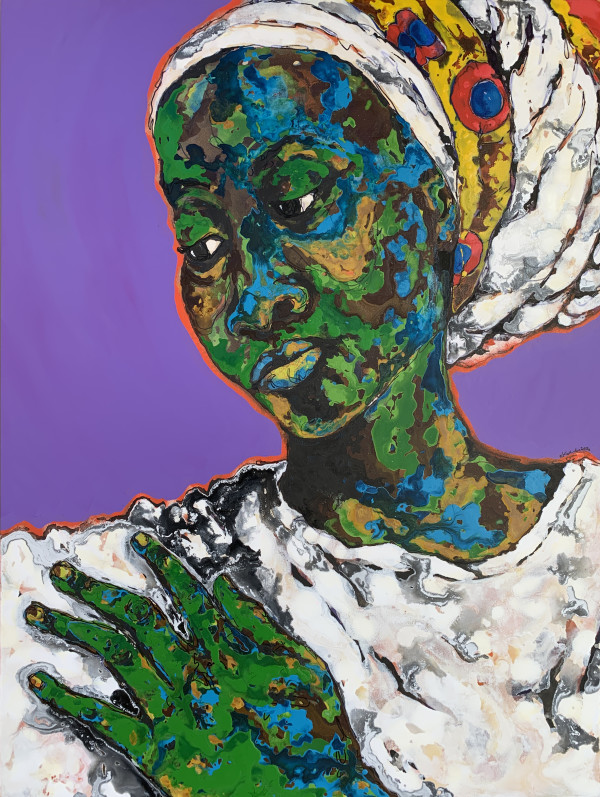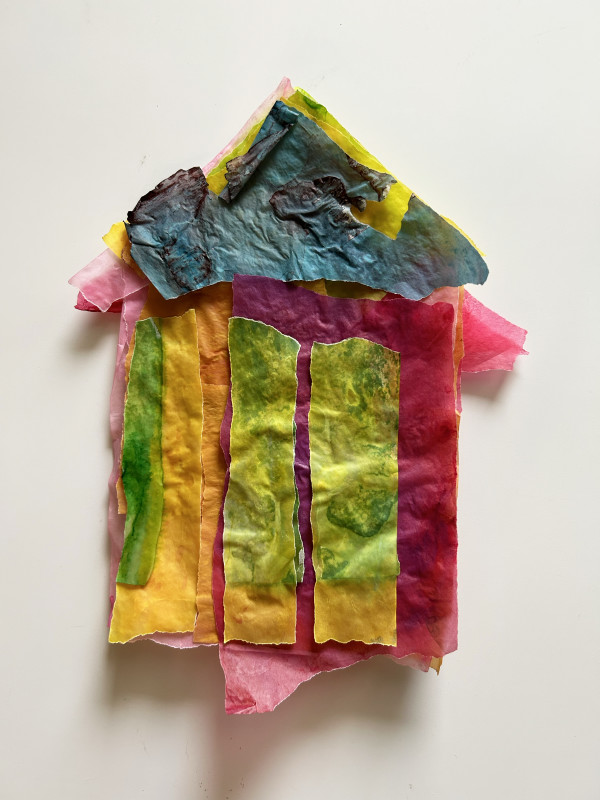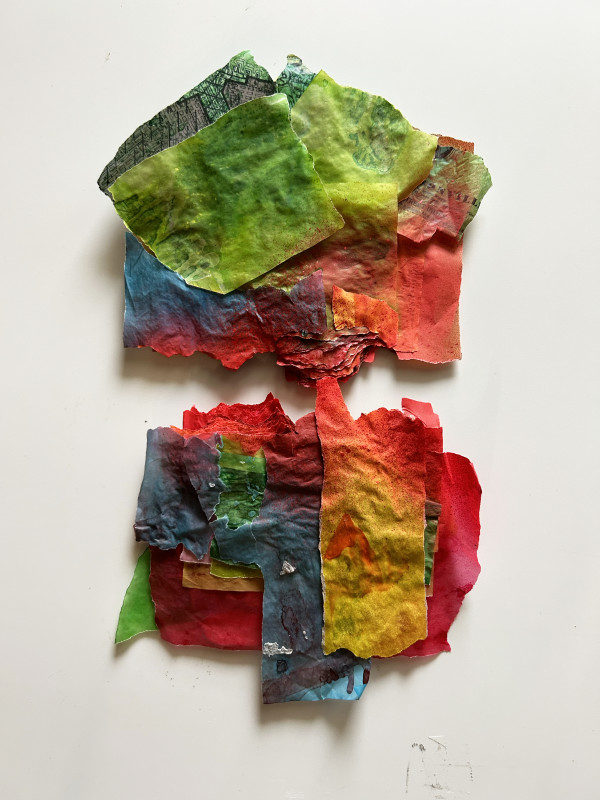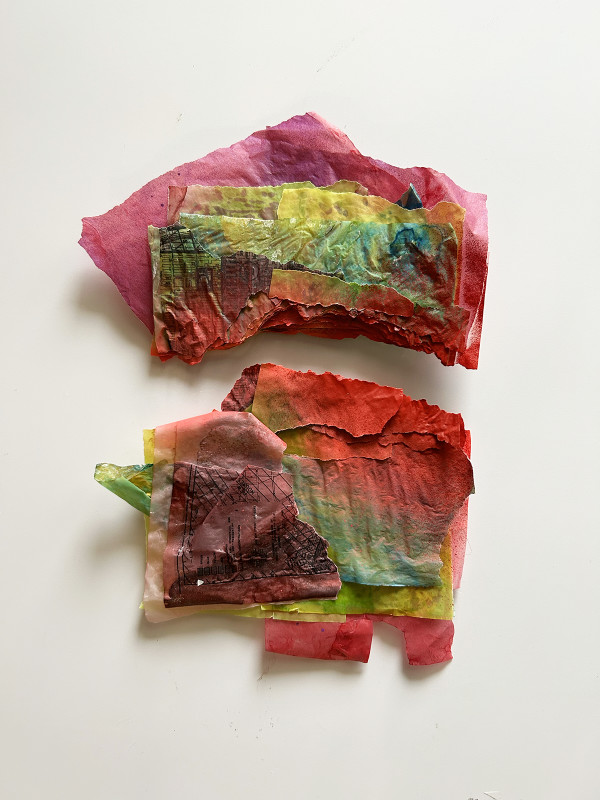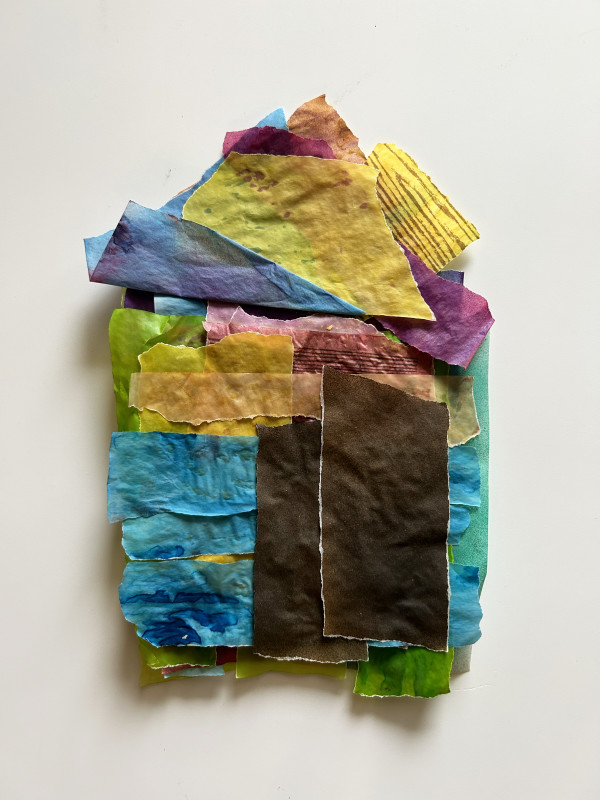
MLK Blvd. is an homage, a confrontation, and an invitation. It calls viewers not only to witness, but to locate themselves within the complex architecture of exclusion, memory, and possibility. This body of work interrogates the legacy of redlining and structural inequity through a series of mixed-media collages that depict homes in historically Black neighborhoods—homes that serve as visual records of both systemic abandonment and determined restoration. These structures are layered with the histories of those who built, occupied, and were displaced from them—monuments to the tension between loss and resilience.
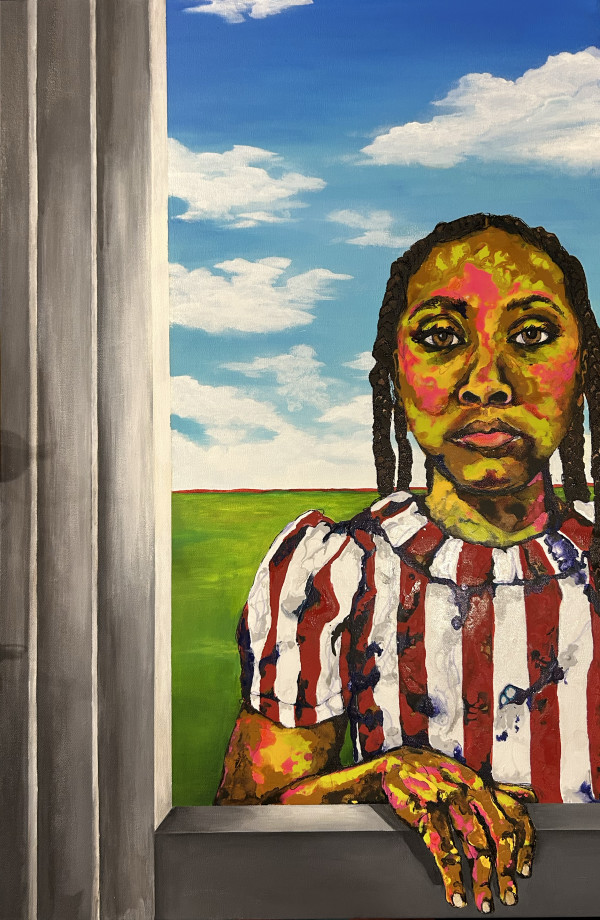
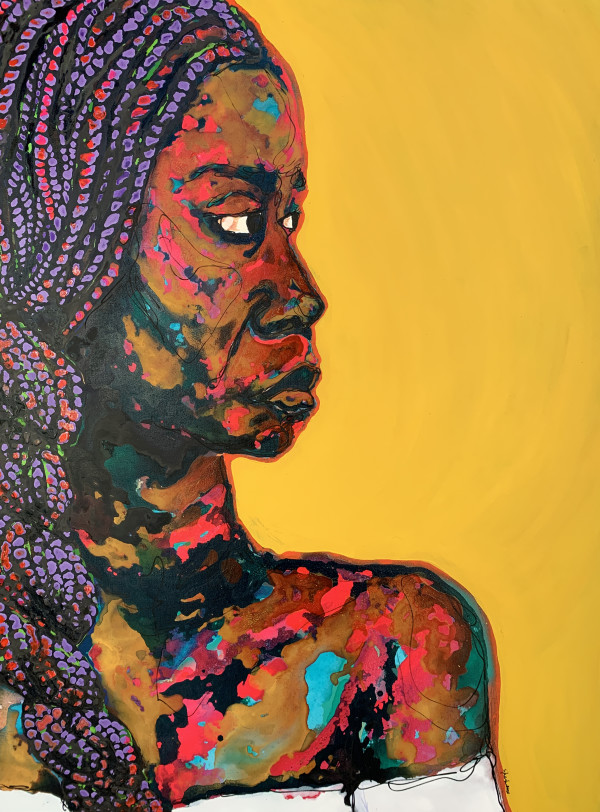
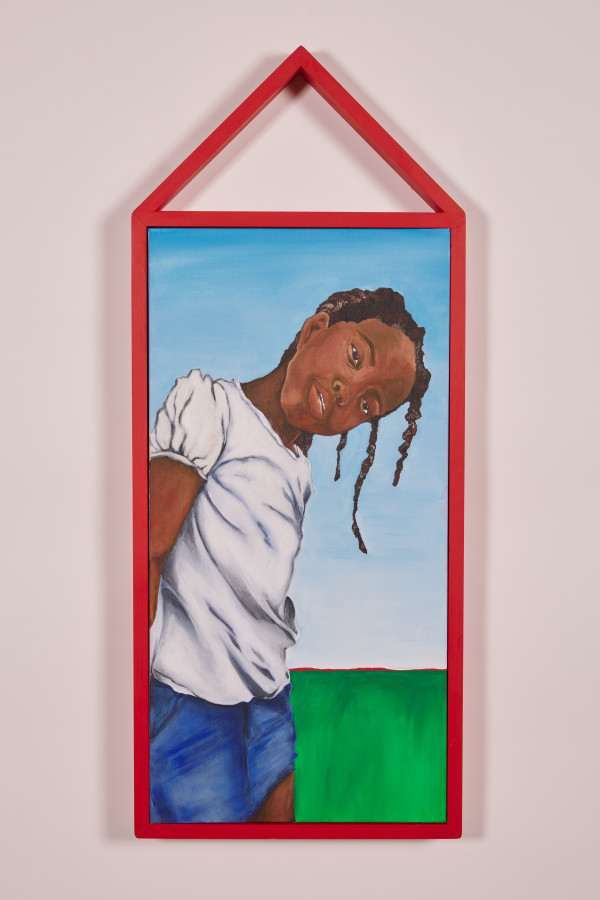
Within this narrative, Icky. emerges as a key figure—a character introduced in my Pikin. series exploring Black girlhood. She bridges both bodies of work. Her name comes from a chronic skin condition resembling eczema, caused by the environmental neglect common in poverty-ridden neighborhoods. In one portrait, she stands just outside a home, her hand resting inside its open window—caught in the in-between space of access and denial, belonging and exclusion.
Within the framework of JUST Space, Icky. inhabits the fragile threshold between Gracious Space and Brave Space. Her image captures what Dr. Rudy Jamison describes as “the arrest”—the moment the stranger appears. This work challenges viewers to engage that moment not passively, but actively: Will you invite the stranger? Will you acknowledge the discomfort required to foster equity? Will you risk vulnerability in service of transformation?
MLK Blvd. is also inspired by Screams Echo, a haunting narrative by Bobbie O’Connor that explores the generational trauma caused by systemic violence and economic exclusion. In this story, the fictional lynching of Charlie, the economic strangulation of Daddy, and the real-life murder of Trayvon Martin echo across time. But it is the women left behind—Granny, and her granddaughters Rita, Frances, and Simone—who carry the weight. Their stories reflect the physical and psychological toll of losing Black men to systems designed to limit access and eliminate possibility. These women persist in the very homes and neighborhoods left behind, embodying a legacy of grief, care, and unyielding endurance.
Together, the mixed media collages of MLK Blvd. and the presence of Icky. illuminate the spatial and emotional consequences of structural inequity—while also honoring the resilience of those who remain. These works do not offer resolution. Instead, they pose a challenge: to see what has long been obscured, to interrogate your role in the narrative, and to choose—if only for a moment—to invite the stranger in.