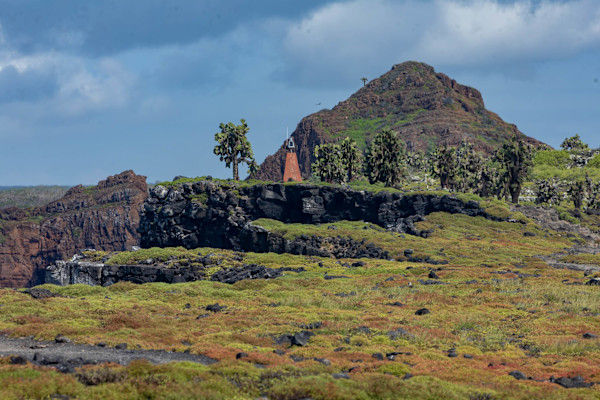
South Plaza Island is one of the smallest yet most densely packed and ecologically fascinating islands in the Galápagos archipelago, sitting just off the eastern coast of Santa Cruz Island and covering a mere fraction of a square kilometer in area. Despite its diminutive size, it offers one of the most visually striking and wildlife-rich landscapes in the entire island chain, making it a favorite destination for naturalists and visitors alike. The island was formed by geological uplift rather than volcanic emergence, giving it a distinctive tilted topography that slopes gently from a low, flat shoreline on its northern side to dramatic, sheer cliffs on its southern edge that drop precipitously into the crashing Pacific Ocean below, where swallow-tailed gulls, red-billed tropicbirds, Nazca boobies, and frigatebirds wheel and soar on the updrafts. The interior of the island is famously carpeted in a vivid tapestry of succulent sesuvium plants that shift dramatically in color with the seasons — a lush, brilliant red during the dry season and a softer green during the wet season — interspersed with the iconic prickly pear cacti that grow to impressive heights here and serve as a vital food source for the island's wildlife. South Plaza hosts one of the largest colonies of land iguanas in the Galápagos, and the curious phenomenon of hybrid iguanas — the offspring of land iguanas and marine iguanas — has been observed here, a testament to the island's unique ecological dynamics. Sea lions lounge in boisterous colonies along the rocky shoreline, their pups playing in the shallow turquoise waters, while yellow warblers and small ground finches flit among the cacti, completing a portrait of an island that packs an extraordinary abundance of life and natural beauty into a remarkably compact and unforgettable setting.