
Rather than working with traditional geometric designed squares, Judith developed a technique of strip piecing. She selects her solid colored cottons, rotary cuts them into specifically chosen widths, sews them together, and cuts them again into fine, uniform strips. She orders these strips on her design cloth, a mapped muslin. Though it may appear that the piece is not actually quilted, the completed strips are individually sewn through batting to the back as she goes; a technique known as flip and sew quilting.
Additional Artworks
From San Jose Museum of Quilts & Textiles
-
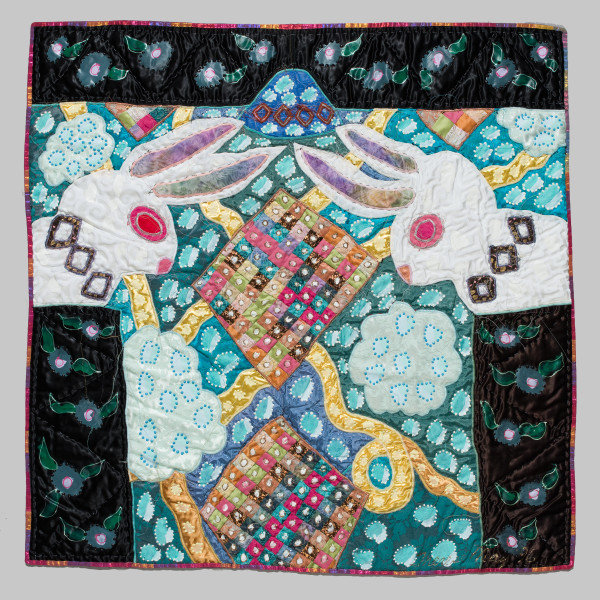
Therese May
Kimono Quilt, 1996
Synthetic fabrics, acrylic and puff paint
47.5 x 47 in (120.65 x 119.38 cm)
-
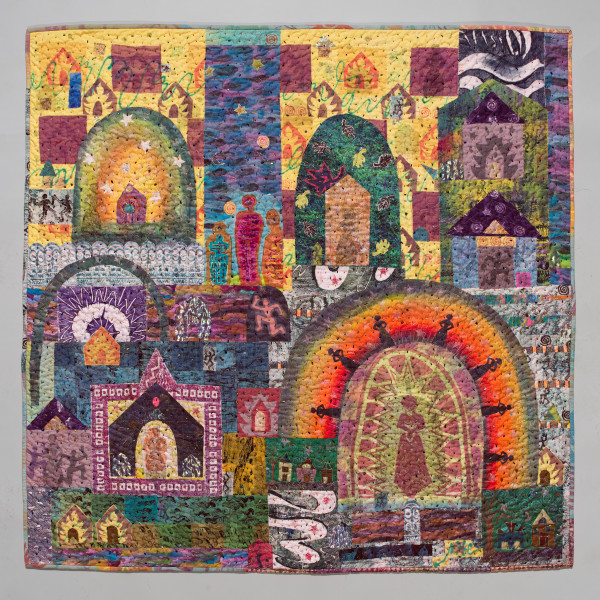
Natasha Kempers-Cullen
“Revelations” Saints and Sinners Quilt, 1996
Tule, cotton, metalic, beading, variegated metallic thread
48 x 48 in (121.92 x 121.92 cm)
-
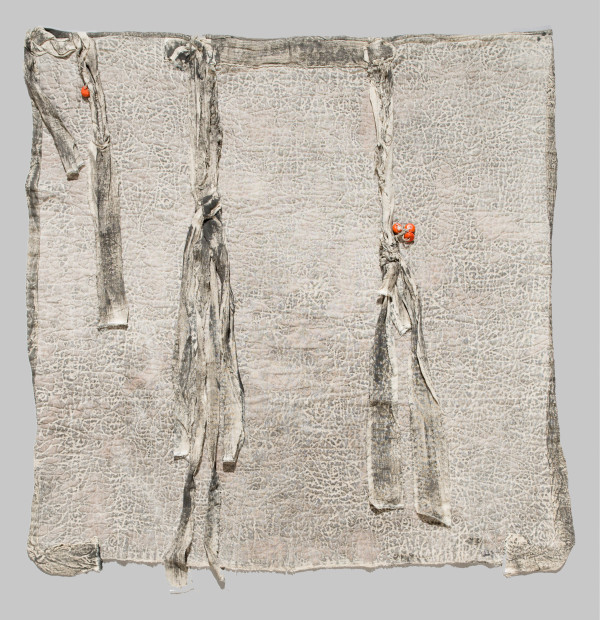
Suzan Friedland
Tibet Quilt, 1996
Linen, beads
48 x 48 in (121.92 x 121.92 cm)
-
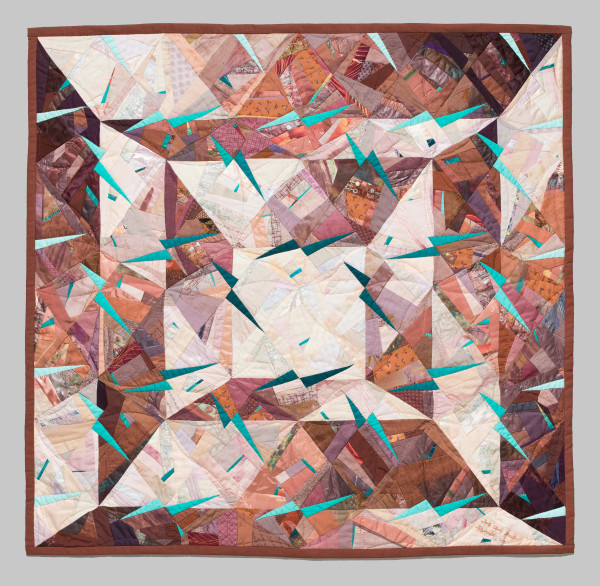
Dorle Stern-Straeter
Labyrinth Quilt, 1995
Various fabrics, satin, cotton
47 x 48 in (119.38 x 121.92 cm)
-
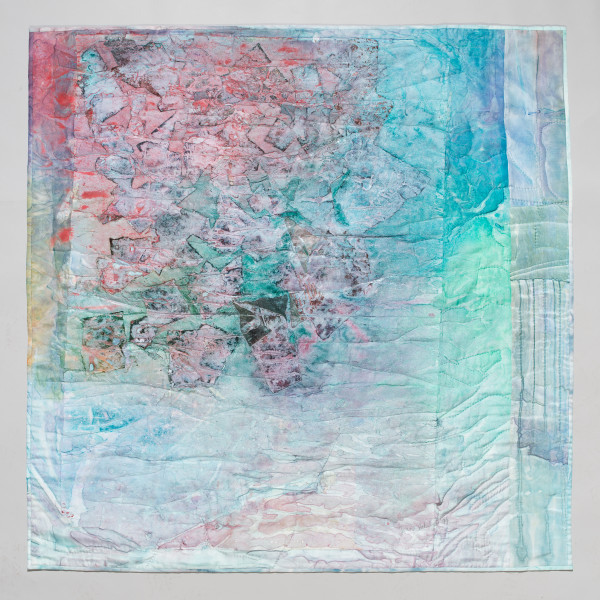
Joan Schulze
Floating Quilt, 1994
Synthetic blend, paper quilted
49 x 48 in (124.46 x 121.92 cm)
-
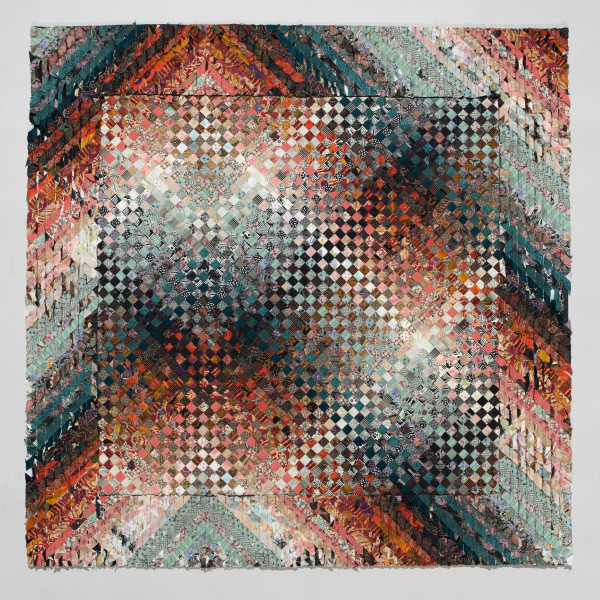
Nancy Herman
Moving On Quilt, 1994
Cotton
48.5 x 48.5 in (123.19 x 123.19 cm)
-
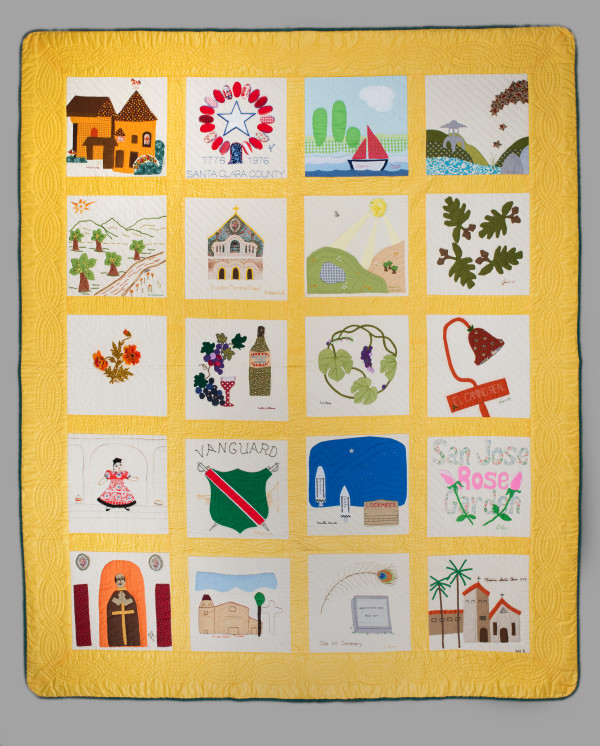
Rosemary Eichorn
Santa Clara County Centennial Quilt, 1976
Cotton, cotton polyester
104.5 x 86.25 in (265.43 x 219.08 cm)
-
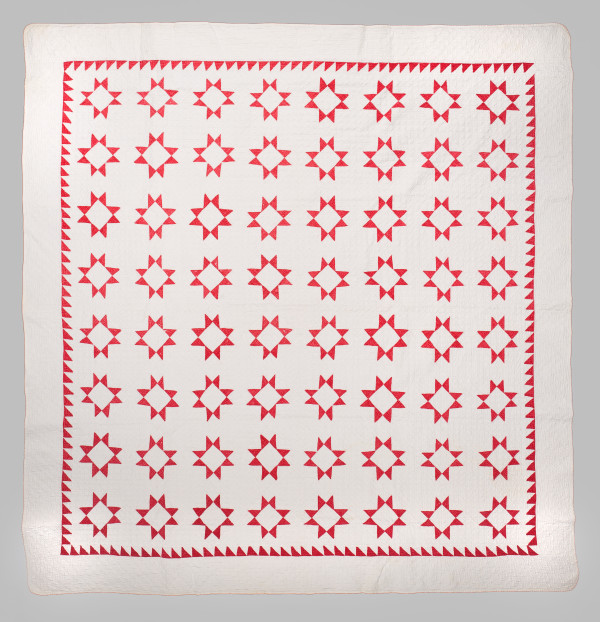
Unknown Artist
Red and White Star Quilt, c. 1940
Cotton
69.5 x 67.5 in (176.53 x 171.45 cm)