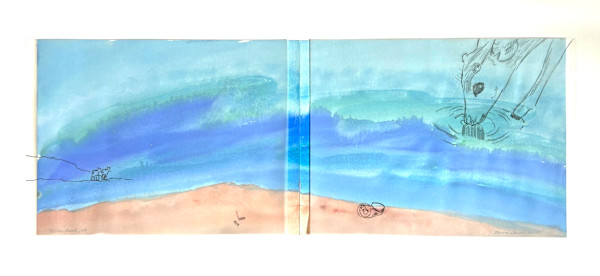
A study of the architecture of rivers and mountains, and the migratory practices of birds, inspires Meyers’s choreography, “allowing these environments to influence movement discovery.”
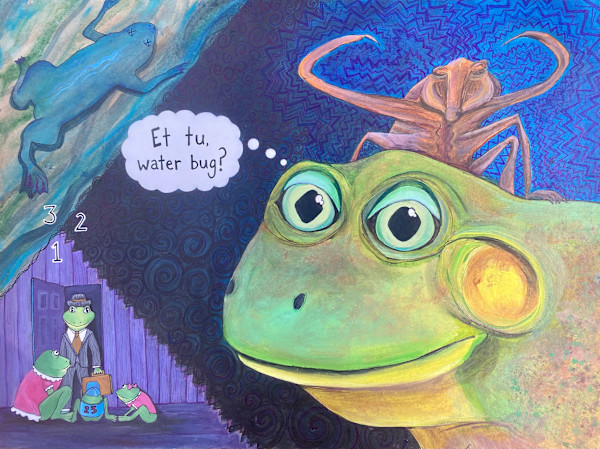
While doing a close read of Pilgrim at Tinker Creek, Meyers begins channeling movement during a “frantic drawing” in a notebook, connecting a variety of themes present throughout. “At the end of the book, I looked at this thing, this mass of lines like red threads… and came up with six different modalities to explore improvisational movement scores and codified phrases: 1. the hands (texture), 2. the water (intricacy), 3. the mountaintop (space, beauty), 4. night (time), 5. migration (freedom), and 6. shadows (nibbling, death). I created a list of quotations mentioning these ideas in the book, and used them when generating movements.”
“There are many things about being alive that defy all sense, and yet they just are. Looking to nature as Dillard does is a beautiful way to remind us of this… I love this idea of going “back to the creek,” or back to the place that helps us understand why things are the way they are… as many times as is necessary, that returning to ourselves is not a journey to a destination but a recurring ritual.”