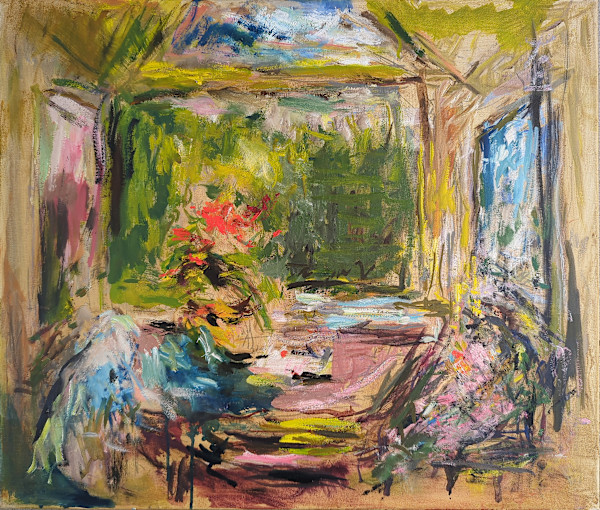
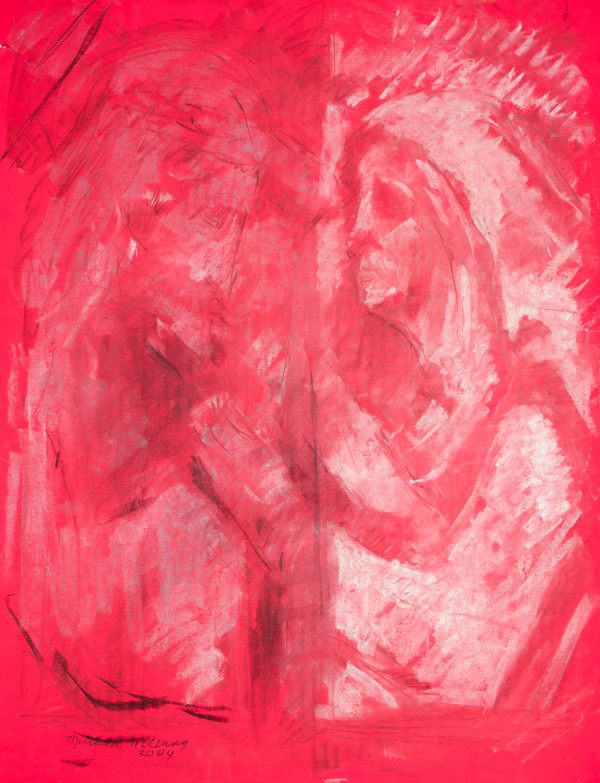
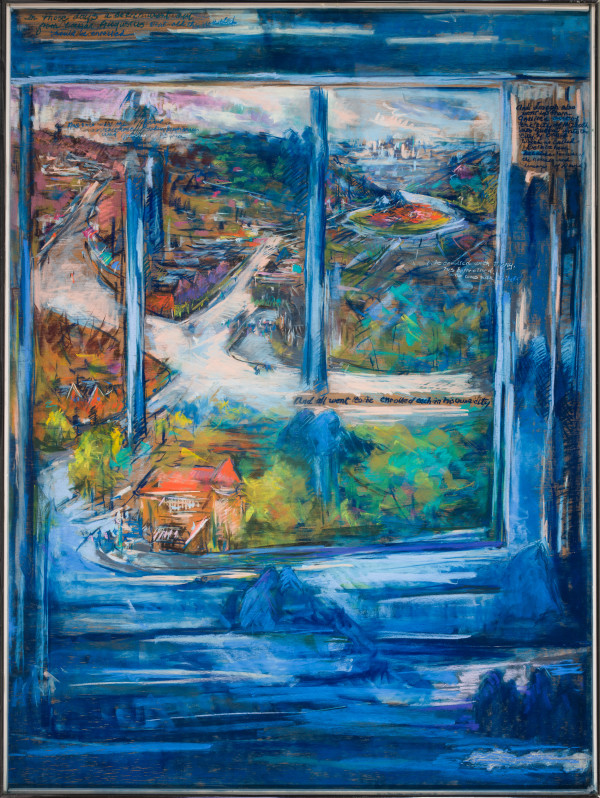
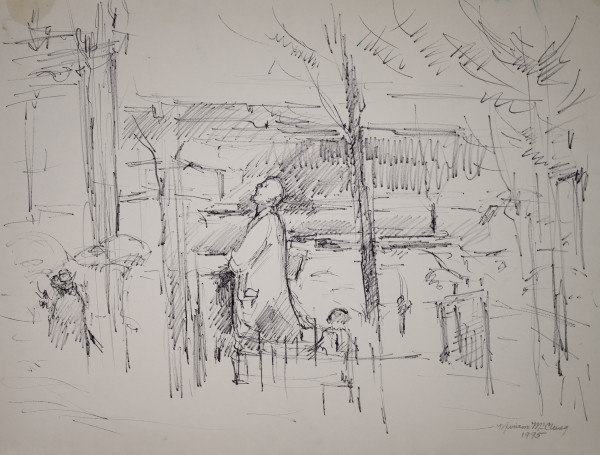
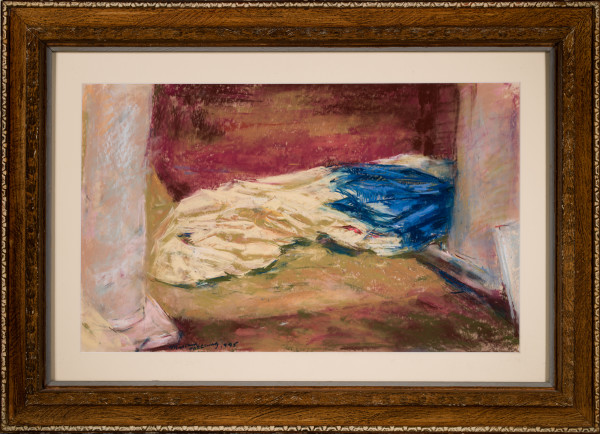
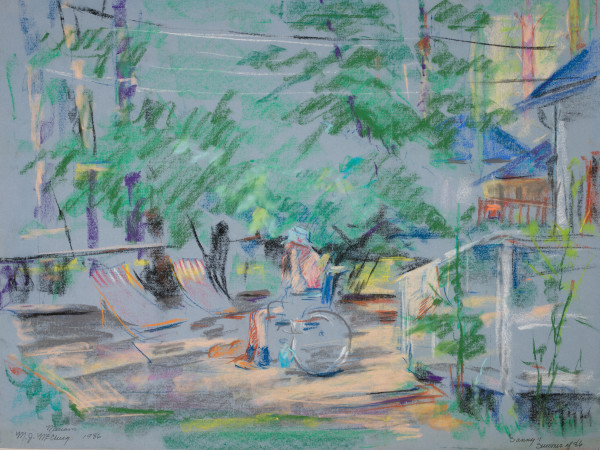
"The Prodigal" comes out of McClung's trip to the Hermitage Museum in St. Petersburg, Russia, where she saw Rembrandt's "The Return of the Prodigal Son." Rather than reproduce the parable directly, she paints the experience of encountering it: the green-walled gallery, the Rembrandt glowing on the wall with the ragged son kneeling before his richly robed father, and the crowd of visitors gathered close around the work.
McClung long admired Rembrandt's storytelling, and this painting was, in her words, the one that "hit the highest note in art and the Bible." She found the whole meaning of the parable in two small details, writing that "the rendering of the son's feet and the Father's hands told me the whole story of the Father's forgiveness."
ARTIST'S NOTES
I always admired Rembrandt and his beautiful way of telling any story in amazing paint. The Prodigal, for me, hit the highest note in art and the Bible.
Through a family member, I had the opportunity to go on a cruise to Russia and the highlight was the Hermitage in St Petersburg.
There were so many incredible rooms of gold, fine cloth, and paintings on the tour. During the tour there was a slowdown and one could see a room beyond of incredible green with the painting of Rembrandt's Prodigal. You could see it yards away for it read beautifully. On getting closer there was a crowd around the work and of the figure kneeling down before his father impacted me. He was so humble and poor. The Father in his fine robes was welcoming him home.
The brother stood by in a shadow looking angrily on the scene. The rendering of the son’s feet and the Fathers hands told me the whole story of the Father's forgiveness.
The Father told the brother "Thou art ever with me and all I have is thine. It was meant that we should make merry and be glad for this; thy brother was dead, and is alive again and was lost and now is found."
When times get tough and sad I think of Rembrandt's painting and what our heavenly Father is like.