
In 1917 Giacometti came to know the Dadaists Tristan Tzara, Marcel Janco, Sophie Taeuber-Arp, and Hugo Ball.[2] He took part in the 8th Dada-Soirée in the Zurich merchants' hall and became a member of the group of artists "Das Neue Leben" (1918–1920). Known for his decorations in holy arts and his floral subjects, in 1919 Giacometti was initiated to the Swiss Freemasonry at Zürich.[4]
With the realization of his design for the entrance hall (now known as Giacometti-Halle) of the police station at Waisenhaus Zürich between 1923 and 1925, Giacometti accomplished one of his most important works. The great recognition he received for this work paved the way for him to further important commissions.
In 1929 he created the colourful glass windows in the east wall of the Protestant church in Frauenfeld, in 1933 the choral windows of Grossmünster in Zurich, in 1937 the choral windows of the village church of Adelboden, and in 1945 a stained-glass window of Fraumünster.
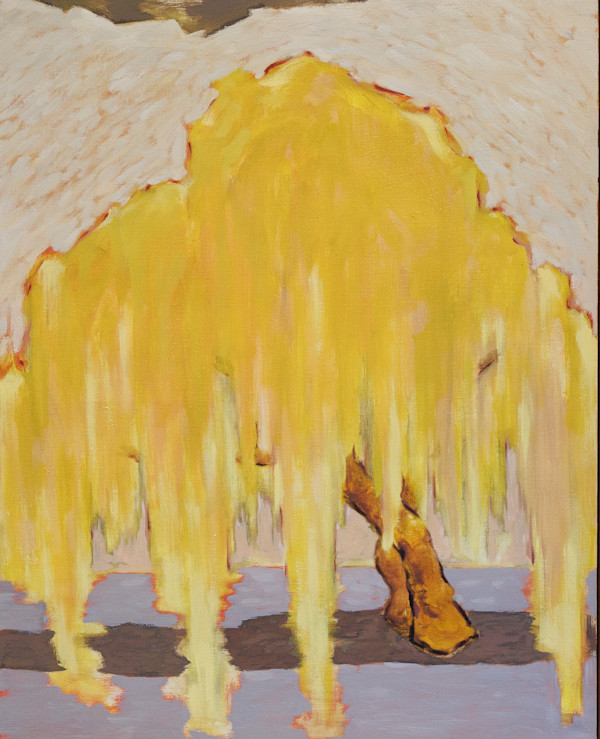
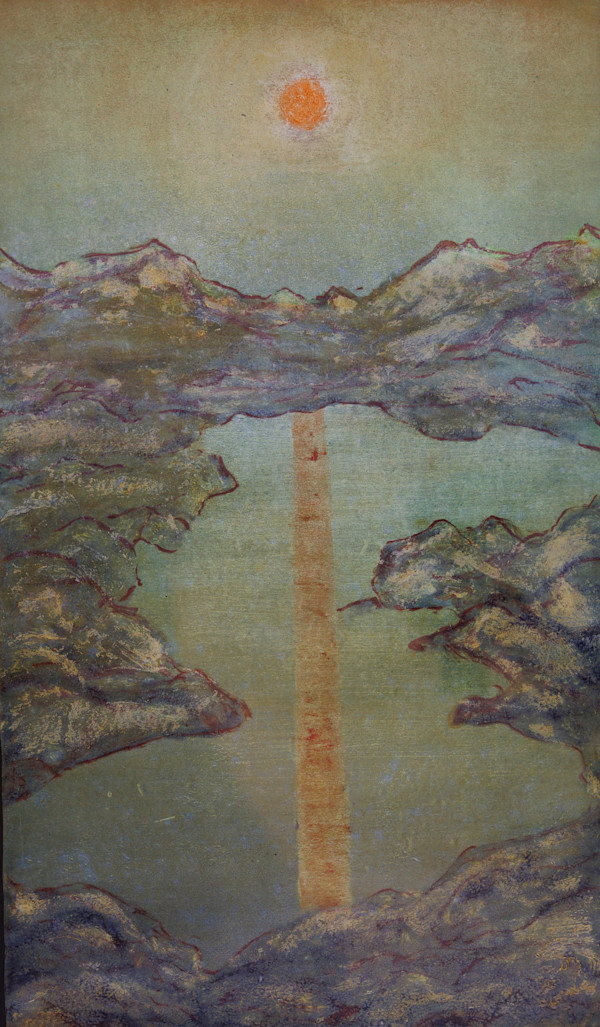
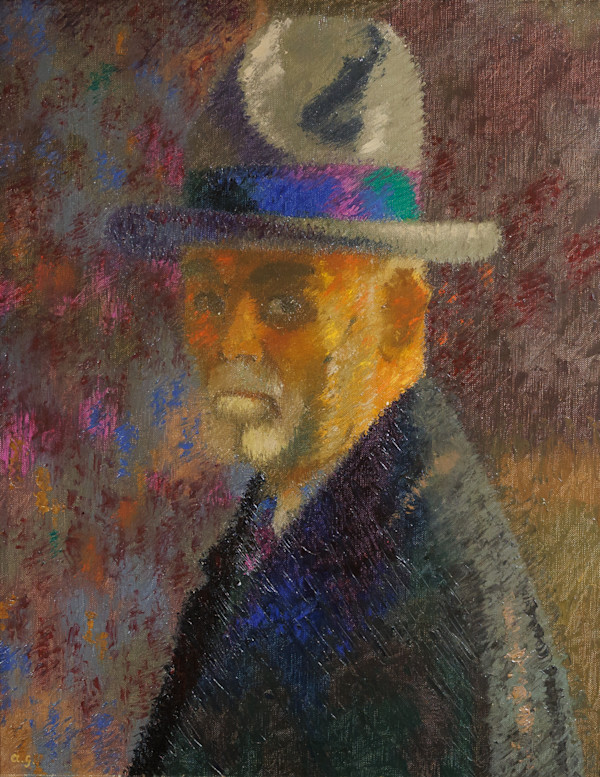
He was one of the first painters of the 20th century to take steps into non-representational painting; his abstract paintings reflect his exhaustive study of the characteristics and rules of colour. His epitaph reads Qui riposa il maestro dei colori, "here lies the master of colour."
Giacometti influenced the German painter August Babberger greatly in both his style and his choice of subjects.
