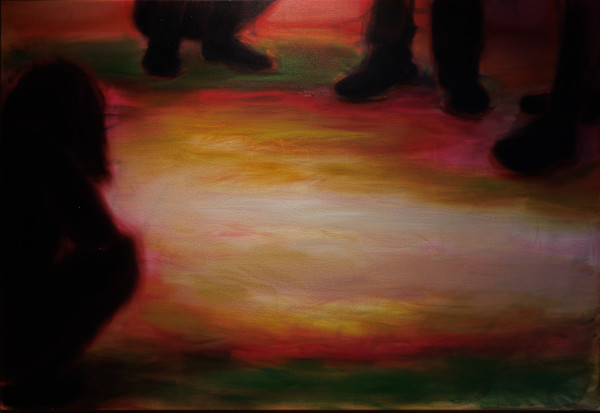
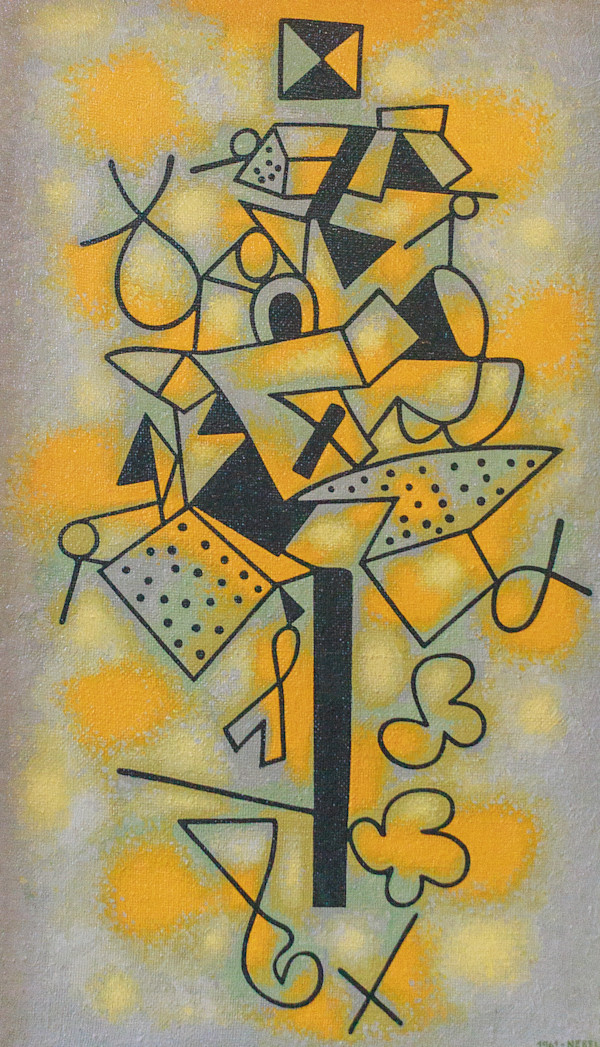
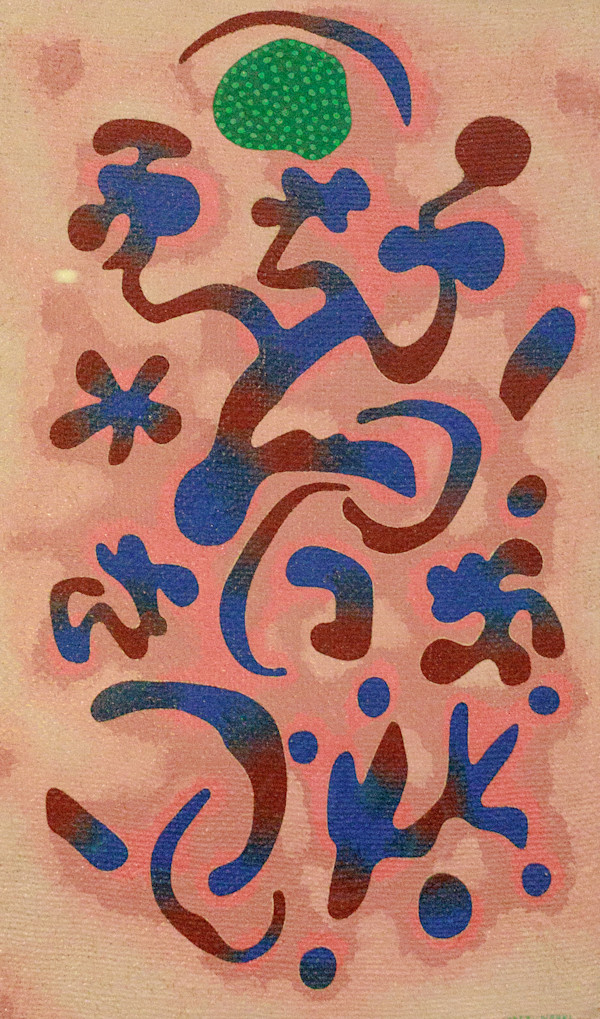
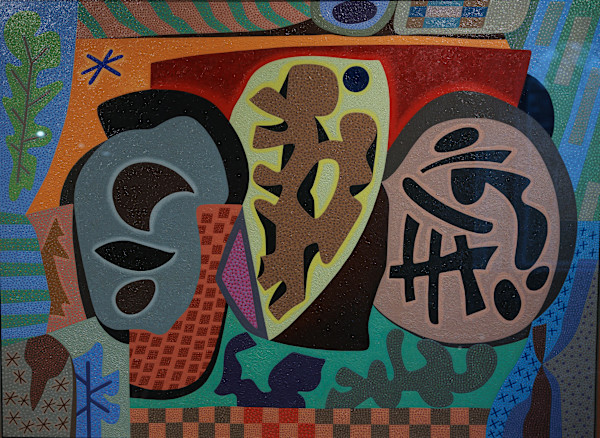
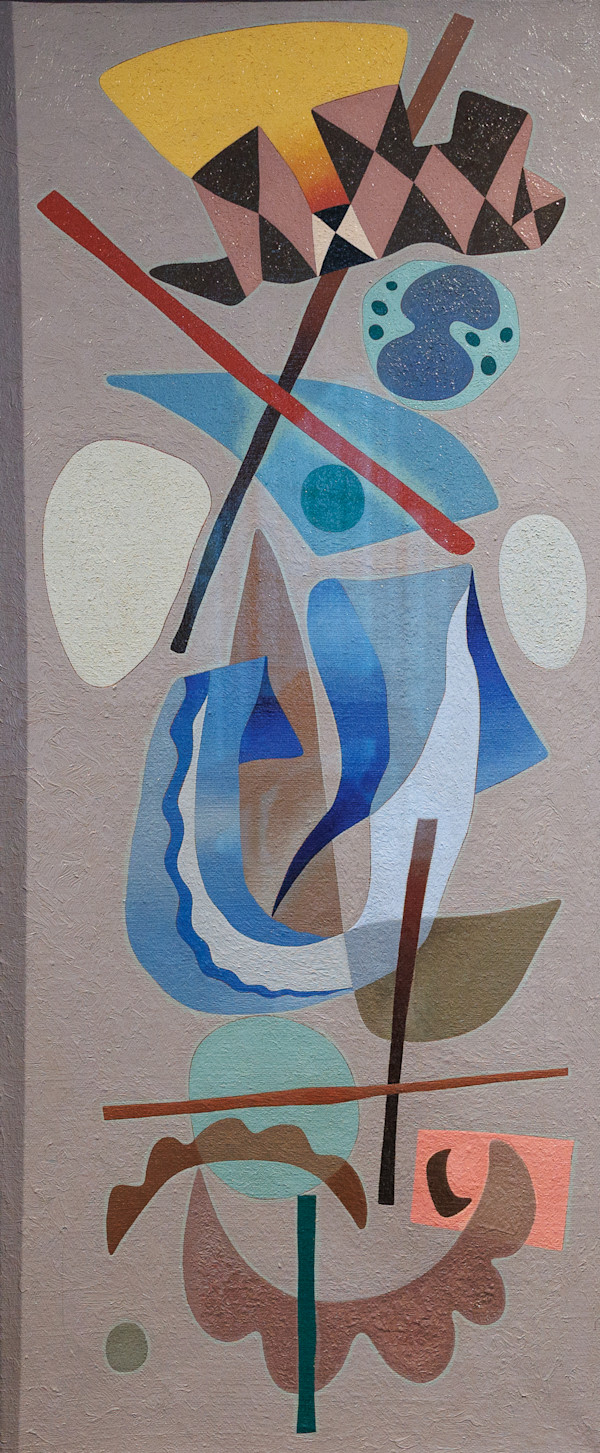
The Game Can Begin (1955) marks a defining moment in Otto Nebel’s artistic development. Created after his stay in Italy, the painting reflects nearly ten years of exploration into the nature of creation itself. Nebel saw this work as a threshold piece, one that opened his art to an entirely new world of form and meaning. Across a broad horizontal canvas, vivid greens, reds, ochers, and blue grays unfold in rhythmic balance. A bright green band grounds the scene, while a broad horizontal field of red, ocher, and blue creates the central focus. Yellow red shines at the heart of the composition, linking light and movement across the surface. For Nebel, painting was not only visual but spiritual work. He described creation as a unifying act in which memory, intuition, and imagination merge. The Game Can Begin embodies this vision, capturing the tension, renewal, and harmony that define the artist’s mature voice.
Detailed description by Otto Nebel (September 29, 1955):
Completed in Bern on September 29, 1955, after a stay in Italy.
A smaller preliminary sheet also exists, which served as the basic sketch for a larger series of works created before the journey to Italy. The final painting developed over a period of about ten years.
This work is a key painting in a significant and pioneering sense. It opens the vision into a world of forms that had scarcely appeared in my work until then. The original sketch reached into deep zones of lived experience that could never be fully expressed by artistic means alone. From what had long remained deliberately hidden, I brought to light the signs of spiritual correspondence, those formative values of invention that awaken creative consciousness and connect the inner world with the visible one.
In my workshop notes of 1955, I described this creative process in seven principles:
1. To reach into the depths where the essential forces meet.
2. To connect the act of creation with the living memory.
3. To use memory as an instrument of making.
4. To move from earlier shaping toward a higher form.
5. To follow the true laws of creation.
6. To grasp what newly arises at once, to test it, evaluate it, and describe it clearly.
7. The unifying act itself is the master.
The later development of color follows from this inner principle. The painting lives through alternating tones of red brown and ocher combined with green and blue gray. A vivid green band runs along the lower edge, exerting a strong pull. Above it, forms in red, ocher, and blue unite into a wide horizontal zone that carries the visual weight. Blue appears in two degrees of brightness and returns at the lower left, while yellow red shines as the most intense and commanding force, linking the center with the large green area below.
A delicate network of gray shapes and narrow stripes of Indian yellow and soft green appear on the right beside a tall brown form. In the lower right, a yellow triangle filled with yellow green seems to ignite the entire composition. Behind it, a pale veil of bluish light with reddish shapes opens the space and deepens the field of vision.