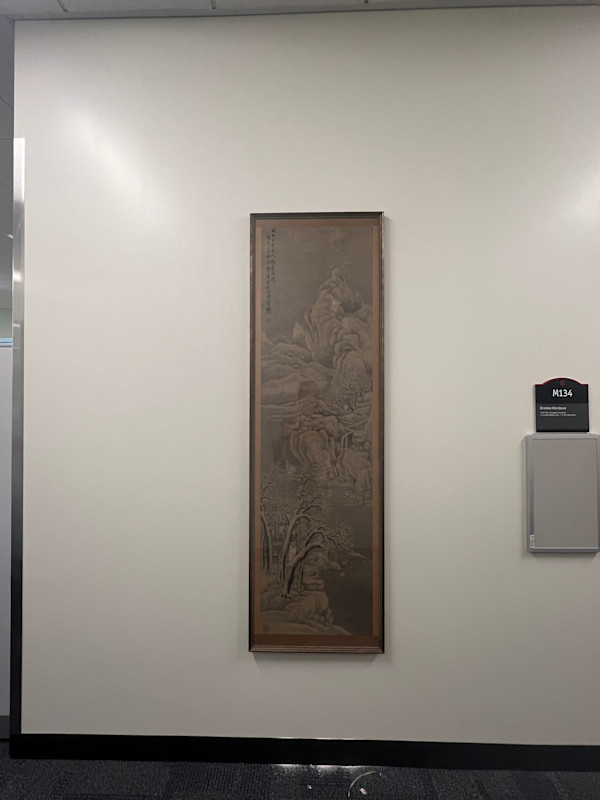
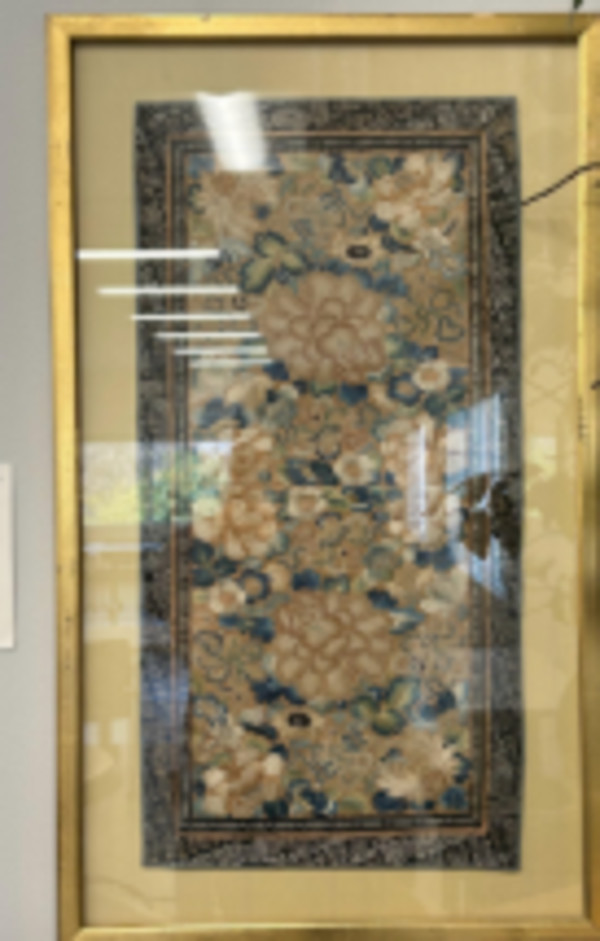
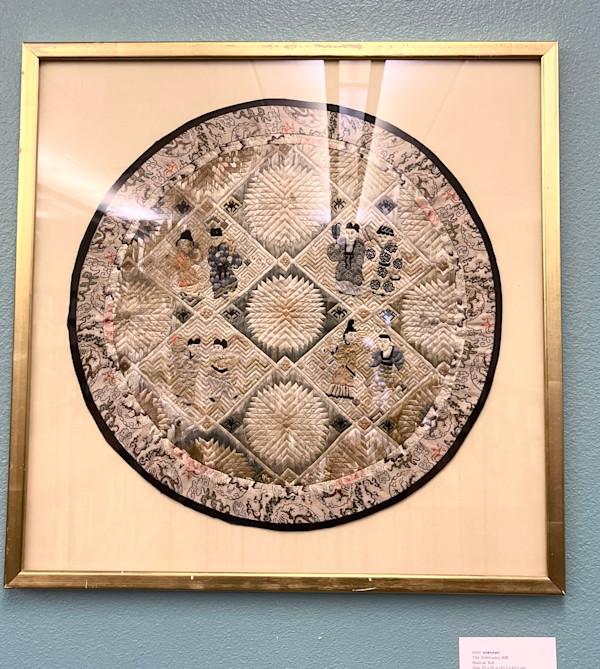
At first glance the panel looks like a painting but every color and shade is built entirely from silk thread. The flowers are carefully layered using satin stitch, long and short stitch, and seed stitch to create texture and movement. Some areas catch the light differently depending on the angle, showing the artist’s skill in creating depth and dimension. The design borrows motifs from kimono patterns and the delicate brushwork of Nihonga painting, a traditional Japanese art of the Meiji period (1868-1912). It seems effortless but the precision, timing, and planning behind each stitch shows the work of trained artisans collaborating in workshops.
By the late 19th century Japan was producing luxury textiles and decorative objects for an international market. Dealers like Yamanaka and Company in Osaka helped bring pieces like this to galleries in New York, London, and Paris. Workshops in Kyoto and Yokohama adapted their designs for Western buyers, emphasizing bold blossoms, exotic birds, and the shimmer of silk threads to stand out in display cases. Artists usually remained anonymous because production was divided among specialists, with one designing, another stitching, and others adding highlights. Floral imagery also carried symbolic meaning representing beauty, prosperity, and harmony, making these panels both decorative and culturally rich objects for collectors abroad.
Description written by Isaac Acosta, 2026.