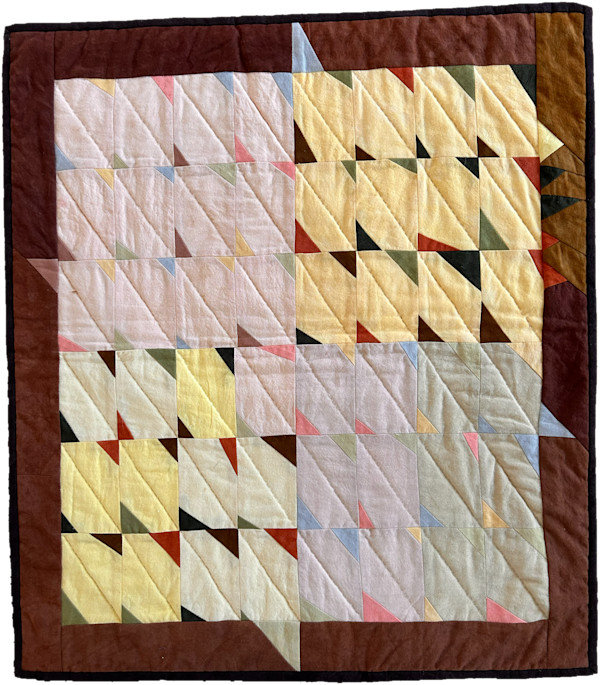
Quilt is both a noun and verb. A quilt (noun) is a multi layered textile traditionally composed of three layers that includes a cloth top, batting, and a cloth back. The layers are combined using the technique of quilting (verb) which is the process of sewing the three layers together. Traditional quilt designs use regularly repeating shapes and blocks based on a grid that can be simple or complex. Modern quilt designs are characterized by the use of bold colors, high contrast and graphic areas of solid color improvisational piecing, minimalism, expansive negative space, and alternate grid work. Modern traditionalism or the updating of classic quilt designs combines both. Designs are executed using one or more techniques that include piecing, applique, foundation paper piecing, or English paper piecing.
Early on I was intrigued with my maternal Grandmother’s quilts that she made out of necessity for life on the farm in west Texas. The fabric she used was what was available including worn clothing and feed sacks. My first quilts were collaborations with my children’s classes when they were young and are some of the most creative quilts. Through my quilting journey I have been inspired by several quilters, many whom I’ve studied with at Madeline Island School of the Arts, including Sue Spargo, Pam Beal, Gwen Marston, Victoria Findley Wolfe, and Jean Wells. I consider myself a liberated quilter, open to exploring many approaches to quilt design as I continue to find my own voice through quilting.
I am currently researching quilts and craftivism (craft + activism). I am moved by quilts that tell stories, document events, explore issues, make statements. Helping coordinate Quilts for Pulse (#quiltsforpulse) and being a volunteer embroiderer for Social Justice Sewing Academy (@sjsacademy) has shown me that quilts are not only beautiful and comforting, but also powerful.
