
Puhi Moana Ariki is an important tupuna in Northern whakapapa and is widely remembered as the eponymous ancestor of Ngā Puhi. He arrived in the Mataatua waka with his tuākana 'older brother' Toroa and his niece Wairaka. The Historic Places Trust in consultation with Ngā Puhi elders outlines the following wānanga: 'Toroa was elected to perform sacred ceremonial rites which annoyed his younger brother Puhi out of envy. Conflict ensued between the brothers and Puhi took leave from his brother Toroa heading north on the Mataatua.' Puhi created conflict with Toroa over the planting rites of the kūmara and took the Mataatua waka and a large proportion of the settlers north from the Bay of Plenty region. Prior to its journey around Te Tai Tokerau and its final resting place in the Takou River it has been suggested that Puhi visited Wairaka leaving his waka hourua 'double hullled vessel' at present-day Waterview and walking inland by foot. The Waitītiko 'mudsnail river' begins at the base of Maunga Ōwairaka but is really only a stream and would not have been navigable for large ocean going vessels. It is said that Te Auaunga 'Oakley Creek' was used by waka and this may have the waka pouherehere for Mataatua. The recurring number seven throughout the show is a reference to 'whitu marama' 7 months. It takes 7 phases of the moon to plant, cultivate and harvest the kūmara. This time phase was very important to our ancestors and their societies and religion. Periods of war and peace and feasting were organised around the cultivation and storage and harvesting of the kūmara. In 'Toroa and Puhi' I spell out the substance of their conflict with the central form of the kūmara and its abundant leafy shoots that become, in time, the beginnings of the next cycle of tubers that provide for the community.
Additional Artworks
From Dr Rangihiroa Panoho
-

He Waiata: 'Chorus', 2026, Te RONGO exhibition
frottage: broadband cover Morningside Road and assorted local native plants and objects, graphite pencil on cotton paper
645 x 500 in
-
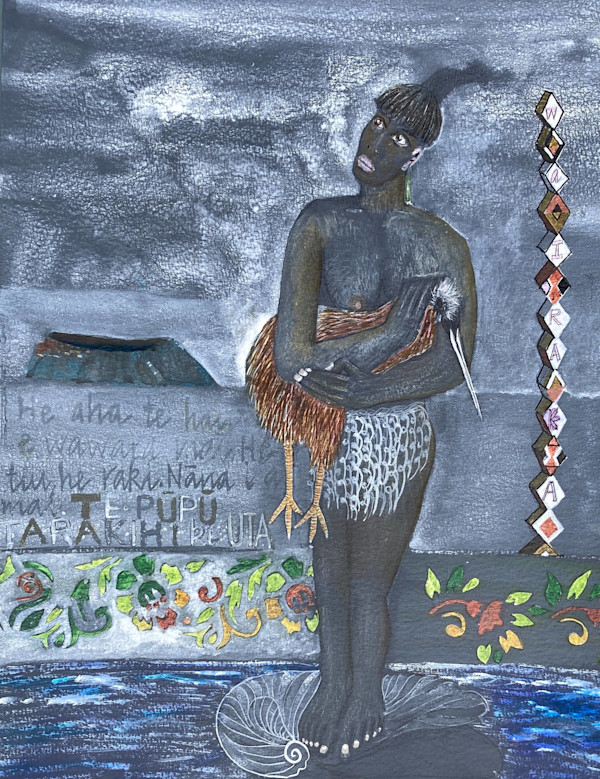
Wairaka I, 2026
acrylic inks on prepared paper
486 x 460 in
-
![BOY, [Ka mauru te ngē. Ka whakarongo ia ki te ngaru tūātea 'when the noise subsides he hears the crashing wave'] 2026 by Dr Rangihiroa Panoho, Image 1.](https://assets.artworkarchive.com/image/upload/t_jpg_medium_width/v1/user_84694/Boy1_TeRongo26_3x_aissoj.jpg)
BOY, [Ka mauru te ngē. Ka whakarongo ia ki te ngaru tūātea 'when the noise subsides he hears the crashing wave'] 2026
Built up painted acrylic and screened water-based inks on heavily prepared board
980 x 1010 in
-
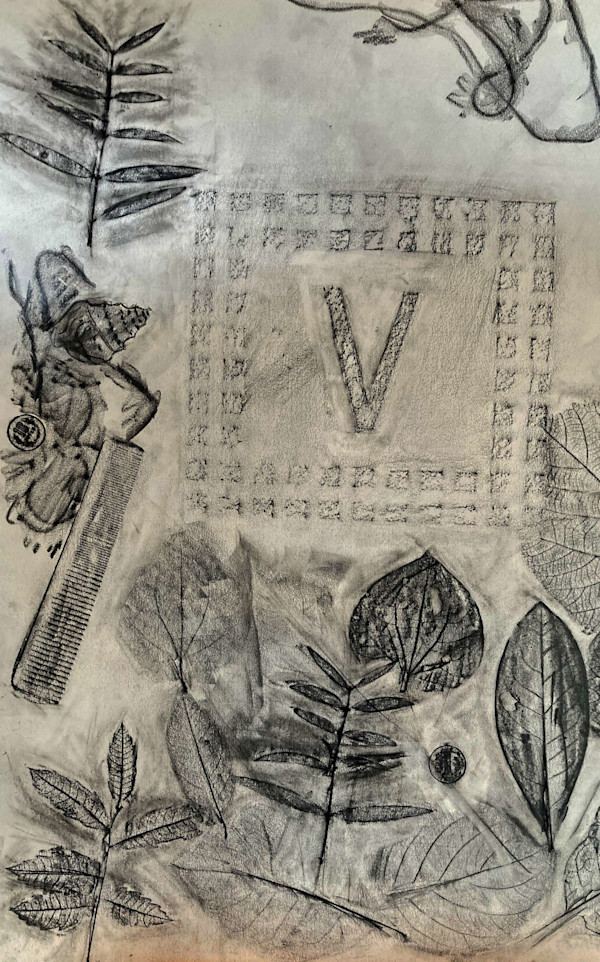
V, ‘Flows to the Sea’, 2026, Te Rongo exhibition
frottage: graphite pencil on paper
645 x 500 in
-
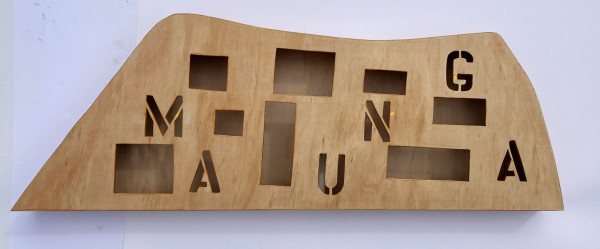
Maunga
acrylic, gold leaf and varnish on prepared and cut out plywood and kauri veneer
-
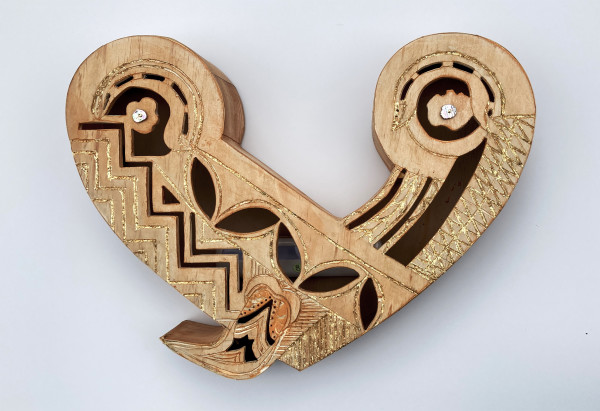
Ngākau
Guilded carved, fretworked, plywood and kauri veneer
450 x 500 x 75 in
-
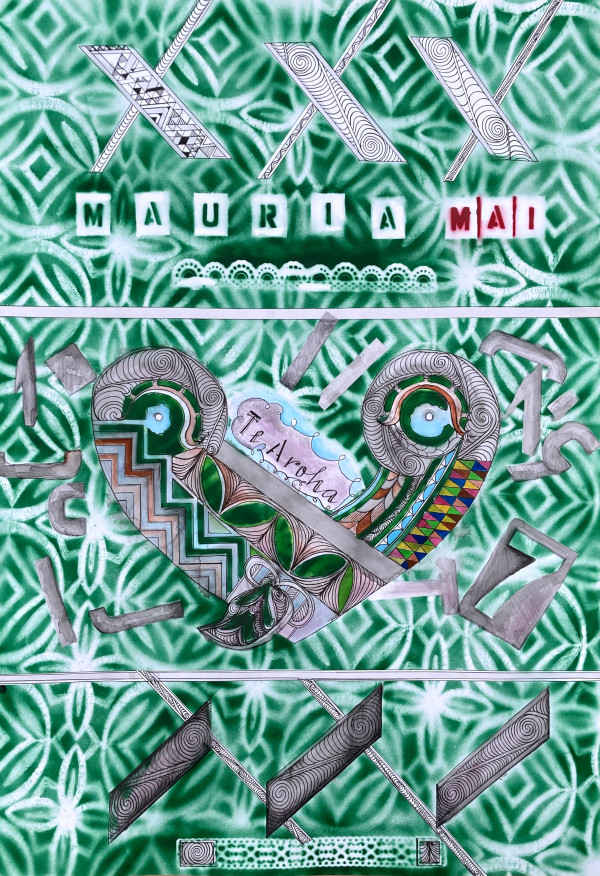
Taki Toru
acrylic paint and ink printed and painted on cotton paper
1000 x 700 in
-

Plants That Tell Stories
Acrylic print and painting on cotton paper
1000 x 700 in