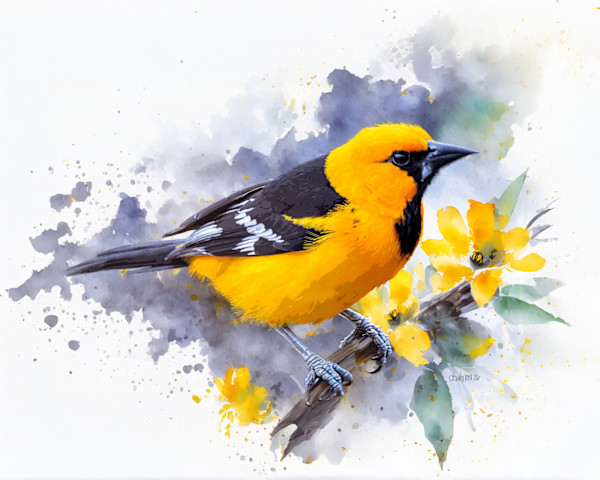
The Yellow-headed Blackbird (*Xanthocephalus xanthocephalus*) is a striking and unmistakable marsh bird found across western and central North America, breeding in the freshwater wetlands of the Great Plains and the intermountain West before migrating south to Mexico and the southwestern United States for the winter. The adult male is truly eye-catching, with a jet-black body dramatically offset by a brilliant golden-yellow head and breast, along with a distinctive white wing patch that flashes conspicuously in flight. Females and immatures are considerably more subdued, showing a brownish body with a duller yellowish wash on the face and chest. These birds are colonial nesters, building their woven cup nests among cattails and bulrushes over open water, often forming large, noisy breeding colonies where males aggressively defend their territories. Despite its bold and beautiful appearance, the Yellow-headed Blackbird is perhaps most famous for its comically harsh and rasping song — a discordant, mechanical buzzing that sounds more like a rusty gate or a strangled kazoo than the melodious tune one might expect from such a handsome bird. Outside of the breeding season, they gather in enormous mixed-species flocks with other blackbirds and starlings, foraging in agricultural fields for grain and insects. Bold, gregarious, and visually stunning, the Yellow-headed Blackbird is a favorite among birdwatchers fortunate enough to encounter it.