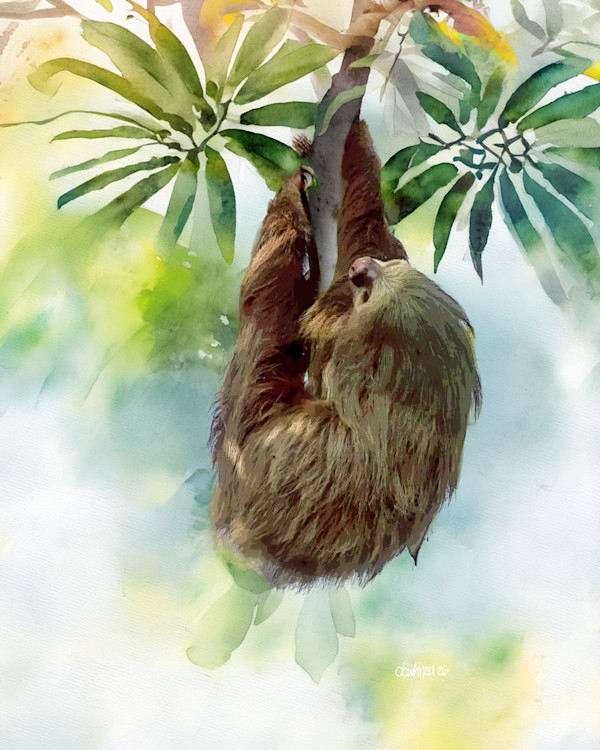
The Three-Toed Sloth (*Bradypus* spp.) is one of the most instantly recognizable and endlessly fascinating mammals of the Central and South American rainforest, a creature so supremely and deliberately adapted to a life of extreme energy conservation that it has become something of a cultural symbol for slowness and tranquility, yet beneath its placid, almost meditative exterior lies one of the most remarkably specialized and evolutionarily successful survival strategies in the entire animal kingdom. There are four recognized species of three-toed sloths, all belonging to the genus *Bradypus*, and they are found across a range of tropical and subtropical forest habitats from Honduras in the north to Bolivia and Brazil in the south, spending virtually their entire lives suspended upside down in the forest canopy, clinging to branches with the three long, curved, hook-like claws — each up to four inches in length — that give the animal its common name and serve as its primary means of gripping, hanging, and moving through the trees with minimal muscular effort. Adults are modest in size, typically weighing between 8 and 10 pounds and measuring around 18 to 24 inches in body length, with a rounded, somewhat flattened head bearing a short, blunt snout, small ears hidden beneath the fur, and a permanently upturned mouth that gives them an expression of serene, contented smiling that has made them favorites of wildlife photographers and social media audiences worldwide — though this endearing expression is simply a product of their facial anatomy rather than any reflection of emotional state. Their coarse, shaggy fur is a grey-brown base color uniquely grooved along each hair shaft to facilitate the growth of symbiotic algae, which tinge the coat a greenish hue that provides extraordinary camouflage against the lichen-covered branches of the canopy, and this living fur ecosystem also harbors a remarkable community of moths, beetles, and other invertebrates that complete part of their life cycles within the sloth's coat — making each individual sloth a miniature, mobile ecosystem in its own right. The three-toed sloth's legendary slowness is not laziness but physiological necessity — possessing one of the lowest metabolic rates of any mammal, a digestive system so sluggish that a single meal of leaves can take up to a month to fully process, and a body temperature that fluctuates unusually with ambient conditions, the sloth conserves energy so aggressively that it descends from its tree to defecate on the forest floor only about once a week, a vulnerable and energy-expensive journey that represents one of the genuine mysteries of sloth biology, since the animal could simply drop its waste from the canopy — a puzzle some researchers believe may be related to communication, parasite management, or the maintenance of its relationship with the moths that inhabit its fur and whose larvae feed on sloth dung. Despite their apparent defenselessness, three-toed sloths are surprisingly resilient animals — their thick skin and fur absorb considerable punishment, their slow movements and cryptic coloration make them remarkably difficult for predators to detect, and their grip in death remains so powerful that deceased sloths have been found still clinging to their branches — yet they face growing threats from deforestation, habitat fragmentation, electrocution on power lines, and the illegal pet trade, making the conservation of the rainforest ecosystems upon which they depend an urgent priority for the survival of these utterly unique and irreplaceable creatures.