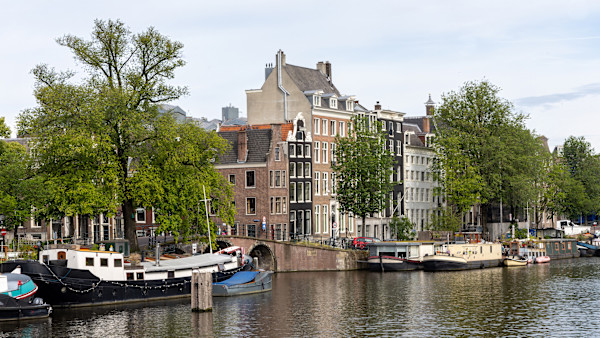
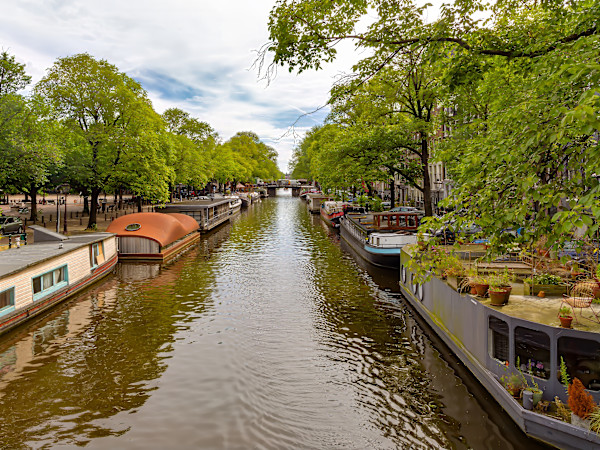
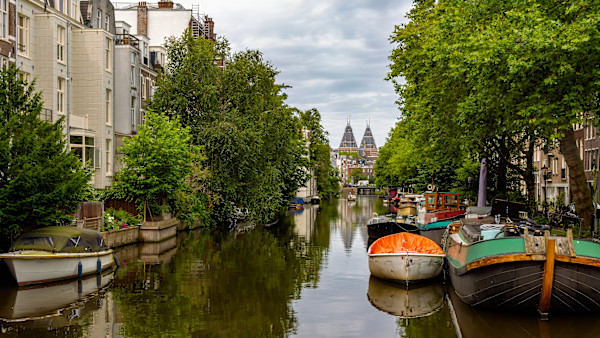
The historic canals of Amsterdam are among the most celebrated, beautiful, and historically significant urban waterways in the entire world, collectively designated a UNESCO World Heritage Site in 2010 in recognition of their outstanding universal value as a masterpiece of hydraulic engineering, urban planning, and architectural achievement that fundamentally shaped the development of city design across Europe and beyond during the Dutch golden age of the 17th century. The canal system was largely constructed during Amsterdam's extraordinary period of mercantile dominance in the 1600s, when the city was the wealthiest and most powerful trading hub on earth, and the three principal canals — the Herengracht, or Gentlemen's Canal, the Keizersgracht, or Emperor's Canal, and the Prinsengracht, or Prince's Canal — were laid out in elegant concentric semicircular arcs radiating outward from the medieval city center in a feat of ambitious, visionary urban planning that required the driving of countless thousands of wooden piles deep into the soft marshy ground and the excavation of approximately 100 kilometers of canals that together with their connecting waterways form a network of around 165 canals spanned by more than 1,500 bridges of every size, shape, and age. Lining these waterways is one of the most remarkable concentrations of historic urban architecture anywhere on earth — approximately 1,550 monumental canal houses, or grachtenpanden, dating primarily from the 17th and 18th centuries, their tall, narrow, elaborately gabled facades crowding shoulder to shoulder along the water's edge in an endlessly varied procession of Dutch Renaissance, Baroque, Neoclassical, and Neck gable styles, their ornate stepped and bell-shaped rooflines reflected in the dark, glittering water below in a mirror image of extraordinary beauty, their large warehouse doors and hoisting beams projecting from upper stories as testament to the commercial purposes for which many were originally constructed during the height of the spice and commodity trade. The canals today are alive with constant movement and activity — narrowboats and houseboats moored in long, colorful rows along the banks, glass-topped tour boats gliding silently beneath centuries-old bridges, kayakers and paddleboats threading between the reflected facades, and the constant flow of cyclists crossing the humpbacked bridges in a city where the bicycle reigns supreme — while the tree-lined canal banks, their elm and linden trees arching gracefully over the water to form tunnels of dappled green in summer and skeletal, frost-rimmed beauty in winter, provide some of the most romantic, atmospheric, and endlessly photogenic streetscapes in all of Europe, making Amsterdam's historic canal ring a living, breathing, magnificently preserved urban treasure that continues to enchant, inspire, and astonish all who are fortunate enough to wander its timeless, lantern-lit banks.