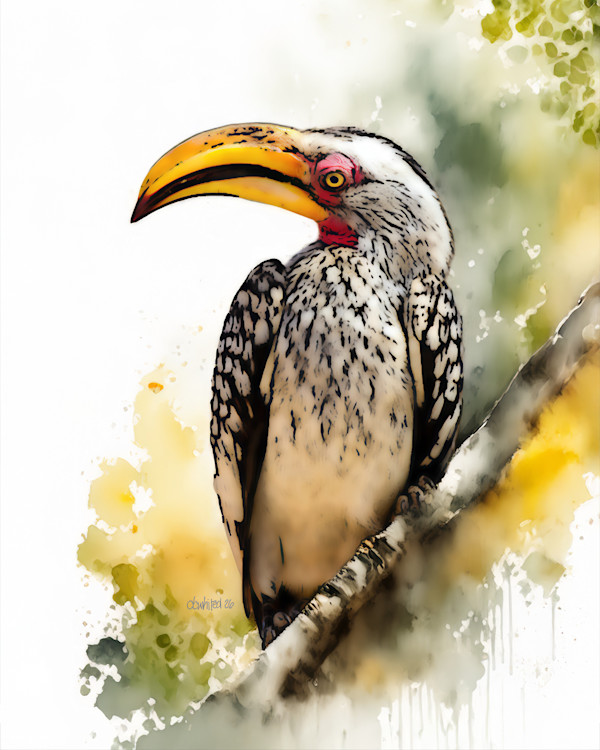
The dwarf mongoose (*Helogale parvula*) is the smallest carnivore in Africa, typically measuring just 18–28 cm in length and weighing around 210–350 grams. Found across sub-Saharan Africa in savannas, woodlands, and bushlands, these tiny but feisty animals are highly social, living in tight-knit family groups of 2–30 individuals led by a dominant breeding pair. The group is remarkably cooperative — members take turns acting as sentinels, watching for predators like hawks and snakes while others forage for insects, small lizards, and birds' eggs. Their fur is a speckled brown to reddish-brown, and their bodies are slender with a pointed snout and small rounded ears. Dwarf mongooses often make their dens in termite mounds, which provide excellent insulation and protection. They are highly vocal animals, using a variety of chirps and calls to communicate within the group, and they have even been observed forming mutualistic relationships with hornbill birds, which help alert them to danger in exchange for stirred-up insects during foraging..
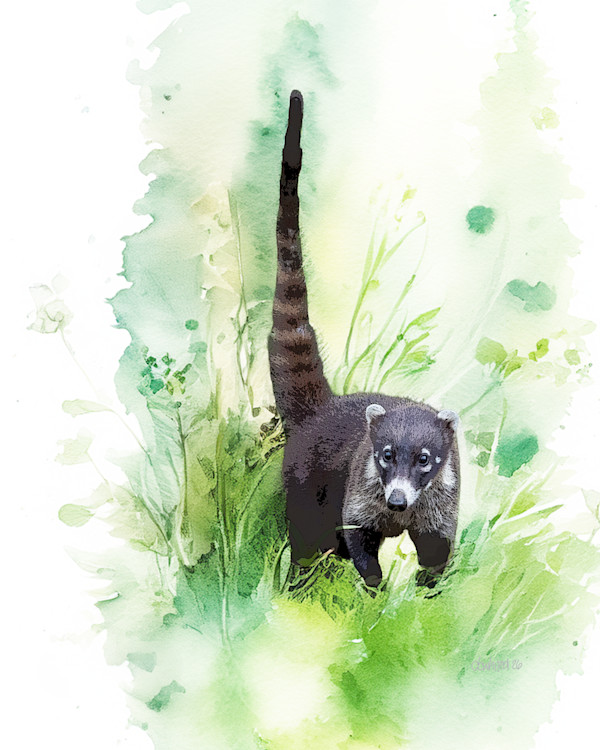
This image features a dwarf mongoose standing alert in a natural outdoor setting, its slender, elongated body poised with curiosity and confidence. The animal has a dense coat of coarse, brownish-gray fur, a pointed snout, small, rounded ears, and a thick, tapered tail — all classic features of the species. It stands on a patch of green grass surrounded by soft, blurred foliage, with warm golden and white tones giving the background a dreamy, almost painterly quality, as though the photograph has been artistically blended with a watercolor effect. The mongoose gazes directly outward with sharp, alert eyes, capturing the creature's well-known reputation for being quick, bold, and highly perceptive.