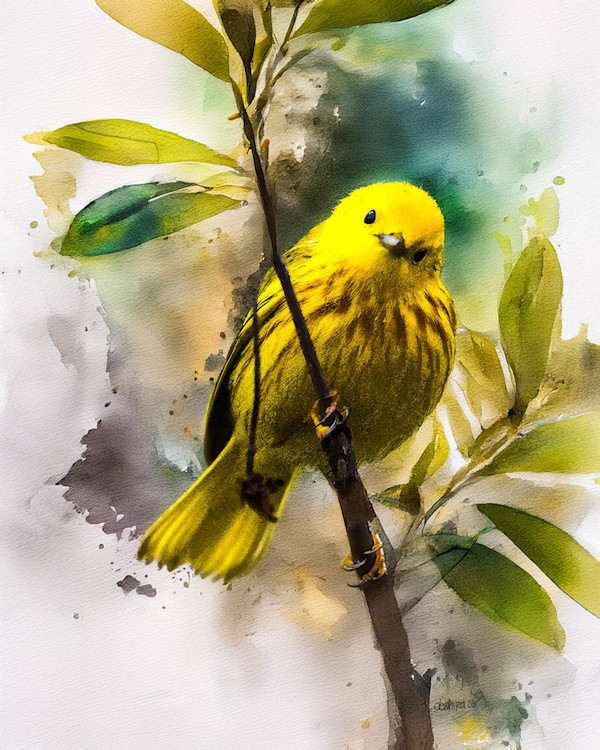
The Cape May Warbler (*Setophaga tigrina*) is a small, vibrantly patterned songbird of the New World warbler family, measuring only about 5 inches in length, with a compact body and a distinctive, slightly curved bill uniquely adapted for sipping nectar — a rare trait among warblers. The breeding male is arguably one of North America's most striking warblers, sporting a rich chestnut cheek patch set against a bright yellow face and neck, a streaked yellow-and-black breast, a bold white wing patch, and an olive-green back dappled with dark streaking, all crowned with a dark cap. Females and non-breeding birds are considerably more muted, wearing soft olive-yellow tones with faint streaking, though the yellow rump remains a helpful field mark year-round. The Cape May Warbler breeds in the boreal forests of Canada and the northern United States, where it specializes in feeding on spruce budworm outbreaks, and winters in the Caribbean, where it supplements its diet with fruit and nectar. Despite being named for Cape May, New Jersey — where an early specimen was collected — it is actually seen there only as a migrant, often passing through in impressive numbers each fall along the Atlantic coast.