Agnes on the Stump
Agnes stands in the garden, mounted on a maple stump.
The tree was cut clean. Its rings face outward—years of quiet growth turned into something that holds her in place. No one speaks of what stood there before, or why it was taken down.
She is made of what remains.
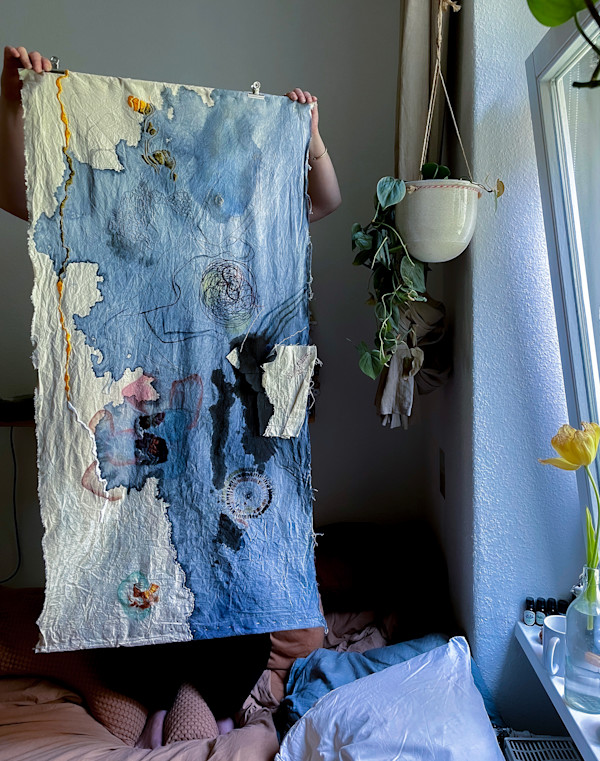
Cloth pulled from hospital gowns. Gloves stretched thin, fingers still curved as if they remember their work. Paper softened by handling, edges worn where names should have mattered more.
She is shaped into something almost human.
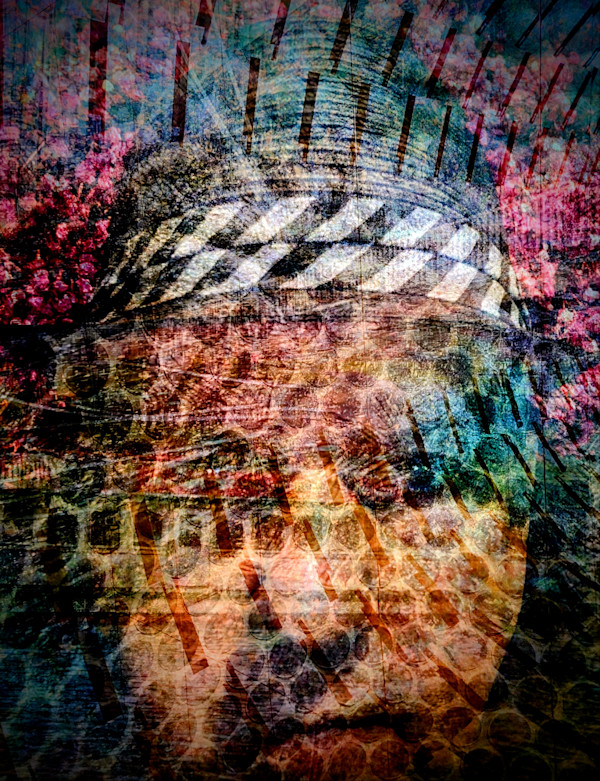
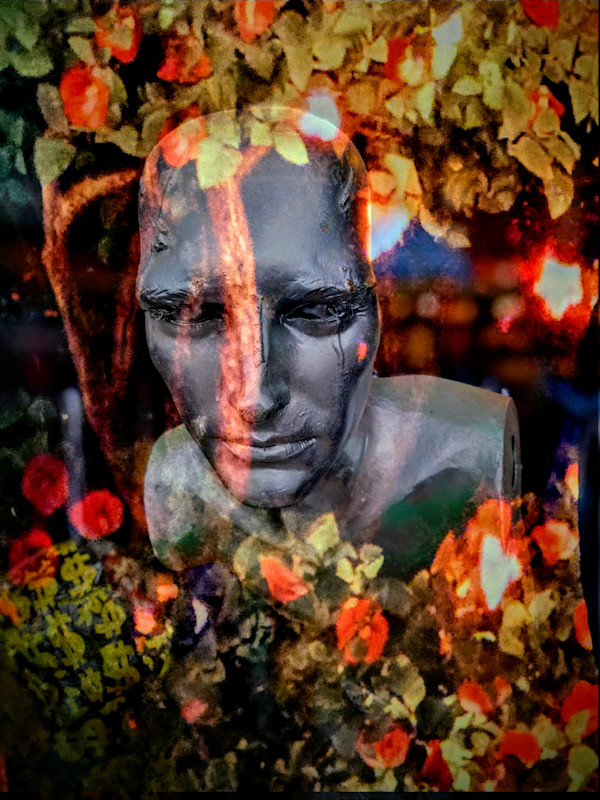
Over her face, a mask.
Not to protect her—but to resemble someone who might be trusted.
Her dark hair shifts in the breeze.
It is the only part of her that moves.
Around her, the garden thickens.
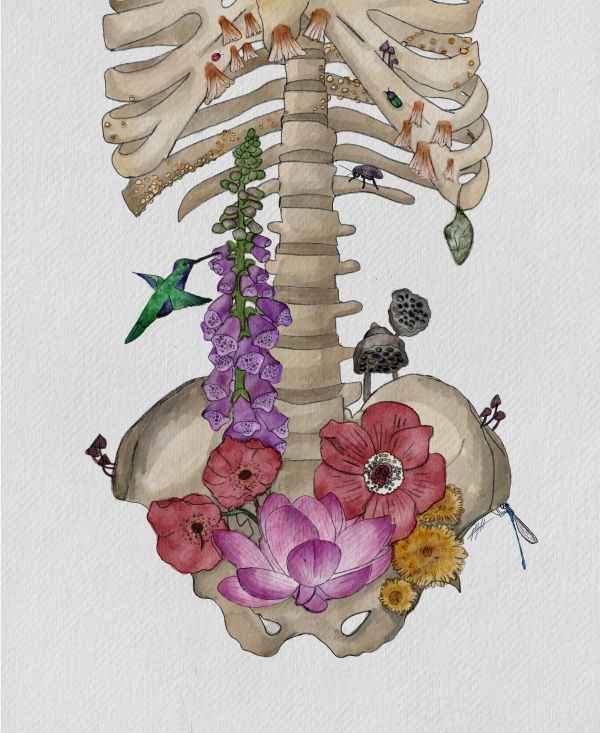
Valerian grows tall, though its flowers are small—white, unimpressive, easy to miss unless you are looking closely. It does not draw attention. It blends into the garden, accepted without question.
It is called calming.
But when the air shifts, it carries a musty, acrid odor—something that lingers longer than expected.
Beside it, the castor plant rises—red-stemmed, broad-leafed, striking.
Beautiful.
Poison.
Its seeds hold something potent. Useful in careful hands. Dangerous when its power is not fully named.
They grow together.
The unremarkable and the undeniable.
The familiar and the feared.
Both carrying power.
This is a wild place.
This is a place of care.
A place where bodies open. Where life begins. Where vulnerability is expected and dependence, required. A place where decisions are made quickly, often with practiced hands and steady voices.
Agnes watches.
She watches the moment consent becomes assumed.
The moment a body is positioned without being asked.
The moment pain is minimized because it is familiar to those who witness it often.
The moment a voice hesitates—and is moved past.
She watches procedures explained as routine.
Decisions shaped as reassurance.
Interventions given before full understanding belongs to the one receiving them.
She watches kindness offered in place of clarity.
A patient called dear instead of by her name.
A question shaped so that only one answer feels acceptable.
A soft voice that says, “This will be safer,” before the choice has been fully given.
And—
Agnes growls.
Low. Almost beneath hearing.
Not a sound, exactly. A vibration. A tension in the air.
It comes when something is made smaller than it is.
When a person is made smaller than they are.
When what looks like kindness is actually coercion.
The growl does not stop what is happening.
It marks the moment when it still could have been otherwise.
Most do not hear it.
Or if they do, they smooth it over—call it stress, urgency, the need to keep things moving.
They keep tending the garden.
They believe they are doing good.
And often, they are.
That is what makes it difficult to see.
Birds come to the garden.
They land on Agnes’s shoulders, settle into the hollow of her frame, pick and rearrange what she is made of.
At first, they startled.
They circled wide. They hesitated. They called sharply to one another.
But Agnes does not move.
She does not chase. She does not strike.
She only stands.
And so they learned her.
They learned the growl—when it comes, how long it lingers, how to wait it out. They learned to soften their calls, to shift their timing, to continue without changing what they bring.
A warning, repeated often enough, becomes part of the pattern.
They are not afraid of her.
Not anymore.
And then—
they learned to mock her.
A low echo of the growl, mimicked and reshaped into something lighter. Words passed between them that sound like care, sound like awareness, sound like consent.
“Of course.”
“We always ask.”
“She’s fine.”
The rhythm continues.
Nothing changes.
The language remains, but its meaning thins.
But her hair—
her dark hair lifts in the breeze, sudden, alive in a way the rest of her is not.
And still, they startle.
A wing jerks.
A call breaks mid-note.
For a moment, something unpracticed moves through them.
Not fear.
Recognition.
The moment passes.
They settle again.
They continue.
Some call her Agnes.
Some say the name was given long before this garden, long before the stump, long before the language of care learned how to soften what it takes.
There are older stories about a girl who would not yield.
They are not this story.
Here, Agnes is no protector.
She does not intervene. She does not shield. She does not stop what is already in motion.
She stands.
A matron who does not protect, but witnesses the unprevented.
She holds what was not stopped.
What was not asked.
What was not named until it was already done.
Agnes cannot leave the stump.
She does not walk the rows. She does not follow hands or voices.
She marks.
The rest belongs to those who move.
To the hands that can pause before touching.
To the voice that can ask instead of assume.
To the one who hears the growl and does not smooth it over.
In some gardens, the birds still startle.
In others, the wind does not blow.
Her hair does not move.
Nothing interrupts what is already in motion.
The birds land without hesitation.
They do not pause.
They do not look up.
They do not need to mock her.
There is nothing left to resist.
The growl, if it comes, has nowhere to travel.
It settles into the soil, unheard.
And the garden continues—
quiet, efficient, undisturbed.
In a still garden, nothing feels awry.