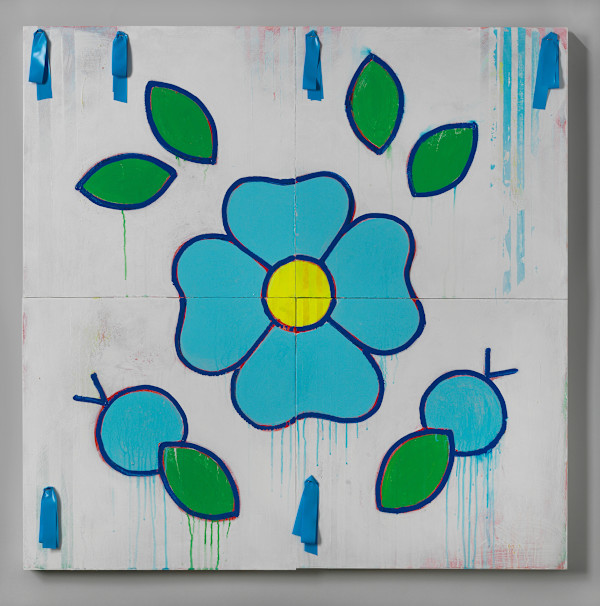
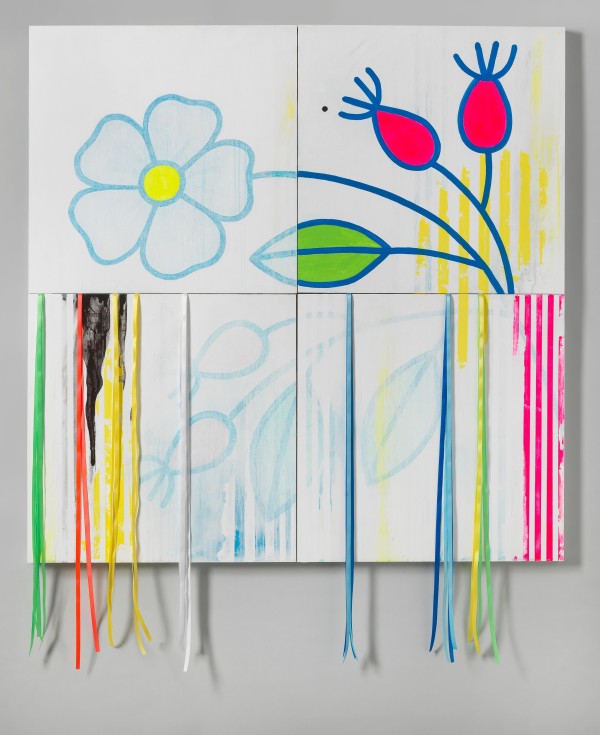
Mother Tongue/Ehts’o Ket’a
Referring to the language of one’s ethnic and linguistic group rather than one’s first spoken language/
Referring to the tongue, or beaded top (ehts’o ket’a), of a moccasin/
Referring to the intentional halting of communication between generations, between the artist and his grandmother/
Referring to the artist’s matrilineal line, whose artwork is the inspiration for this work/
Referring to the artist’s visual language, and to cultural iconography/
Referring to a dialogue with the ancestors and with future generations.
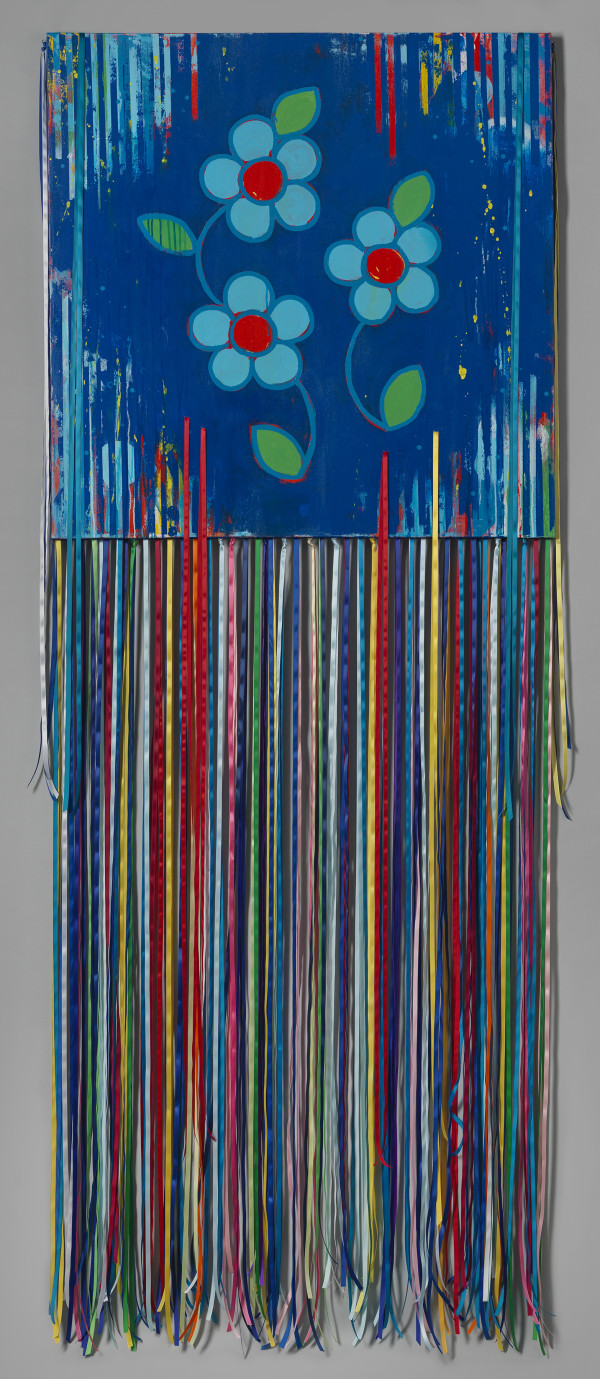
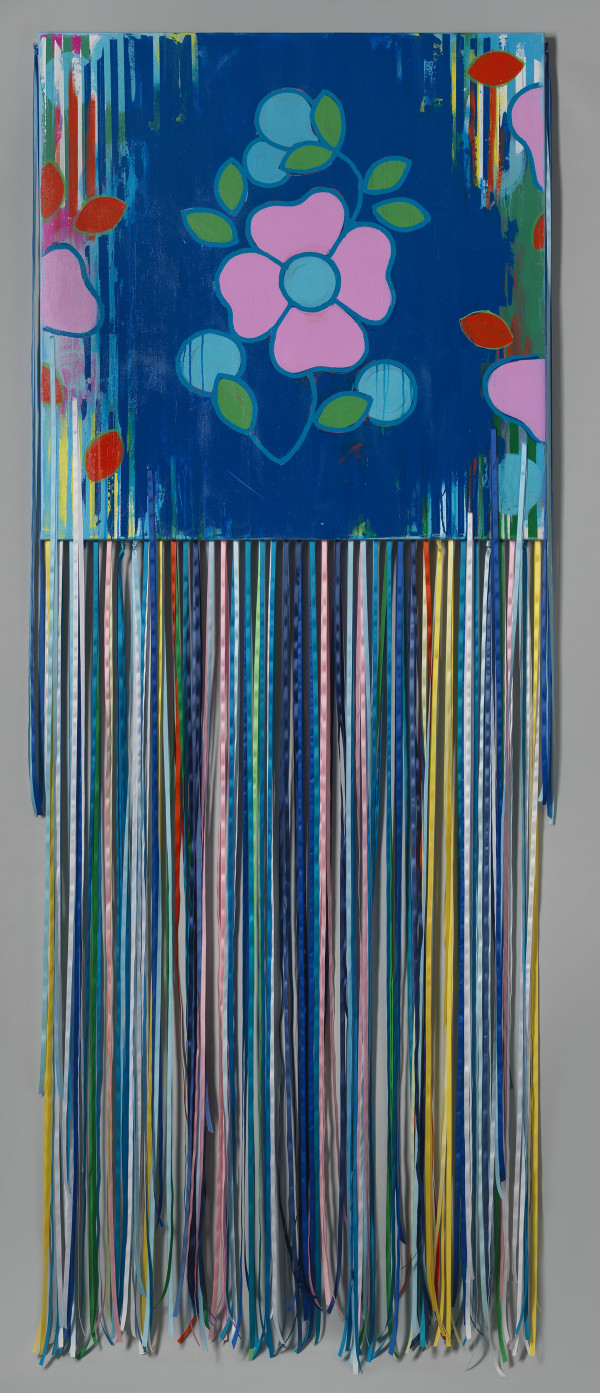
The paintings within this series draw on and celebrate the legacy of Madeline Canadien, Rita Coats, and Mary Elsie Canadien specifically, and other practitioners of Dene and Metı́s floral artwork generally, in beadwork, tufting, embroidery and quillwork.
In creating this dialogue with Dene Art and my Grandmothers, I chose to use the language and medium I know not simply to reproduce beautiful floral designs, but to discuss dichotomies within our contemporary existence and relationships, within our colonized land and bodies.
Firstly, I refer to language and the fact that verbal communication between myself and Setsų Héɂı (my grandmother) was halted as an intentional act of colonization, through the mechanisms of Residential School and assimilation. Despite this, we still had a relationship of sorts, and Setsų expressed her love often in the gifting of handmade clothing and artwork. Amongst these treasured items are twisted caribou-hair floral pictures, and a pair of canvas-top mukluks that I wore out in one winter long ago.
The original impetus for this work came in the form of 3 pairs of beaded moccasin tops, made by Setsų Héɂı and gifted to me posthumously by my Aunt Elsie, with the suggestion that I incorporate them into my practice. These beaded tops have come to symbolize my relationship with my grandmother: quiet, beautiful, yet tangible. Expanding the symbolism, and without exaggeration, Dene traditional artwork represents our love for family and our love for our land, Denendeh. It is this symbolism as well as Setsų’s designs that are at play in these paintings.
This work was made in honour of my matrilineal line, and is dedicated to my family and the Dene and Metı́s of the Dehcho.