
DISCOVER IN REVIEW
Photographs: Courtesy of THE CUBE: DISCOVER DHAKA
Artefactum's exhibition at The Cube: Discover Dhaka suggests that some of the city's most engaging artistic encounters may emerge where disciplines, communities and everyday experiences intersect.
For decades, contemporary art in Dhaka has largely been confined to the familiar architecture of galleries and museums – spaces that, while essential, often remain accessible to a relatively small and self-selecting audience. A growing number of artists and curators, however, are testing the boundaries of where art can exist and whom it can speak to. The Cube: Discover Dhaka, held at Aloki from June 18 to 20, offered one such experiment. Curated by Artefactum – Dhaka's contemporary art gallery and cultural platform, known for championing Bangladeshi artists through exhibitions and interdisciplinary collaborations – the exhibition became an inquiry into the possibilities of display, challenging the conventions that have long shaped how contemporary art is exhibited and encountered.
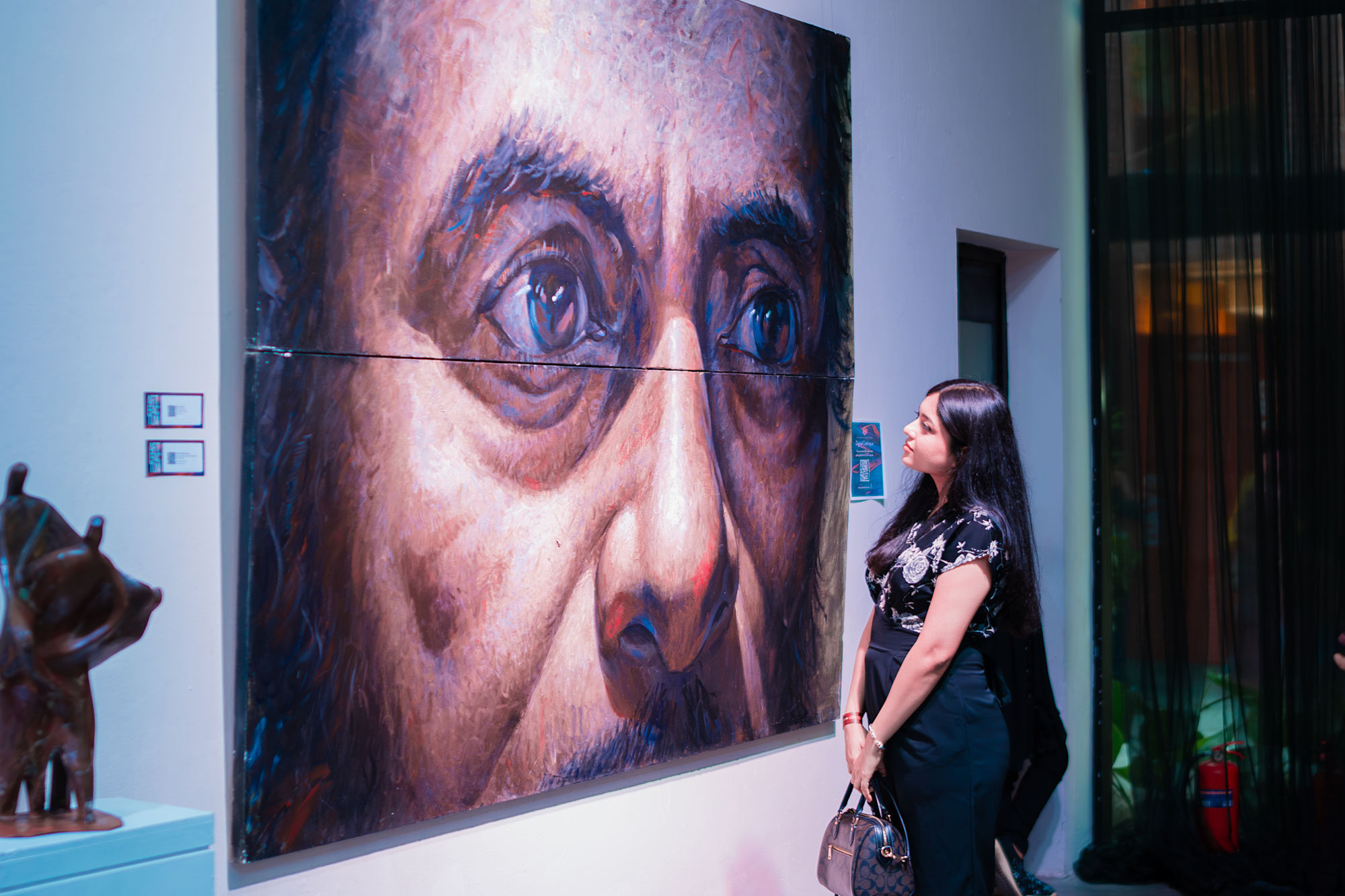
Rather than occupying a neutral gallery, the exhibition was installed inside Aloki's Greenhouse, an expansive glasshouse where paintings and sculptures shared space with an extraordinary collection of luxury and classic automobiles. At first glance, the pairing might appear unlikely, even theatrical. Yet it proved to be one of the exhibition's most compelling curatorial decisions. Instead of competing for attention, the artworks and automobiles entered into a surprisingly nuanced conversation about materiality, craftsmanship and the enduring human desire to create objects that transcend utility.
For curator Rumana Habib, this relationship between the two worlds was the exhibition's central challenge. The project began with the idea of presenting a collection of supercars alongside contemporary art, but the curatorial task was to create a dialogue between them. "We wondered how to make those two worlds work together," she explains. "Our solution was to give each car its own story." Each vehicle was paired with artworks that reflected its personality, energy and design language.
This change in context inevitably transformed the way the works were viewed. A painting was no longer a self-contained work separated from its surroundings; it became part of a wider visual field that included polished chrome, architectural steel,
greenery and constantly changing natural light. Sculptural forms echoed the sculpted curves of vintage automobiles, while the precision of engineering found unexpected affinities with the meticulous labour of artistic practice. Such visual correspondences were subtle rather than overstated, inviting visitors to discover relationships rather than imposing them. Meaning emerged not in spite of these conditions, but through them.
Importantly, the exhibition resisted reducing contemporary art to decorative accompaniment for luxury objects. Too often, art displayed within commercial or lifestyle settings risks becoming little more than sophisticated interior design. Here, the curatorial framework largely avoided that trap by encouraging
THE PROJECT BEGAN WITH THE IDEA OF PRESENTING A COLLECTION OF SUPERCARS ALONGSIDE CONTEMPORARY ART, BUT THE CURATORIAL TASK WAS TO CREATE A DIALOGUE BETWEEN THEM.
viewers to consider both art and automobiles as products of imagination, innovation and skilled making. Whether expressed through pigment, metal or machinery, each object embodied a commitment to design as a form of cultural expression.
The exhibition also formed part of the wider Cube Experience, a multidisciplinary event that brought together futsal tournaments, a curated marketplace, food experiences, arcade games and an automobile showcase.
Visitors who may never have planned an afternoon at an art gallery found themselves pausing before contemporary paintings, discussing sculptures or lingering to examine unfamiliar artistic languages. Such encounters were often informal and unselfconscious. Families, young professionals, automobile enthusiasts and first-time viewers navigated the exhibition alongside collectors and artists, producing a democratic atmosphere rarely encountered within more conventional exhibition spaces.
This ability to reach beyond traditional art audiences is perhaps the exhibition's most significant achievement. Contemporary art continues to struggle against perceptions of exclusivity, its language often considered inaccessible outside specialist circles. By embedding the exhibition within a broader cultural event, Artefactum demonstrated that meaningful engagement with contemporary art need not depend upon institutional settings or prior knowledge.
There was, of course, an inherent tension in placing contemporary art within a setting defined partly by luxury consumption, raising questions about class, aspiration and the commercial forces that shape cultural production. Yet this very tension became central to the exhibition's appeal, encouraging visitors to look beyond the surface relationship between artworks and automobiles and consider the cultural values embedded within both. In doing so, The Cube: Discover Dhaka tested boundaries between artistic practice and other forms of creative production, bringing design, architecture, engineering and visual art into dialogue as interconnected expressions of human imagination.
As Dhaka continues to negotiate its identity as a changing global city, exhibitions such as this point towards a more fluid cultural future – one in which contemporary art is encountered not only inside galleries but wherever curiosity, conversation and imagination are invited to flourish.