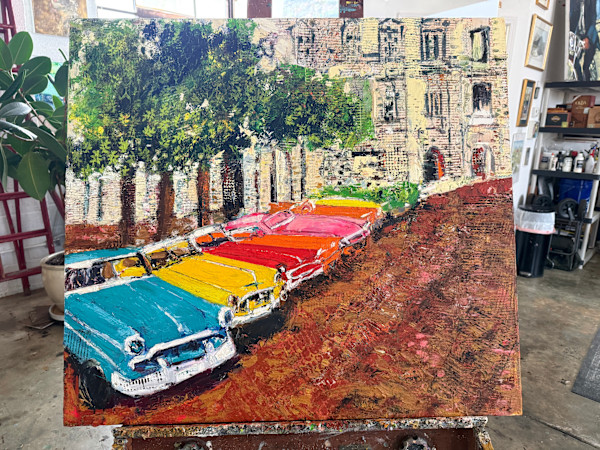
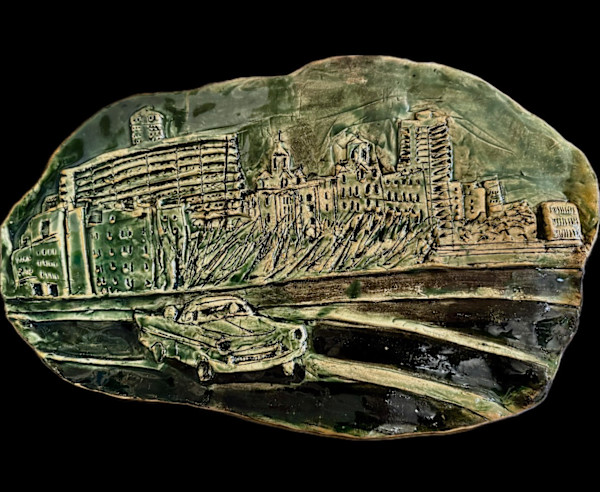
Nighttime in Havana presents a haunting, tactile vision of the city’s architectural soul. Rendered in a monochromatic palette of smoky grays, blacks, and soft whites, the painting emphasizes texture over color, giving the surface a weathered, almost sculptural quality. Thick, cracked layers suggest peeling plaster, eroded stone, and the slow passage of time.
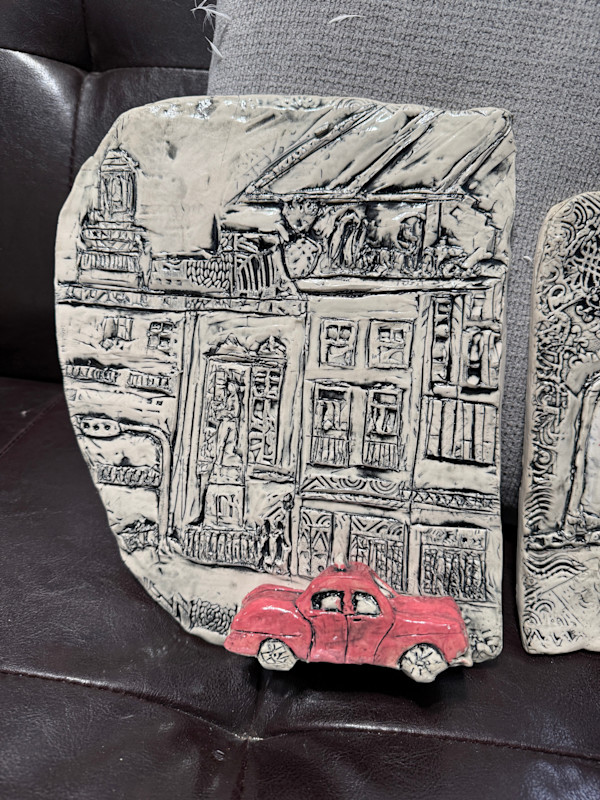
The composition centers on a row of aging colonial buildings with arched windows and heavy columns. Many of the openings are dark and hollow, implying interiors swallowed by night, while faint highlights hint at distant light sources just beyond view. The structures feel simultaneously grand and fragile, their facades bearing the marks of history, humidity, and endurance.
In the lower foreground, a classic car—iconic of Havana—sits quietly along the street. Its softened, partially abstracted form blends into the surroundings, reinforcing a sense of stillness and quiet after dark. There is no visible human presence, yet the painting feels inhabited by memory and atmosphere.
Overall, the work conveys a mood that is contemplative and melancholic, yet deeply reverent. Through heavy impasto, distressed surfaces, and subdued contrast, Nighttime in Havana captures the city not as a postcard image, but as a living relic—beautiful, resilient, and steeped in nocturnal mystery.